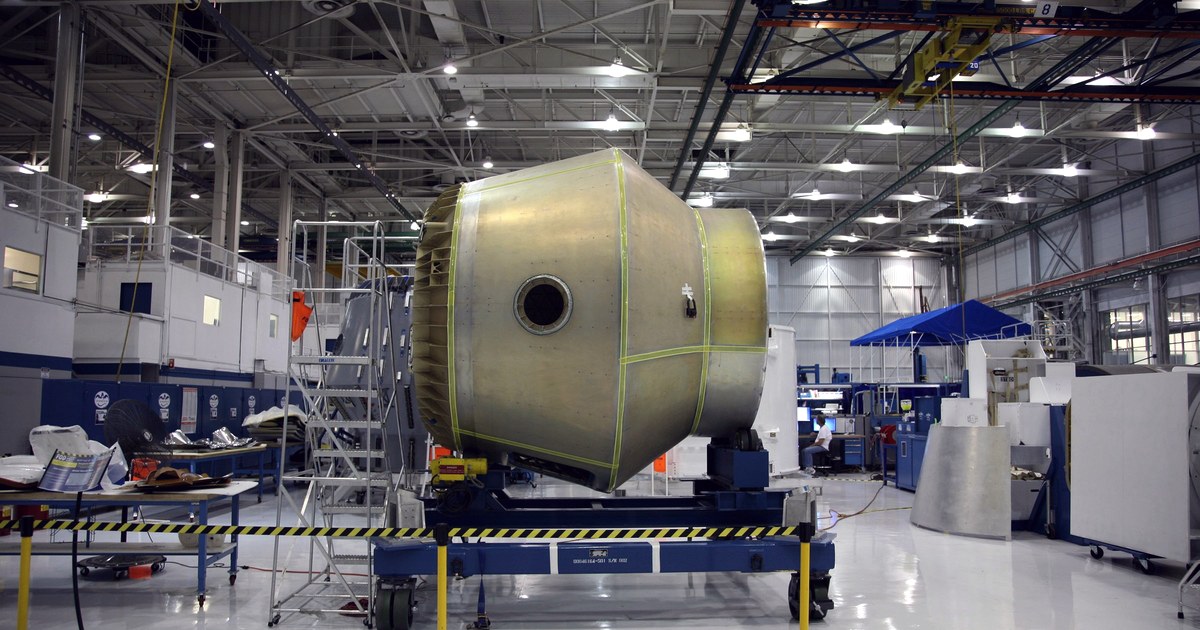
Pixxel has picked its factory site, and it is home. The company confirmed to Analytics India Magazine that it is building GigaPixxel, a 250,000 sq ft satellite plant near Kempegowda International Airport. Pixxel expects it to make 50 satellites by mid-2027, 100 by December 2027, and to hold 200 in simultaneous production by mid-2028. The money is in place: Pixxel raised a $100 million Series C in September 2026, co-led by Temasek and Seraphim, which Deccan Herald reported as the largest round yet by an Indian space-tech company.
The easy read is that a Bengaluru startup stayed in Bengaluru. That read skips what happened in June 2026, when the outcome looked far less certain.
The complaint that should have moved it
On 17 June 2026, Pixxel co-founder and CTO Kshitij Khandelwal posted on X that getting land for a satellite factory on Bengaluru's outskirts "has been way more difficult than actually making said satellites." Andhra Pradesh minister Nara Lokesh replied: "there's a new investor-friendly destination on the outskirts of Bengaluru. It's called Anantapur." Karnataka minister M B Patil answered: "My office will be in touch." Tamil Nadu joined in too: its investment agency, Guidance Tamil Nadu, invited Pixxel to consider Hosur, citing its "strategic location and strong manufacturing ecosystem". No state published the terms it put on the table.
Two days later, the Karnataka government told Analytics India Magazine that Pixxel had not yet applied to the industries department, which allots land, and would do so that week. Pixxel declined to comment.
So the one firm that had publicly called Bengaluru land harder than spacecraft engineering, and had been openly courted by a neighbouring state, is building in Bengaluru. That is revealed preference. The question is what it reveals.
On paper, Andhra's rulebook is the richer one
Andhra Pradesh wrote a dedicated space policy. G.O.Ms.No.122 of 13 July 2025 targets ₹25,000 crore of space investment over ten years, with 5,000 direct and 30,000 indirect jobs. For a large unit (₹125 crore to ₹500 crore of investment), Annexure-I offers 15% of eligible fixed capital investment, capped at ₹75 crore and paid over three years, though only plant, machinery and equipment count. On top of that, the first five large units taking APIIC land get a 25% rebate on its price (10% for later ones), plus full stamp duty reimbursement and five years of net SGST reimbursement, with total incentives allowed up to 100% of fixed capital investment.
Karnataka's offer near the airport is thinner. Its Industrial Policy 2025-30 guidelines pay a large or mega unit 25% of fixed asset value in Zone 1, 20% in Zone 2 and 10% in Zone 3, and Bengaluru Urban gets nothing. The same document classes Devanahalli, Doddaballapura, Hoskote and Nelamangala, the taluks of the Bengaluru Rural airport belt, as Zone 3.
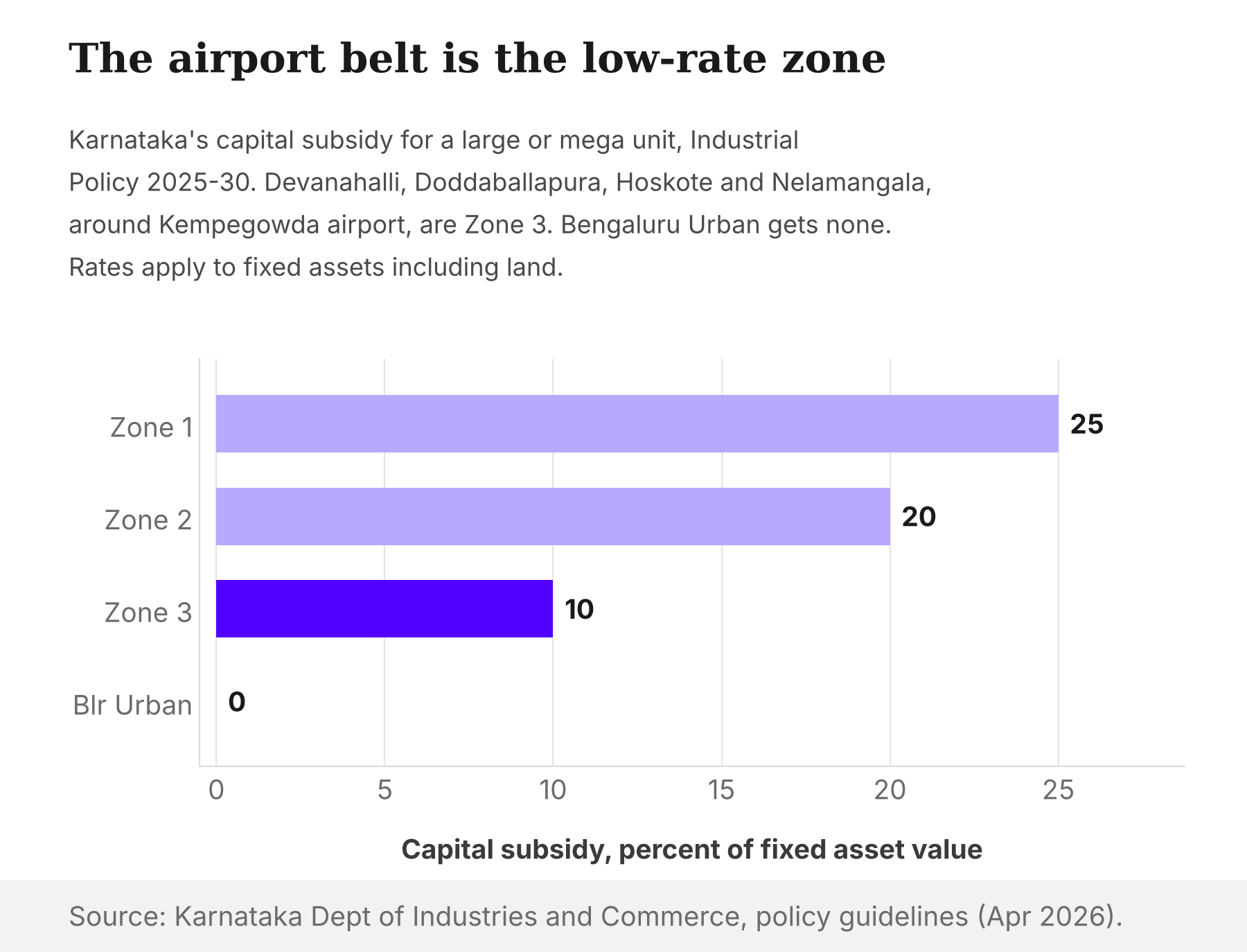
Source: Karnataka Industrial Policy 2025-30 guidelines. Chart: The Signal.
The headline rates favour Andhra, but they are not measured on the same base.
| Term | Andhra Pradesh, large unit | Karnataka, Zone 3 large unit |
|---|---|---|
| Capital subsidy rate | 15% | 10% |
| What the rate applies to | Plant, machinery and equipment only | Land, building, plant and machinery |
| Payout period | 3 years, capped at ₹75 crore | 5 years |
Sources: AP Space Policy 4.0, Annexure-I; Karnataka Industrial Policy 2025-30 guidelines.
Two cautions keep this honest. Pixxel's exact taluk is not public, only "near Kempegowda International Airport", so the airport belt being Zone 3 does not prove Pixxel receives 10%. And what either state actually offered Pixxel has not been disclosed. This piece does not claim Pixxel turned down a bigger cheque.
Karnataka's space-specific money is also modest. The Space Technology Policy 2025-30 approved by its cabinet on 13 November 2025 carries incentives worth ₹225 crore across the whole policy. Set against Andhra's ₹75 crore cap for one large unit, Karnataka's entire space envelope equals three of those single-unit caps. The space policy's published rates also stop short of a plant this size. Per Analytics India Magazine, projects under ₹100 crore get a 20% subsidy on plant and machinery and 25% on five acres of land, while those above ₹100 crore get unspecified "special packages". Pixxel has not disclosed what GigaPixxel will cost, so whether it qualifies for one, or got one, is not public.
What the subsidy cannot buy
Start with six. The Department of Space told the Lok Sabha on 12 August 2026 that IN-SPACe has granted 113 authorisations to 52 private entities, of which 18 are startups. Six of those 18 are in Bengaluru: Pixxel, Digantara, GalaxEye, Bellatrix, Akshath and Cosmoserv. Andhra Pradesh has one, NSpace Tech in Tenali.
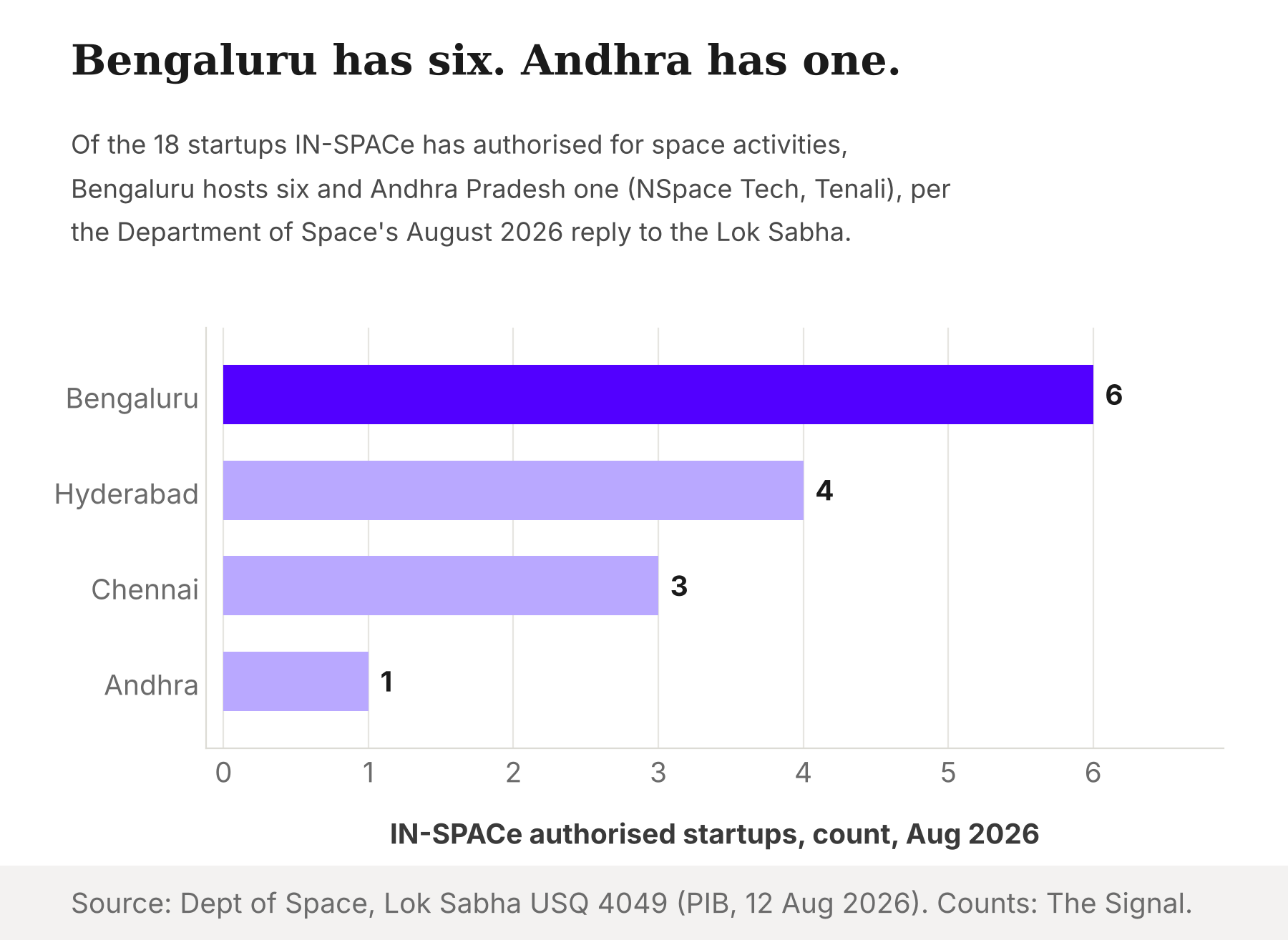
Source: Department of Space Lok Sabha reply, via PIB; city counts are The Signal's own compilation from its annexure. Chart: The Signal.
The same reply says there is, as of August 2026, no proposal for additional central space incubation centres, testing facilities or innovation hubs in Andhra Pradesh. Karnataka's own pitch, in its November 2024 draft space policy summary, claims more than 2,500 MSMEs in the state that are also ISRO vendors and around ten ISRO centres, including the headquarters. That is the state's self-description, not an audited count, but the IN-SPACe list points the same way.
A satellite plant scaling from 50 to 200 units between mid-2027 and mid-2028 needs machinists, test engineers and component vendors who already know space-grade tolerances. Those people sit near the firms in that list. Founders say so out loud: when Guidance Tamil Nadu pitched Hosur to rocket-engine maker Astrobase in that same week of June 2026, co-founder Neeraj Khandelwal (not Pixxel's Kshitij Khandelwal) replied, per DT Next, that its facility would stay near Bengaluru because "North is better for aerospace talent". A capital subsidy refunds part of a building. It does not hire anyone.
Lokesh appears to agree. At the CII Partnership Summit in November 2026 he said, per Business Standard, that "incentives alone don't build an ecosystem", and named speed and centres of excellence for testing and certification as Andhra's edge.
Where land does win
Andhra's pitch is working, for a different kind of project. At the same summit the state signed about ₹1,800 crore of space deals, covering rocket engine making, testing and propulsion R&D. Bengaluru-based Bellatrix Aerospace plans a ₹550 crore satellite and propulsion centre on 120 acres at Lepakshi, with 565 jobs by December 2030. Skyroot Aerospace holds 294.67 acres at AP Space City in Tirupati for a ₹400 crore investment, nearly two and a half times Bellatrix's acreage for less money.
Those are land-hungry projects, measured in acres, and acres are what Andhra can hand over quickly. Pixxel described its own plant in square feet and satellites produced.
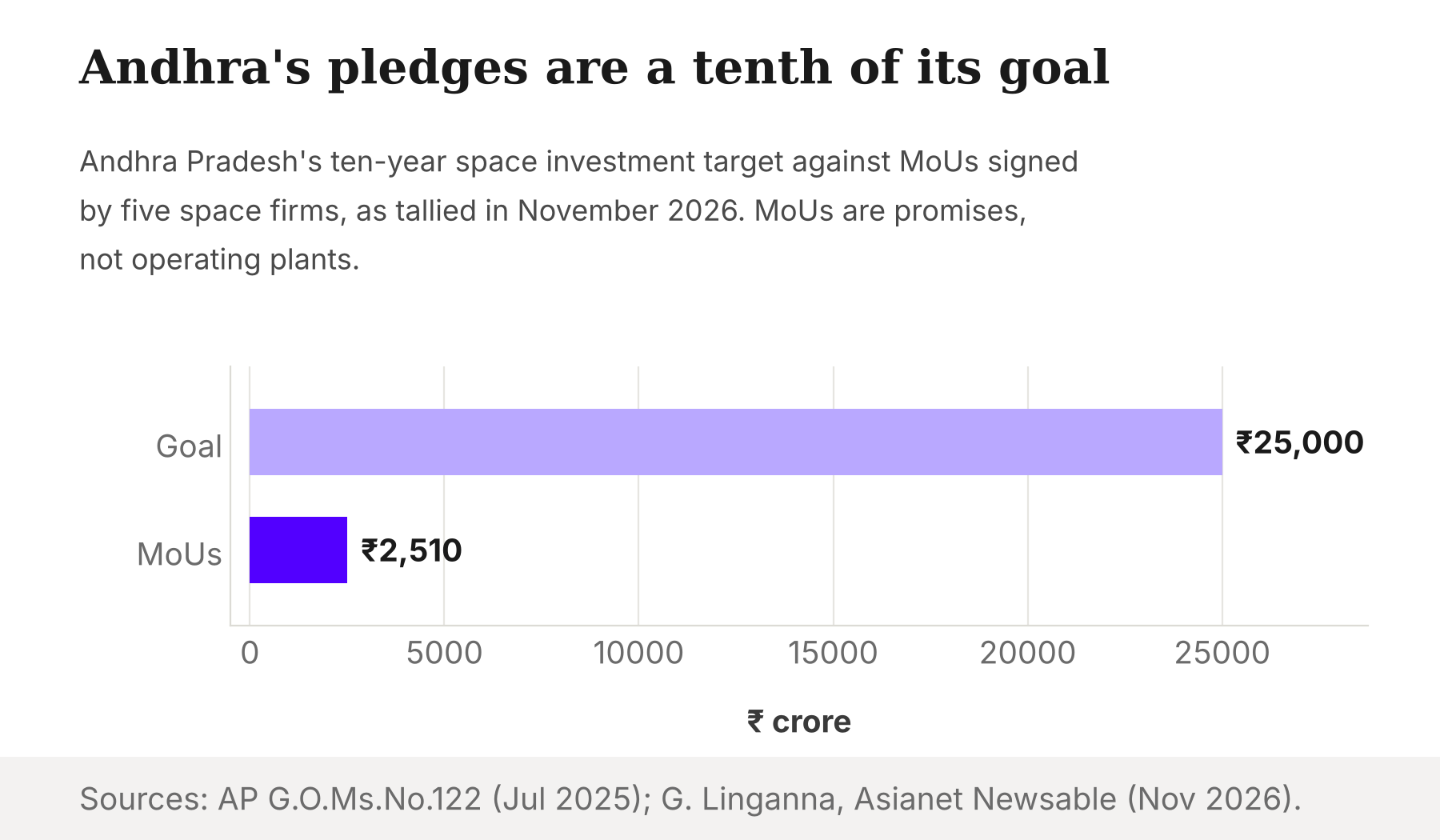
Sources: AP Space Policy 4.0; Girish Linganna, Asianet Newsable opinion. Chart: The Signal.
The honest objection
The strongest case against this reading is that Andhra is not losing at all; it is specialising. Aerospace analyst Girish Linganna argues in an Asianet Newsable opinion piece that Bengaluru is "the brain of space design" while Andhra is becoming "the manufacturing and testing muscle near Sriharikota". Pixxel's own CEO, Awais Ahmed, told Analytics India Magazine the company will "explore opportunities in other states" while staying based in Bengaluru. On that view, Pixxel's plant is one data point and the Bellatrix move is the trend.
That case is real, and Bellatrix proves Bengaluru firms will cross the border for acreage. But Linganna's piece never mentions Pixxel, and its own tally is sobering: five firms' MoUs add up to ₹2,510 crore, about a tenth of the ₹25,000 crore goal. An MoU is a promise, not a plant. The "builds it" half of the slogan describes rocket and propulsion work. For satellites, the one factory with a date on it is going up in Karnataka's lowest-rate zone.
The Signal
States are bidding for space manufacturing as if it were one industry with one price. It is at least two. Rockets and engines need land and test ranges, and Andhra, offering what Lokesh calls speed plus a land rebate, can win those. Satellites need dense clusters of engineers and vendors, and on the IN-SPACe list Bengaluru outnumbers Andhra six to one. A subsidy rate does not close that gap.
Watch two things. First, whether Karnataka converts Pixxel's land application into a fast allotment, since the state said in June 2026 the paperwork had not yet been filed; the complaint was about process, and process is the one thing Bengaluru can fix cheaply. Second, whether Bellatrix and Skyroot break ground on the acreage they hold. Andhra can sell an acre faster than Bengaluru. It cannot yet sell the people who know what to build on it.
Reporting basis: Pixxel's facility plans and its CEO's remark on other states are per Analytics India Magazine, which says the company confirmed them; the Series C is per Deccan Herald, reporting Pixxel's announcement. The June 2026 exchange between Kshitij Khandelwal, Nara Lokesh and M B Patil is from their posts on X, via Asianet Newsable, and the Karnataka government's statement that Pixxel had not applied for land is per Analytics India Magazine. Andhra Pradesh's incentive terms and ₹25,000 crore target are from G.O.Ms.No.122 (Space Policy 4.0), read in the APIIC copy. Karnataka's zone rates and zone map are from the Department of Industries and Commerce's Industrial Policy 2025-30 guidelines; the ₹225 crore space envelope is the cabinet decision as reported by Deccan Herald, since the final policy text was not available; the space policy's published rates are per Analytics India Magazine, writing in November 2025; the vendor and ISRO-centre counts are the state's own claims in its November 2024 draft. Guidance Tamil Nadu's Hosur pitches and Neeraj Khandelwal's reply are their posts on X, via DT Next. IN-SPACe authorisation figures are from the Department of Space's Lok Sabha reply, via PIB, and the city counts are The Signal's own compilation from its annexure. The CII summit deals and Lokesh's remark are per Business Standard; the ₹2,510 crore MoU total and the "designs it, builds it" framing are a single analyst's opinion piece in Asianet Newsable. The three-to-one envelope comparison and the Skyroot-to-Bellatrix acreage multiple are The Signal's calculations from those figures.