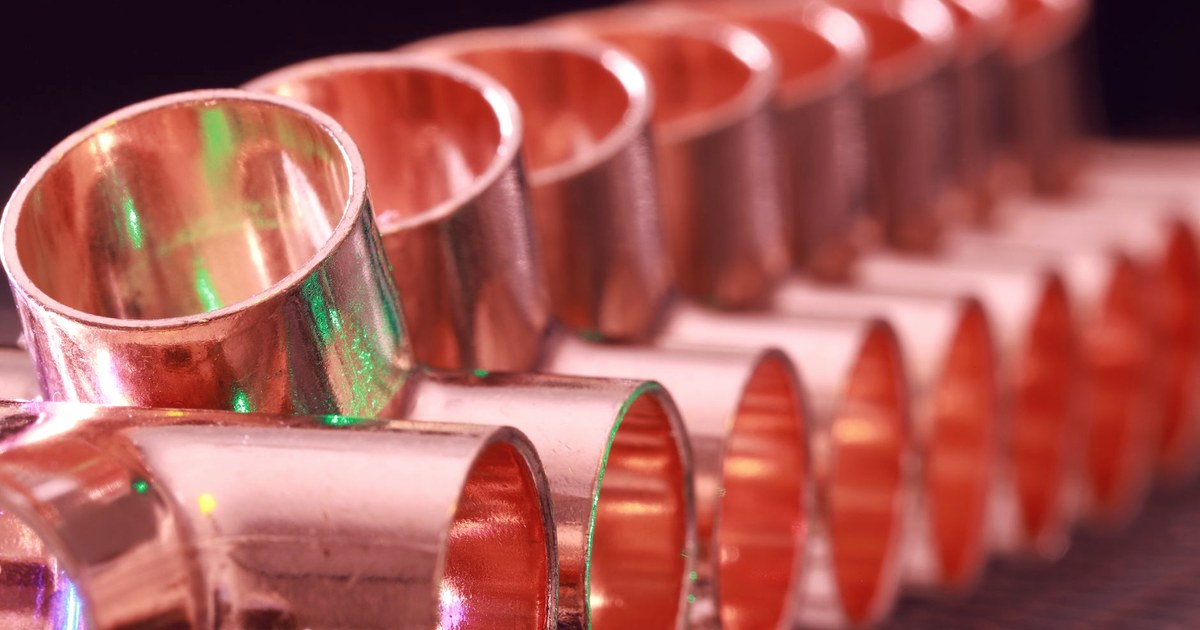
Copper just had its moment. Benchmark three-month futures on the London Metal Exchange gained as much as 0.8% on 7 September 2026 to trade at $14,533 a tonne, beating the previous record set in January, as Bloomberg News reported. The consensus story behind the rally is a global one: tariff-driven flows into the United States have been draining stockpiles held everywhere else, and the market has run short of the cushion it was counting on. CRU Group had projected a 639,000-tonne global surplus for 2026; the research firm now regards the market as at best balanced. Consultancy Project Blue estimates the world lost about 338,000 tonnes of mine production in the first half of 2026 to setbacks in Indonesia, the Democratic Republic of Congo and Chile. Read the headlines and this looks like a story about tariffs and mine outages, playing out in London.
It is worth slowing down on that framing, especially from an Indian vantage point. A global price shock does not land evenly across every importer. India built itself an unusually thin buffer between the world price and its own supply, not through bad luck but through a specific decision taken eight years ago.
India stopped making the copper it now has to buy at record prices.
The number that carries this story is 0.843: the million tonnes of refined copper India produced in FY18, its all-time high, according to the Ministry of Mines' 2025 Copper Vision Document. That peak came in the same fiscal year Vedanta's Sterlite Copper smelter and refinery at Thoothukudi, in Tamil Nadu, with 0.400 million tonnes a year of refined-copper capacity, shut down in May 2018. The closure was not a routine business decision. Police firing on anti-Sterlite protesters in Thoothukudi killed 13 people, and days later Tamil Nadu's government ordered the plant permanently shut, with the state's chief minister announcing the decision himself. The Ministry of Mines states plainly that India became a net importer of refined copper following that closure. A country that had just posted its best year of copper output lost, within weeks, the single plant responsible for a large share of it, and never got back to that level.
What the smelter's closure actually broke
The intuitive story is that shutting a smelter should mainly cut India's imports of copper concentrate, the raw ore a smelter turns into metal. The data bears that out precisely: the Ministry of Mines states that the closure of Sterlite Copper in 2018 cut India's copper concentrate imports by 44% in FY19 compared with FY18. Fewer imports, in this one narrow sense, look like less dependence.
That reading inverts once you follow the metal one step further downstream. The smelter's actual job was converting imported and domestic ore into finished copper that Indian wiring, motors and pipes could use. Remove that step and the country still needs the finished metal, just now bought already refined, from someone else's smelter, at whatever price the world market sets that day. The Ministry of Mines puts India's net imports of copper cathodes, the refined form, at 0.335 million tonnes in FY24, directly attributing the dependence to the Sterlite Tuticorin closure. India swapped a raw-material import it could shop around for at leisure for a finished-metal import priced on the same exchange that just set a record.
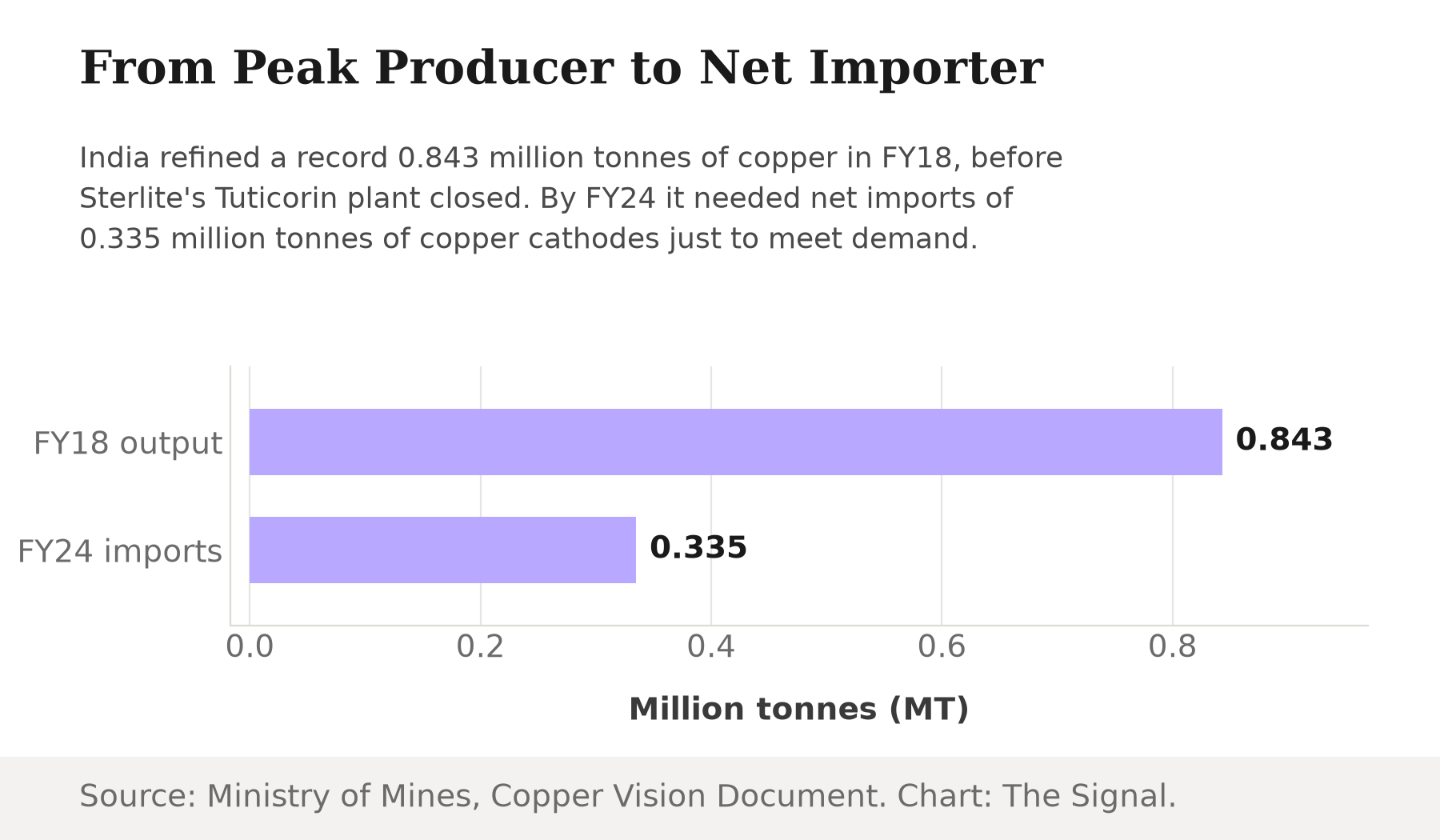
Source: Ministry of Mines' 2025 Copper Vision Document (FY18 output; FY24 net imports). Chart: The Signal.
The one producer left standing
India did not lose its entire copper industry in 2018, but what survives is thin at the top. The Ministry of Mines identifies Hindustan Copper Limited, a government-owned enterprise, as India's only copper miner, with a mining capacity of about 4 million tonnes of ore. Ore is not refined metal, and mining capacity is not smelting capacity, but "only copper miner" still does real work: whatever gap exists between what India can dig up domestically and what it needs sits on one state-owned company's balance sheet, filled from an import market currently paying a record price for the same commodity.
The bill was already climbing before the record
None of this needed September's record price to become expensive. Imports across copper concentrate, anode and refined forms rose from Rs 40,057 crore in FY21 to Rs 88,623 crore in FY23, according to the Ministry of Mines, citing Ministry of Commerce trade data: a rise of 121% in two years, on volumes that were not growing anywhere near that fast. That climb happened years before this week's LME record and had nothing to do with tariffs or Congolese mine outages. It was the compounding cost of routing a growing chunk of India's copper needs through the import bill instead of a domestic smelter, at whatever price the world happened to be charging in a given year.
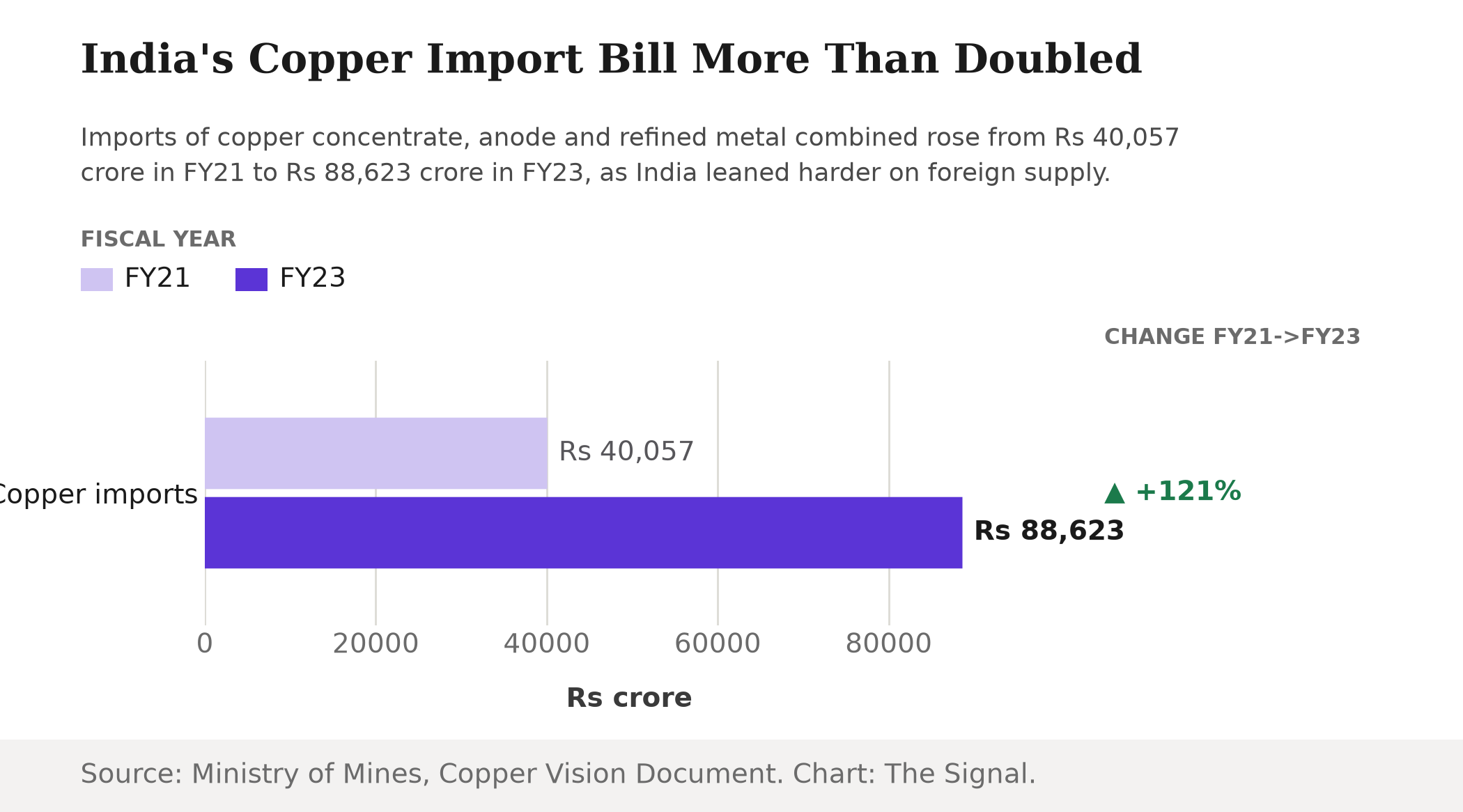
Source: Ministry of Mines' 2025 Copper Vision Document, citing Ministry of Commerce trade data. The 121% rise is The Signal's calculation. Chart: The Signal.
Demand is not going to make this easier
The exposure this creates is not a one-off. The Ministry of Mines projects India's copper demand will rise 2 to 2.2 times to 3 to 3.3 million tonnes by 2030, and 5.9 to 6.5 times to 8.9 to 9.8 million tonnes by 2047, driven by India's 500 GW renewable-energy target and its 30% electric-vehicle penetration goal. Every tonne has to come from somewhere. Unless domestic refining capacity is rebuilt at a pace unseen since 2018, a larger share of a much larger number will keep routing through the same import channel that already doubled in cost within two years, against a market that just proved it can jump to a record in a single session.
India's own projections put copper demand on a steep climb through 2047.
| Horizon | Demand vs current baseline | Projected demand |
|---|---|---|
| By 2030 | 2 to 2.2 times | 3 to 3.3 million tonnes |
| By 2047 | 5.9 to 6.5 times | 8.9 to 9.8 million tonnes |
Source: Ministry of Mines' 2025 Copper Vision Document, citing India's 500 GW renewable-energy and 30% EV-penetration targets.
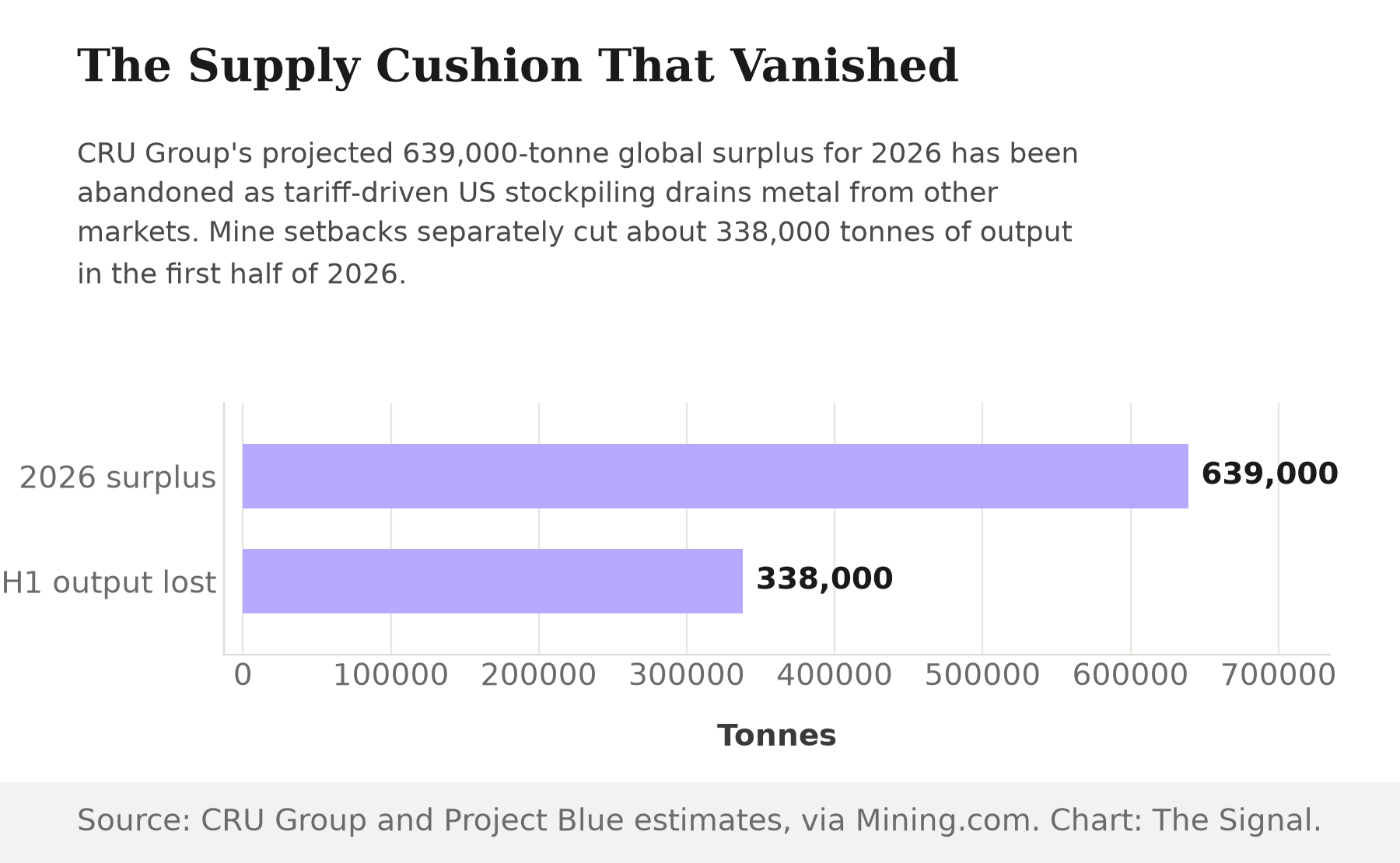
Source: CRU Group and Project Blue, via Mining.com. Chart: The Signal.
The honest objection
The strongest case against blaming the 2018 closure is that India was never going to be copper self-sufficient regardless of what happened to one smelter. Hindustan Copper's roughly 4-million-tonne ore mining capacity was always going to fall well short of feeding demand that the Ministry of Mines itself expects to multiply several times over by 2030 and 2047. On this view, India's copper ore reserves, not the Tuticorin plant, were always the binding constraint, and importing concentrate to feed a smelter was never a permanent fix, only a postponement.
That case has real force, and it explains why concentrate imports would have stayed necessary either way. But it does not explain why the country needed to give up the conversion step it already owned. A smelter running on imported concentrate still captures the refining margin at home, still meets domestic refined-copper demand without a second import transaction, and still leaves the country buying a raw material priced on a different, generally less volatile market than the finished metal now setting records on the LME. Losing Sterlite Tuticorin did not just remove one link in a chain that would eventually have needed foreign ore anyway. It removed the one link that stood between Indian buyers and the world refined-copper price, on exactly the days that price does something like it just did.
The Signal
A pollution-driven plant closure in one Tamil Nadu district in May 2018 and a tariff-driven trading session on the London Metal Exchange in September 2026 look like they belong to different stories. The Ministry of Mines' own numbers say otherwise: the closure is the reason India meets its refined-copper needs on the same market that just hit an all-time high, rather than on a domestic smelter's own cost base. What to watch from here is not the price. It is whether India adds refining capacity anywhere near the pace its own 2030 and 2047 demand projections assume, or whether the gap between what India needs and what Hindustan Copper's mines and whatever smelting remains can supply simply widens, one record rally at a time. An environmental decision does not stay an environmental decision once the world price moves. It becomes a standing bill.
Reporting basis: the 7 September 2026 LME copper record is as reported by Bloomberg News, via Mining.com; CRU Group's abandoned 2026 surplus forecast and Project Blue's first-half 2026 mine-production loss estimate are each that research firm's own figure, also via Mining.com, which carries credited wire and consultancy reporting rather than original figures of its own. The details of the 2018 closure itself, the police firing that killed 13 protesters and the state government's shutdown order, are per TIME's contemporaneous reporting, a separate origin from the Ministry. Every other India-side figure in this piece, the Sterlite Tuticorin closure's 0.400 MTPA capacity, India's FY18 refined-copper production peak, the FY19 concentrate-import drop, the FY24 net cathode-import figure, Hindustan Copper's mining capacity, the FY21-to-FY23 import-value rise, and the 2030 and 2047 demand projections, comes from a single origin: the Ministry of Mines' 2025 Copper Vision Document, which in turn cites Ministry of Commerce trade data for the import figures. The 121% rise in India's copper import bill between FY21 and FY23 is The Signal's calculation from those two Ministry of Mines figures.