India's food regulator went after one of the best-known names in bottled water on Sunday. The Food Safety and Standards Authority of India (FSSAI) said on November 22, 2026 that it had sanctioned prosecution against Bisleri International after a regulatory sample of its packaged drinking water was found non-compliant with prescribed bromate limits and declared unsafe under the Food Safety and Standards Act, 2006. The easy read is a brand scandal: a household name, a chemical with a cancer label, a court case.
It is worth slowing down on that. The more useful story is not what one bottle contained. It is how the system that is supposed to catch this is built, and what it does once it has.
Two labs, two different contaminants
The detail that most coverage skipped is in the appeal. According to the same FSSAI statement, when Bisleri appealed, the sample went to the Referral Food Laboratory, which also declared it unsafe, but due to polynuclear aromatic hydrocarbons (PAHs), not bromate.
So the first lab and the appeal lab agreed on the verdict and disagreed on the reason. Both findings are legally sufficient on their own: unsafe is unsafe. But they point to different failure routes. Bromate is something water treatment itself can create. The reported statement gives no measured level, plant or batch for either finding.
Bisleri disputes the whole thing. The company says its water is safe, that it has received no notice by email or in hard copy, and that it runs "over 90 tests across our 10-step manufacturing process". A prosecution sanction is permission to take a case to court. It is not a conviction.
How a safety step makes bromate
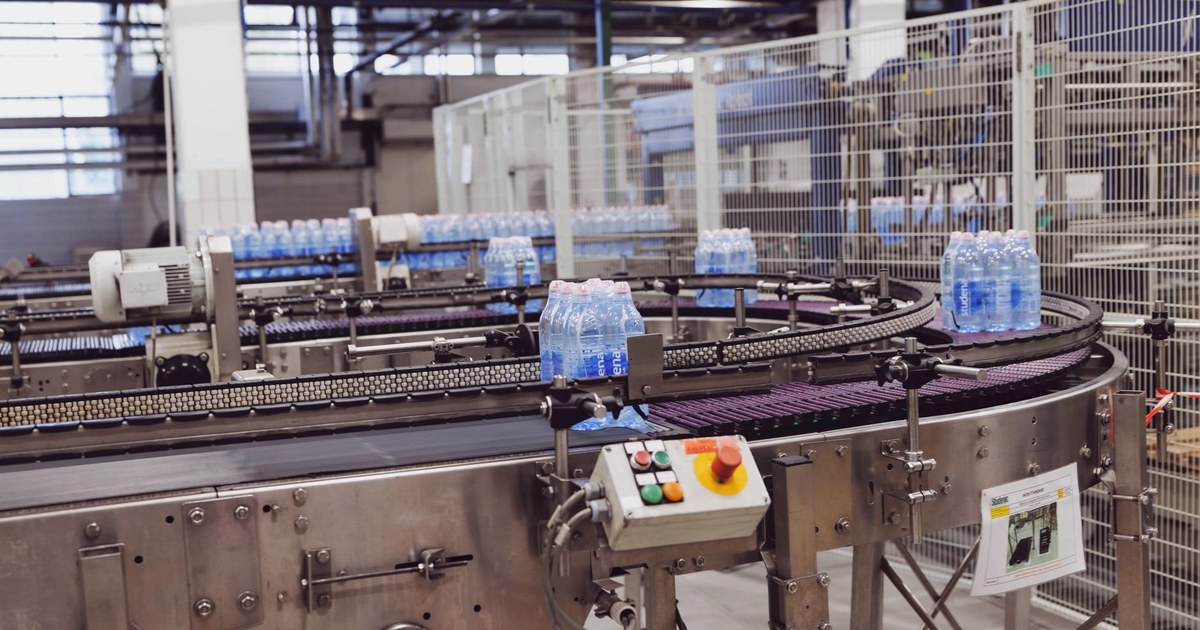
Bromate is the more instructive of the two findings, because of where it comes from. The World Health Organization's background document on the chemical states that bromate "may be formed in water during ozonation when the bromide ion is present". Ozone is a disinfectant. Bottlers use it so that the water is free of microbes. If the source water carries bromide, the same step converts some of it into bromate.
That is a virtue turning into a vulnerability. The WHO sets a provisional guideline value of 10 micrograms per litre, and the same document notes that IARC has classed potassium bromate as Group 2B, possibly carcinogenic to humans, on animal evidence. It also cites a Health Canada survey in which bromate in ozonated bottled water averaged 18 micrograms per litre, with a range of 4.3 to 37.3. That Canadian average, from 1999, sat at 1.8 times the WHO value.
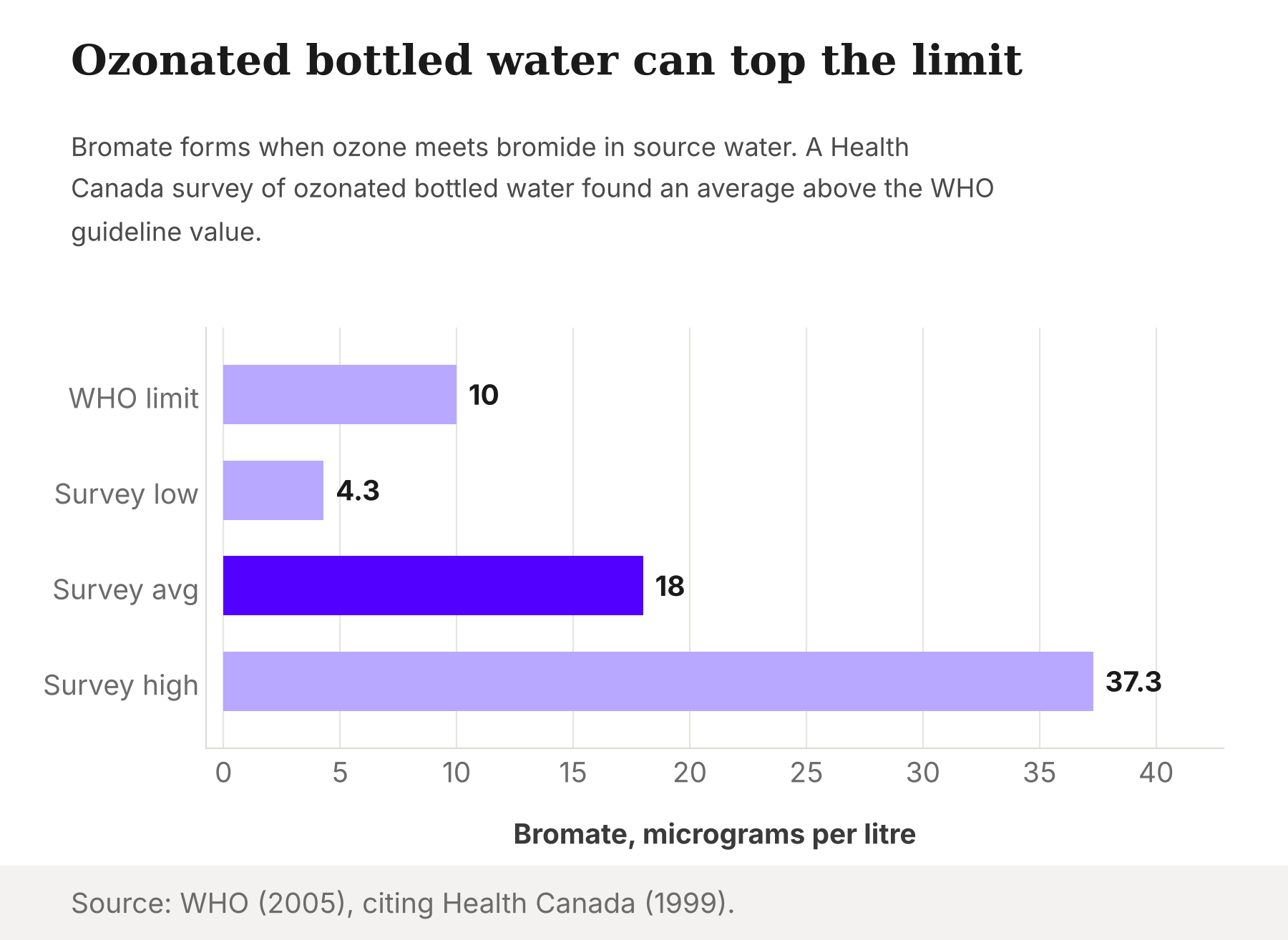
FSSAI has not said what produced the bromate in Bisleri's sample, and nothing here says ozonation did. The point is general. In bottled water, bromate can be a process risk as well as a contamination risk, and the process runs every day.
The twice-a-year column
That makes the testing schedule the real question. The Bureau of Indian Standards product manual for packaged drinking water, IS 14543, puts PAH and bromate tests in its "report for six monthly test", alongside mercury, lead, arsenic and uranium. Both contaminants named in the Bisleri case sit in the column a licensed bottler checks twice a year, not on every batch.
A six-monthly test is reasonable for a contaminant that comes from geology and changes slowly. It fits less well for one that a treatment step can generate, where ozone dose and source-water bromide shift from day to day. A plant can pass in one test window and drift out of range in between.
The certification layer itself has also changed. FSSAI's list of high-risk food categories now includes packaged drinking water and mineral water, citing orders dated May 2, 2022 and November 29, 2024. The November 2024 move followed amendments that removed mandatory BIS certification requirements for certain food products, with high-risk status bringing mandatory third-party audits and annual inspections in its place. India swapped a mandatory product mark for a heavier inspection regime. The Bisleri case is that regime producing its most visible result.
What usually happens next
Here the national numbers matter more than the brand. The health ministry told the Lok Sabha that 2,23,808 food samples were analysed in 2025-26 and 40,023 were found non-conforming; 31,878 civil cases were decided with penalties, and 1,918 criminal convictions were recorded, with the figures marked provisional. That is roughly one failed sample in six, and convictions equal to about 4.8 percent of failures.
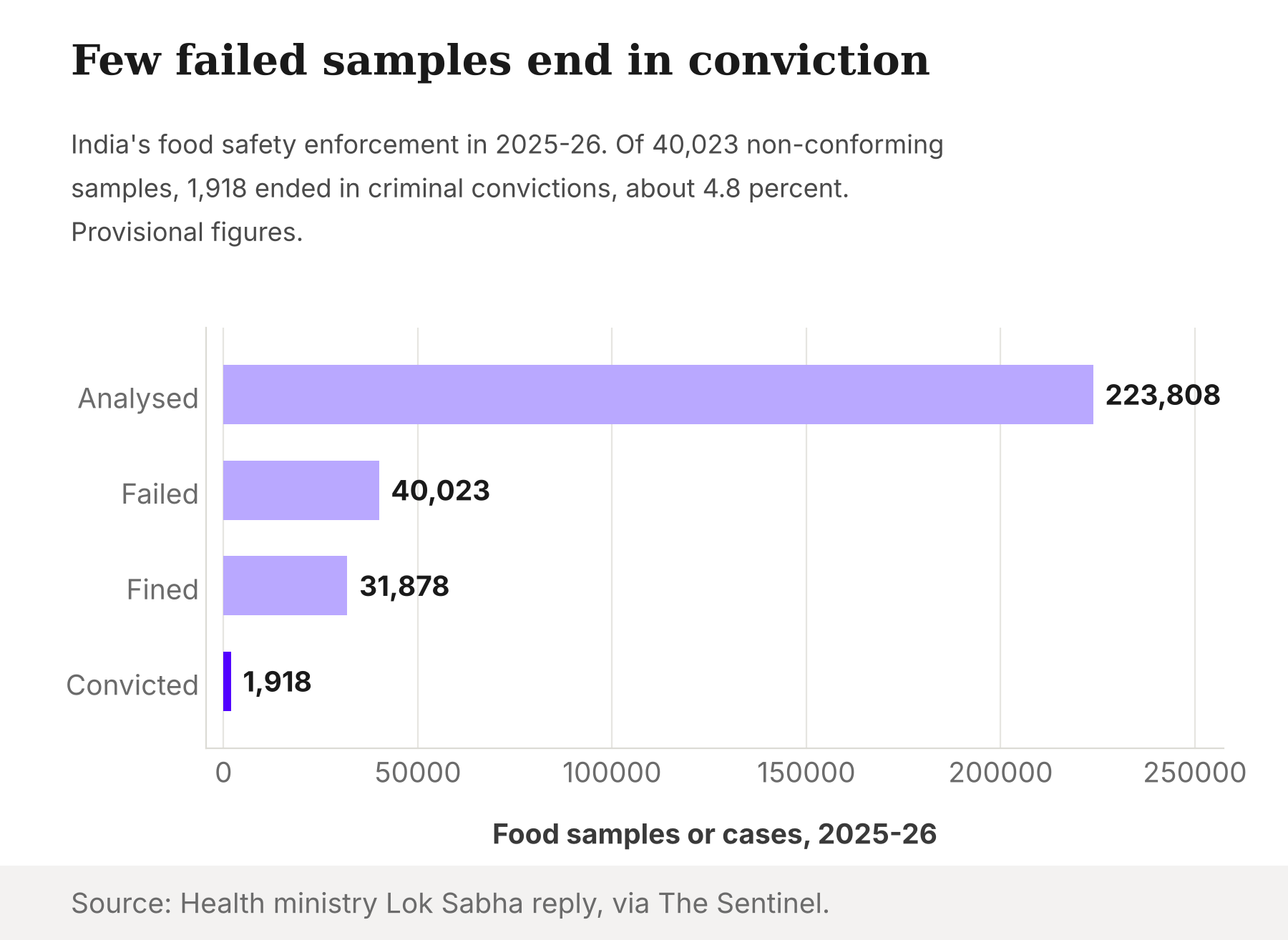
Civil penalties, not convictions, are the system's default outcome.
| Stage, 2025-26 | Count |
|---|---|
| Food samples analysed | 2,23,808 |
| Found non-conforming | 40,023 |
| Civil cases decided with penalties | 31,878 |
| Criminal convictions | 1,918 |
Source: Health ministry reply in the Lok Sabha, via The Sentinel. Provisional figures.
Criminal conviction is the rare tail. Whatever a court eventually decides about Bisleri, the deterrent in this case has already been delivered: the regulator named the market leader in public.
And it is not stopping at one name. Business Standard, citing unnamed sources, reports that FSSAI has collected samples of all major packaged drinking water brands, including Bisleri, as part of an ongoing enforcement drive. The water segment has drawn action before this year. In May 2026, FSSAI's West Region seized alkaline water stocks valued at about Rs 31.61 lakh after a lab confirmed fulvic acid, a substance not permitted under its regulations.
The honest objection
The strongest case against reading much into this is that it is one sample. A single failed bottle from a single premises says nothing about every plant a national brand runs. The two labs did not even agree on the contaminant, which a defence lawyer will note. And Bisleri's 90-test regime may well be tighter than anything the manual requires.
That case is real, and it is why this piece draws no conclusion about Bisleri's water in general. But it argues against a verdict on the brand, not against the question the case raises. If a bottler of Bisleri's scale can produce a sample that two labs call unsafe for two different reasons, the weak point is how often the risky parameters get checked.
The Signal
The Bisleri case will be read as a test of one company. It is a better test of the model India chose in 2024: drop the mandatory BIS mark, label bottled water high-risk, and rely on inspections, audits and regulatory sampling instead. That model has now caught one of the best-known brands in the market. Its weaknesses are the twice-a-year test column for contaminants a treatment step can create, and an enforcement pipeline where convictions run at 4.8 percent of failures. Watch the results of the sampling drive across the other major brands. If more fail on bromate, the problem is the process rather than one plant, and the fix belongs in the testing schedule before it reaches a courtroom.
Reporting basis: the prosecution sanction, the bromate finding and the referral laboratory's PAH finding are from FSSAI's public statement of November 22, 2026, as reported by Business Standard; Bisleri's response is per the company's statement reported by Business Standard, and the wider sampling drive rests on unnamed sources cited by Business Standard alone. The bromate formation mechanism, the WHO provisional guideline value and the IARC classification are from the World Health Organization's 2005 background document, which is also the source, citing Health Canada (1999), for the ozonated bottled water survey. The high-risk classification is from FSSAI's FoSCoS list, and the link to the removal of mandatory BIS certification is per Deccan Herald's reporting of the November 2024 order. The six-monthly testing schedule is from the Bureau of Indian Standards' IS 14543 product manual. National enforcement totals for 2025-26 are from the health ministry's Lok Sabha reply, as reported by The Sentinel, and the alkaline water seizure is from an FSSAI press release. The one-in-six failure share, the 4.8 percent conviction ratio and the 1.8 multiple are The Signal's calculations from those figures.