Three days before World Diabetes Day, the diabetes and cancer story is doing the rounds again. A narrative review in Diabetes Therapy, published on 12 October 2026 by a team that includes R.M. Anjana and V. Mohan, says that "diabetes is associated with an increased incidence and mortality of several site-specific cancers." The figure travelling with it comes from a study the review cites. According to The South First's report on the review, a nationwide analysis of nearly five million people found higher incidence of 21 of 24 common cancers among people with diabetes. The extra risk ran from 11% for non-Hodgkin lymphoma to more than 200% for liver cancer.
The usual takeaway is about lifestyle: control your sugar, lower your cancer risk. That is true as far as it goes. The more useful question for India is about the machinery already in place.
India already screens these people
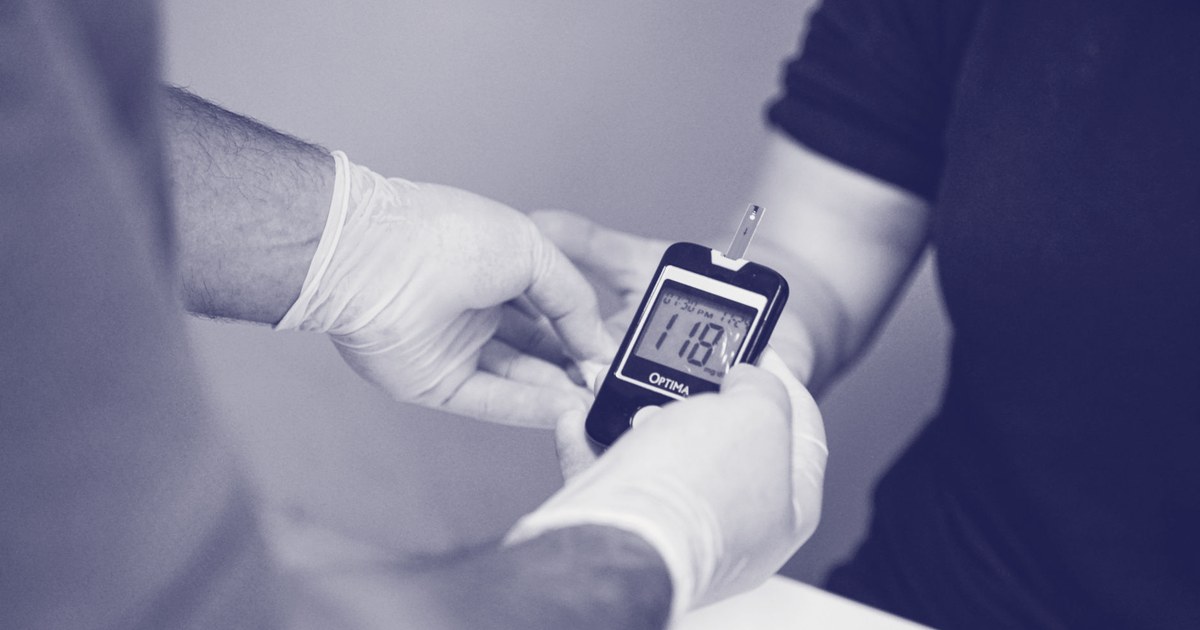
India runs a population screening drive on an enormous scale, and diabetes sits at its centre. The Ministry of Health said on 2 November 2026 that Ayushman Arogya Mandirs have conducted about 44 crore diabetes screenings since 2018, and as many for hypertension. The same platform screens for cancer: 37.7 crore oral cancer screenings, 17.7 crore breast cancer screenings and 9.8 crore cervical cancer screenings over the same period.
So the adults being pricked for blood sugar are also being checked for cancer. The question is which cancers.
Oral, breast and cervical cancer were chosen for good reasons. Each is a big killer in India, and each can be caught early with a cheap look, a hand exam or a simple test. But they were not chosen with diabetes in mind. Put that list next to the cancers with the firmest ties to diabetes, and the overlap almost vanishes.
One match out of six
The 21-of-24 figure is a headline, not a ranking of evidence. The better guide is the umbrella reviews, which grade how solid each link is. A 2021 umbrella review in Cancer Epidemiology, Biomarkers & Prevention found robust observational evidence linking type 2 diabetes to six cancers: colorectal, hepatocellular (liver), gallbladder, breast, endometrial and pancreatic.
India's programme screens for one of those six: breast. Colorectal, liver, gallbladder, endometrial and pancreatic cancer are outside it.
| Cancer with robust diabetes link | Screened under India's NCD programme? | Estimated new cases in India, 2024 | Estimated deaths in India, 2024 |
|---|---|---|---|
| Breast | Yes | 237,231 | 96,100 |
| Colorectal | No | 83,577 | 38,499 |
| Liver | No | 42,037 | 39,408 |
| Gallbladder | No | 30,542 | 23,093 |
| Uterine body (endometrial) | No | 28,308 | 6,362 |
| Pancreas | No | 20,477 | 19,953 |
Case and death estimates from the IARC GLOBOCAN India fact sheet. Diabetes links per the 2021 umbrella review in Cancer Epidemiology, Biomarkers & Prevention.
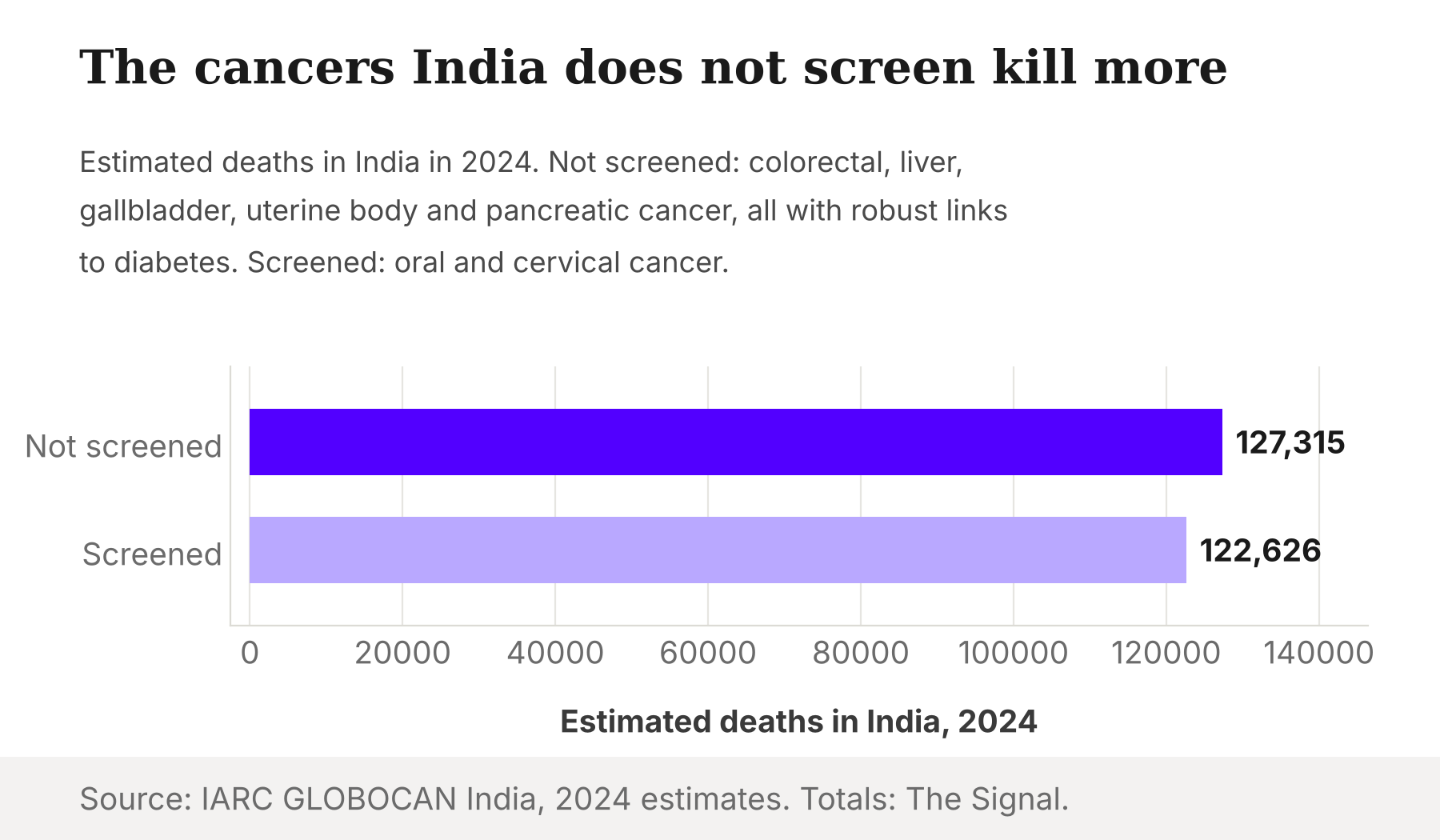
Add up the five unscreened cancers in IARC's GLOBOCAN estimates for India and you get about 204,941 new cases and 127,315 deaths in 2024. That is roughly as many new cases as oral cancer, which GLOBOCAN puts at 205,878 in 2024.
The death count is the sharper figure. GLOBOCAN estimates 86,307 deaths from oral cancer and 36,319 from cervical cancer in 2024, or 122,626 together. The five diabetes-linked cancers the programme does not look for killed more people than the two it was partly built around.
Why the gap matters more for these cancers
Some cancers give you time. Others do not. In the GLOBOCAN India estimates, liver cancer recorded 42,037 new cases and 39,408 deaths in 2024. Pancreatic cancer recorded 20,477 cases and 19,953 deaths. For both cancers, the 2024 death estimate comes close to the 2024 case estimate. These are cross-sectional estimates, not survival rates. But they suggest patients are usually found when there is little left to do.
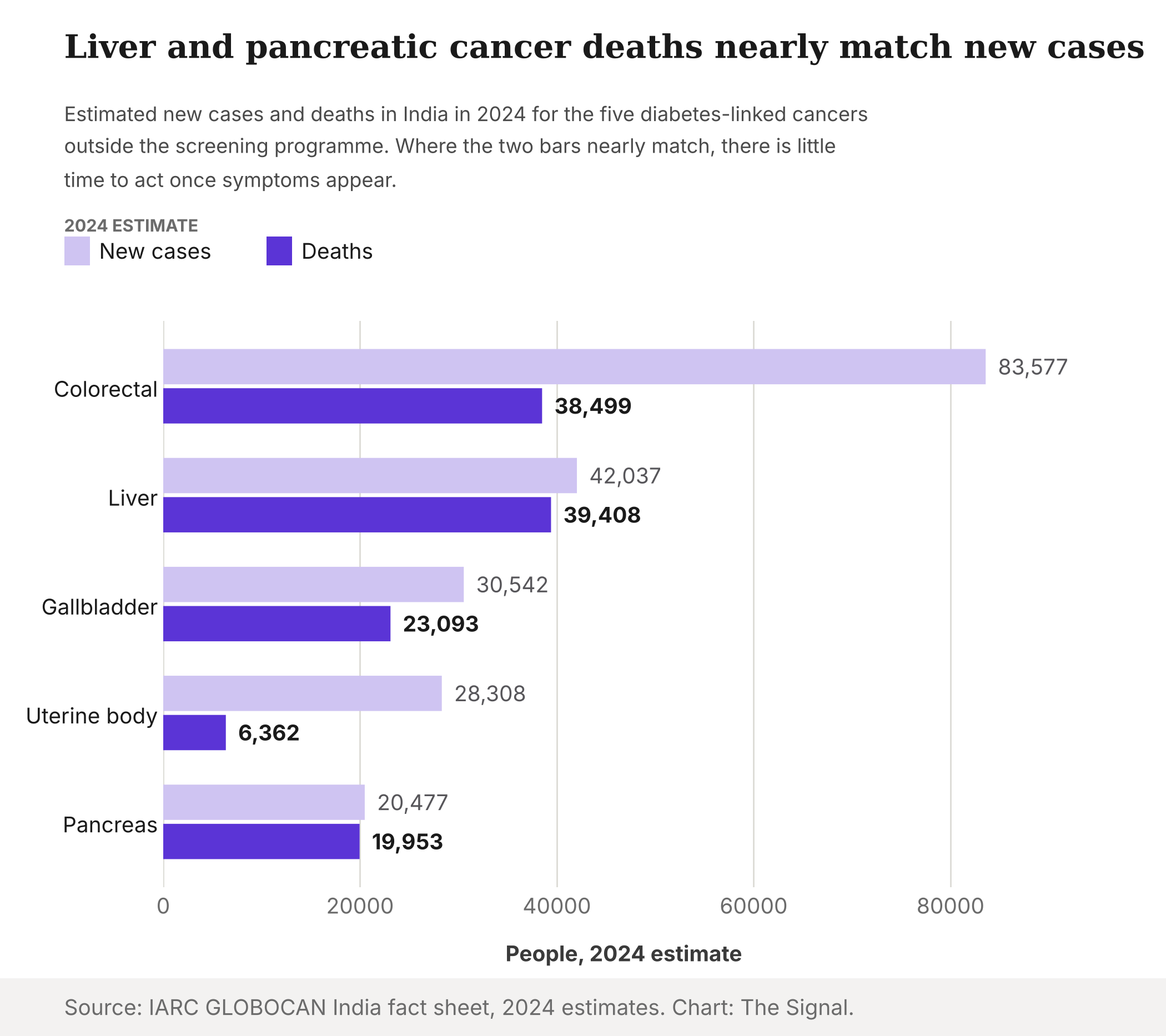
Gallbladder cancer deserves its own mention. In India, GLOBOCAN counts 30,542 new cases and 23,093 deaths in 2024. It is one of the six robust diabetes links, and it gets far less public attention than the cancers India already screens for.
The pool is enormous
None of this would matter much if diabetes were rare. It is not. The ICMR-INDIAB national survey, which covered 113,043 people between 2008 and 2020, found diabetes in 11.4% of adults aged 20 and over and prediabetes in another 15.3%. As The South First reports, citing that study, that works out to an estimated 101 million adults with diabetes and 136 million with prediabetes.
The link also runs both ways. The same South First report notes that a pooled analysis of 13 cohort studies found cancer survivors had a 39% higher risk of developing diabetes than people without cancer. A programme that treats diabetes and cancer as separate queues misses traffic in both directions.
The honest objection
The strongest case against this argument is that you cannot screen for these cancers the way you screen for cervical cancer. Pancreatic cancer has no proven population screening test. Endometrial cancer is usually caught through symptoms, not mass testing. Picking oral, breast and cervical cancer was not an oversight. It reflects where a cheap test exists and where catching it early changes the outcome. Adding five cancers to a programme that already runs crores of screenings could dilute what works.
The evidence also has limits. A 2015 BMJ umbrella review warned that "only a minority of these associations have robust supporting evidence without hints of bias." Diabetes and cancer share causes, among them obesity, age, diet and inactivity. Some of the 21-of-24 pattern is likely confounding rather than diabetes itself.
Both points are fair, and neither breaks the argument. The issue is not mass screening of every adult for pancreatic cancer. It is that India has already identified tens of millions of people at higher risk and has them on a register. The 2021 umbrella review also found Mendelian randomization evidence for potential causal links between genetically predicted type 2 diabetes or fasting insulin and endometrial, pancreatic, kidney, breast, lung and cervical cancers. That kind of evidence is harder to explain away as confounding. A risk-targeted approach is different from blanket screening. It could mean colon checks for older diabetics, liver monitoring for those with fatty liver disease, and treating unusual bleeding in diabetic women as urgent. That asks less of the system than adding new cancers for everyone, though each of those choices is for clinicians and programme designers to test. None of it is settled guidance.
The Signal
India built its NCD platform to find diabetes and a short list of cancers, and on its own terms it has delivered: about 44 crore diabetes screenings since 2018 is a real public health asset. But the register it produced is also a map of who carries higher risk for colorectal, liver, gallbladder, endometrial and pancreatic cancer, and the programme does not read it that way. Watch whether the next revision of NP-NCD guidance adds risk-based follow-up for diabetics, and whether ICMR's cancer registries start reporting diabetes status alongside cancer site. India has already done the hard part of finding the people at risk. It is still checking them only for the cancers it was already looking for.
Reporting basis: this piece draws on seven independent origins. The review's framing is from the Diabetes Therapy paper by Mishra, Anjana, Mohan and colleagues, as indexed on PubMed. The 21-of-24 cancer finding, the 11% to over 200% risk range, the 39% survivor figure and the 101 million and 136 million estimates are per The South First's reporting on that review; The Signal did not verify the underlying five-million-person study directly, and the population estimates are as The South First attributes them to ICMR-INDIAB. Diabetes and prediabetes prevalence are from the ICMR-INDIAB study in The Lancet Diabetes & Endocrinology. The six robust diabetes-cancer links and the Mendelian randomization findings are from the 2021 umbrella review in Cancer Epidemiology, Biomarkers & Prevention, and the caution on bias is from the 2015 umbrella review in The BMJ. Screening counts are from the Ministry of Health and Family Welfare via PIB. Cancer case and death estimates for 2024 are from IARC's GLOBOCAN India fact sheet. The combined case and death totals for the five unscreened cancers, the oral-plus-cervical death total and the screened-versus-unscreened comparison are The Signal's calculations from those figures.