The standard public-health advice on salt is to eat less of it. The World Health Organization says global mean adult intake was 4278 mg a day of sodium, about 11 g of salt, in 2021, more than double its recommendation of under 5 g a day. Every campaign built on that gap asks the same thing of the eater: taste less, cook differently, read labels.
A study published on 4 November 2026 in Nature Health points at a different lever. It models what happens if nobody changes how much salt they use, and the salt itself changes.
The number that carries the argument
The authors simulated replacing regular salt with potassium-enriched salt across 193 countries. Replacing all salt worldwide could prevent 2.96 million deaths and 10.17 million new cases of cardiovascular and chronic kidney disease each year, the study estimates. For India, a release from the research team puts the figure at about 399,884 deaths prevented a year.
India is not a rounding error in that total. The study reports that switching discretionary salt in China, India, Indonesia and Russia alone would achieve over 60% of the total global benefits. Four countries, most of the prize.
This is a computational simulation of hypothetical scenarios, not a trial. The India figure comes from the team's release, and we have not been able to check it against the paper's country table. Treat it as an estimate, not a forecast.
It is also not a new idea for India
An earlier model already pointed the same way. A 2022 study in Hypertension estimated that nationwide salt substitution in India would avert about 214,000 deaths a year in a conservative scenario, and the paper puts the benefit at around 8% to 14% of annual cardiovascular deaths across its two scenarios.
The new India figure of about 399,884 is nearly double the 214,000 conservative estimate from 2022. The two studies use different models and assumptions, so the gap says the estimate is sensitive to method, not that the effect doubled.
Why the product is the lever
The reason this matters for policy sits in a second finding. The study estimates that replacing only discretionary salt, the salt added in home cooking and seasoning, would prevent 1.85 million deaths a year worldwide, more than the 1.56 million from replacing salt in processed and restaurant food.
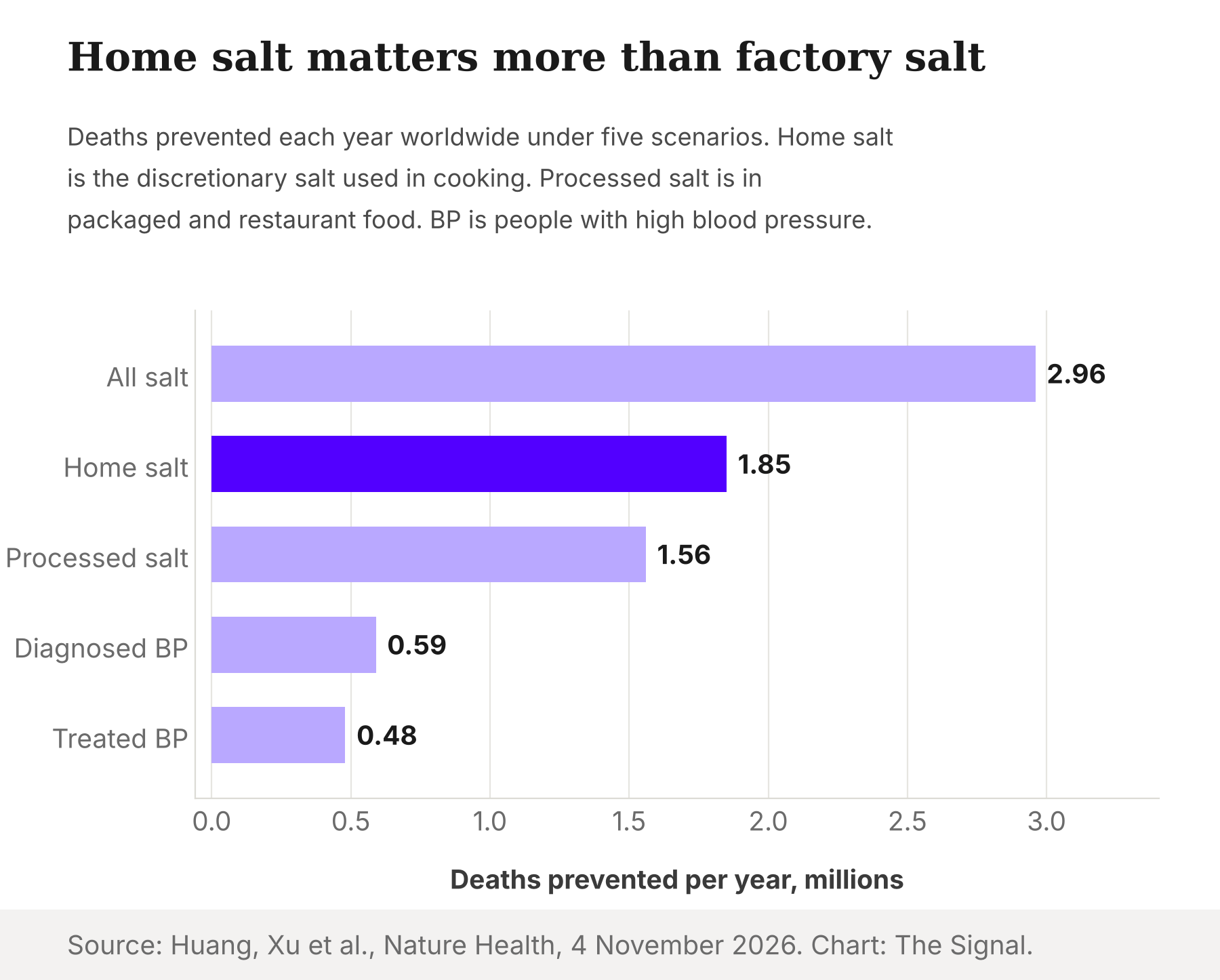
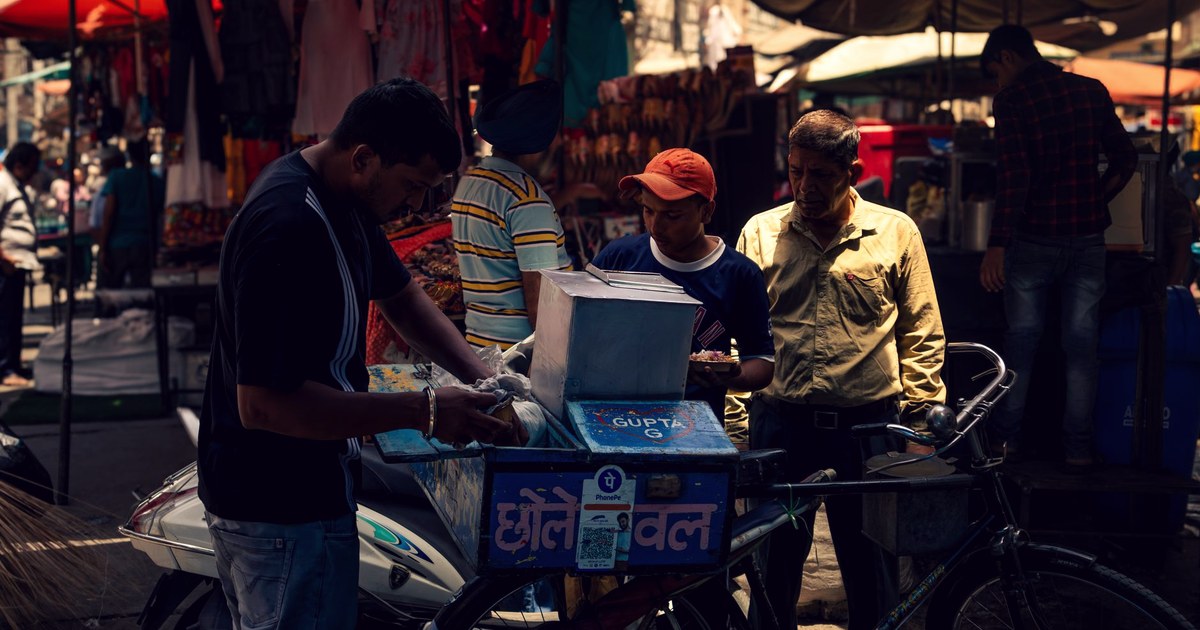
The global weighting favours the kitchen over the factory, according to the Nature Health model. If India follows that pattern, the lever is the packet sold at the grocer.
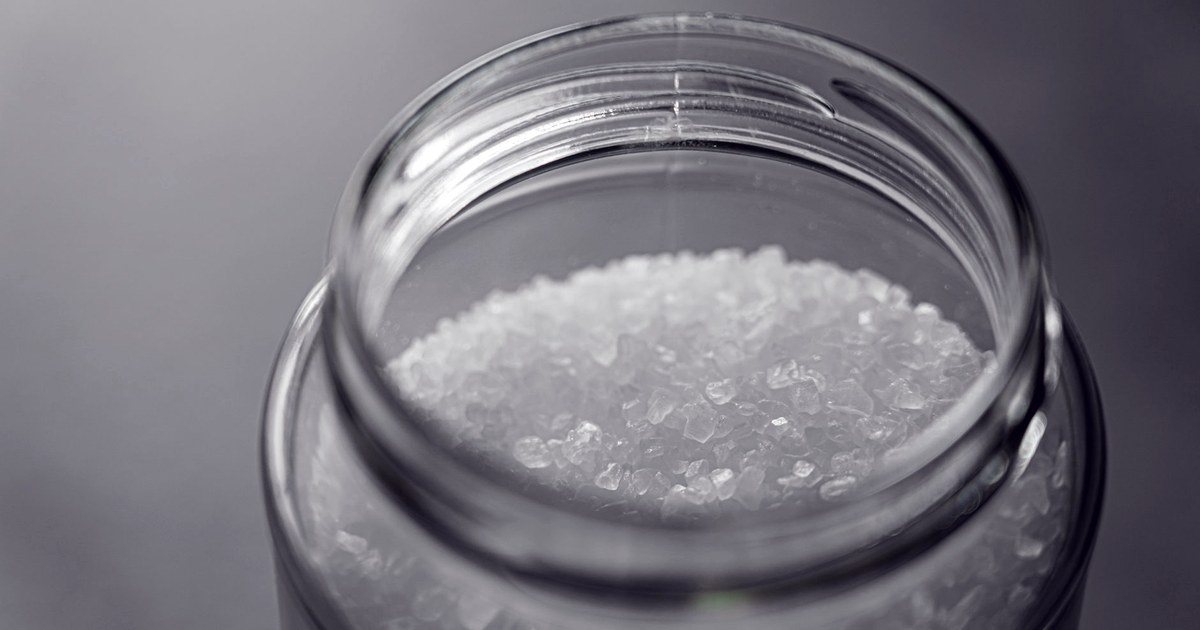
Changing a product is a different kind of intervention from changing a habit. A reduction campaign depends on millions of households accepting a blander meal, while a substitute only needs suppliers to change what is on the shelf. The WHO already suggests replacing regular table salt with lower-sodium substitutes that contain potassium.
The honest objection
The strongest case against is safety. Potassium can build up dangerously in people with failing kidneys, a condition called hyperkalaemia. The Nature Health model does not wave this away. In people with advanced chronic kidney disease, replacing all salt might cause 0.10 million deaths from hyperkalaemia but would prevent 0.75 million deaths from blood pressure lowering.
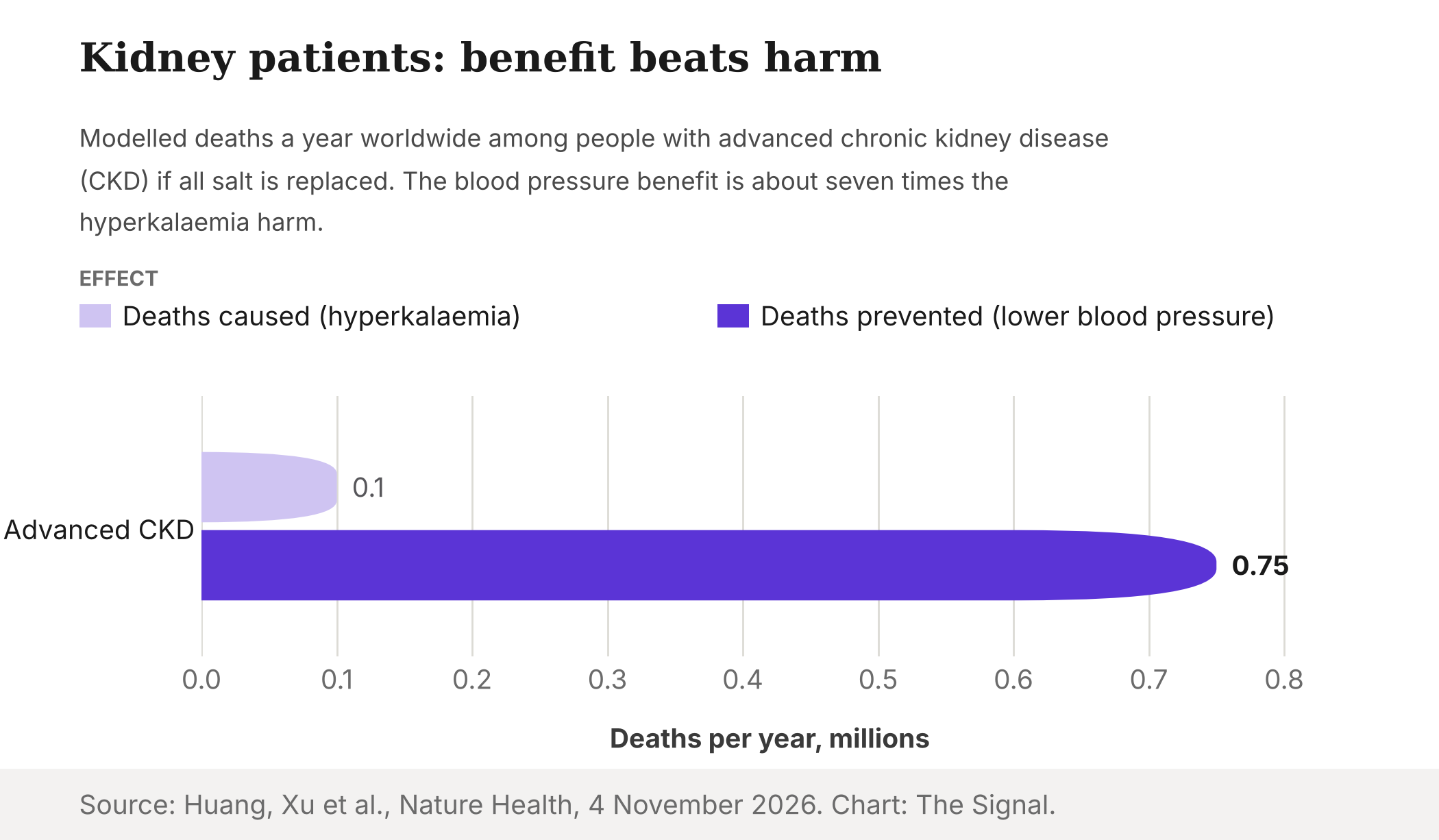
That is about seven times more deaths prevented than caused, even in the group most at risk. The India-specific 2022 study found the same shape. It estimated about 22,000 hyperkalemia deaths in its conservative scenario, against 214,000 deaths averted overall.
The objection is still not empty. A model can only count the harms it includes. The release for the study names patient education, product labelling and clinical oversight as the tools for managing the risk.
What stands in the way
The barriers are practical rather than scientific. The authors say the key challenges are raising awareness, increasing retail availability and reducing the price to that of regular salt. They add that full implementation will probably take decades, and that the switch to iodized salt took almost a century.
This run could not source India's current price gap between potassium-enriched and ordinary salt, or how much of it is sold today. Those are the two numbers that decide whether the estimated 399,884 deaths a year is reachable this decade.
The Signal
Salt policy has long assumed the eater is the problem. This study argues the product is. If the model is even roughly right, the lever India has on hypertension deaths is the content of the packet it already buys, and the work is for suppliers, regulators and retailers, not for every household's palate.
The test to watch is price. Until potassium-enriched salt costs what regular salt does, the model describes a country that does not yet exist.
Reporting basis: the global figures, the salt-type split, the kidney disease findings and the implementation challenges come from the Nature Health paper itself. The India figure comes from a release by the research team distributed through EurekAlert and was not checked against the paper's country table. The earlier India estimates come from the journal Hypertension, and the intake benchmark and substitute advice from the World Health Organization. The comparison of the two India figures and the kidney disease ratio are The Signal's calculations from those sources.