Bangladesh's health directorate has now counted 1,189 measles deaths in 2026, according to its bulletin of 17 October as reported by bdnews24: 1,085 suspected and 104 confirmed. For India, the reflex answer is reassurance. WHO and UNICEF's joint estimates, released on 21 July 2026, say 95 percent of Indian children are fully protected against DTP3 and measles (second dose), and India has dropped out of the world's top ten countries for unvaccinated children against measles.
That is a fair reading of one dataset. It is worth slowing down on, because India has a second dataset that does not look the same.
The outbreak next door traces to a supply gap
By 23 April 2026 the outbreak had reached 58 of Bangladesh's 64 districts, and WHO linked it to a nationwide stockout of the measles-rubella vaccine between 2024 and 2025. The cause WHO names is a supply gap, not a refusal to vaccinate.
By 28 June, Bangladesh had reported 99,207 suspected and 11,710 laboratory-confirmed cases since 15 March, according to the WHO South-East Asia regional bulletin, which cites Bangladesh's health ministry.
Two Indian numbers, 23 points apart
Now put India's two measures side by side.
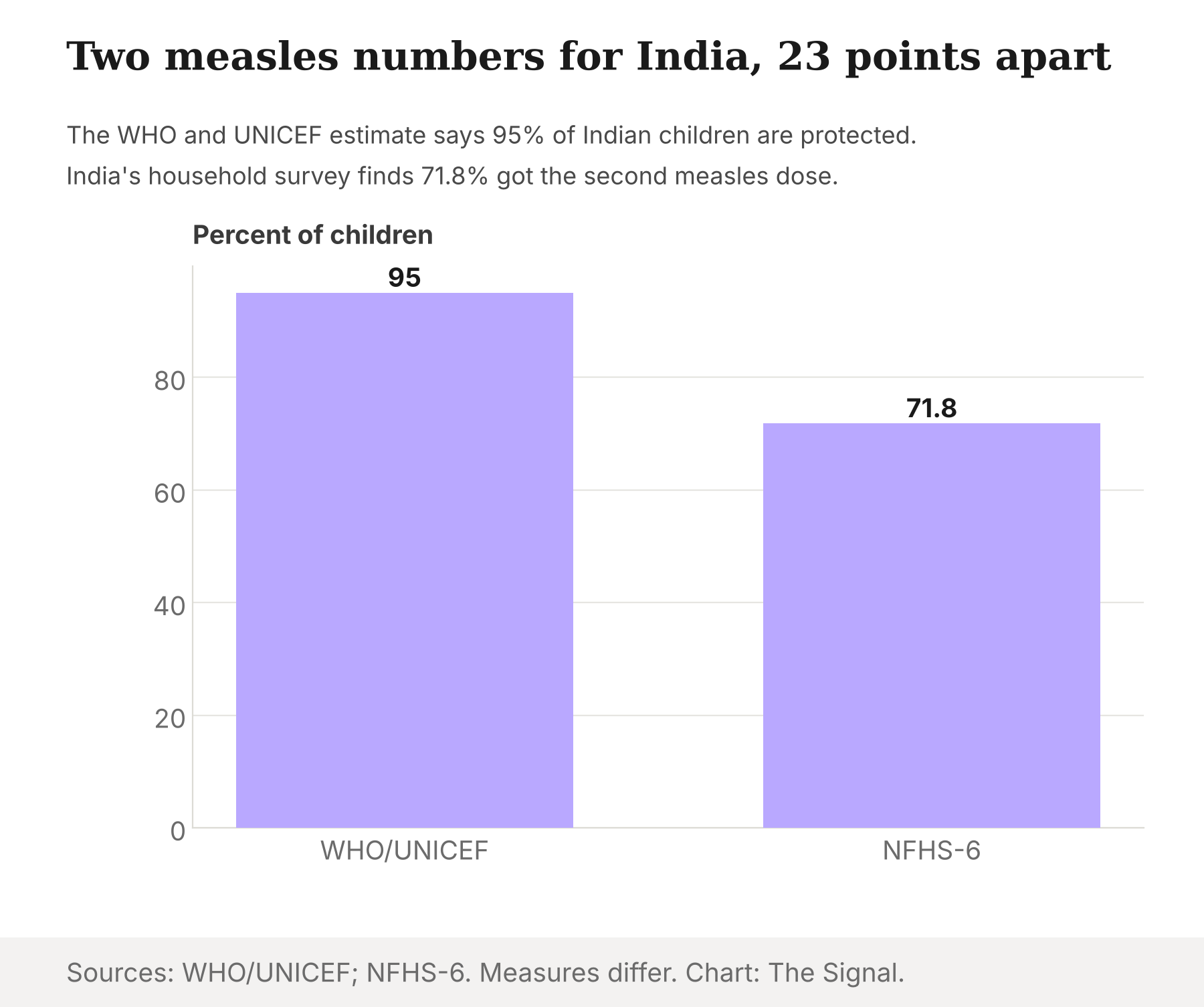
The 95 percent is the WHO and UNICEF estimate for 2025. The 71.8 percent is from the Union Health Ministry's NFHS-6 release, which says coverage of the second dose of measles-containing vaccine rose from 58.6 percent in NFHS-5 to 71.8 percent. The gap between them is 23.2 percentage points.
The honest caveat comes first. These are not the same measurement. The WHO and UNICEF line says 95 percent of children are fully protected against DTP3 and the second measles dose together, while the NFHS-6 release reports the second measles dose alone at 71.8 percent. If the first figure were measured the way the second is, the second dose would sit near 95 percent. Instead, the two sources imply very different realities for the same dose.
What the survey does say, and why it matters
The NFHS-6 release is not bad news on trend. The same document reports that full vaccination among 12 to 23 month olds rose from 83.8 percent to 87.1 percent, and the second measles dose gained about 13 points.
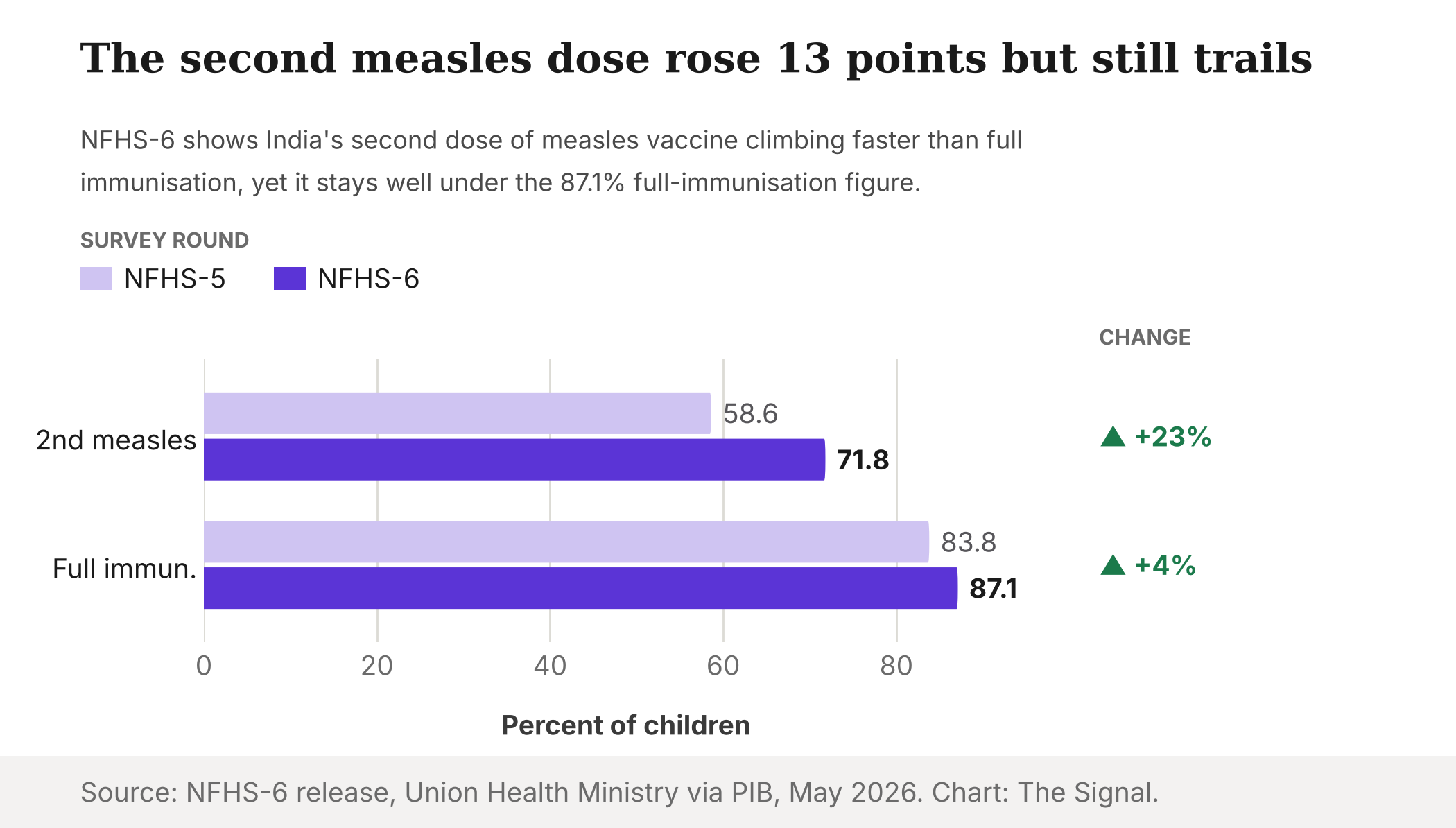
The second dose is the laggard in that table, at 71.8 percent against 87.1 percent for full immunisation in NFHS-6.
The honest objection
The strongest case for calm is that India's trend is improving and the official estimate is built from more than one survey. Zero-dose children, those who have received no routine vaccine, fell from 909,000 in 2024 to 679,000 in 2025 in the WHO and UNICEF estimates. A country that is cutting zero-dose children by a quarter in a year is not Bangladesh in 2024.
That case is real, but it answers a different question. It says India is getting better. It does not say India is safe from an outbreak, and WHO itself is cautious. Its April assessment notes that cross-border movement may facilitate transmission among Bangladesh, Myanmar and India, and that India, "despite achieving high vaccination coverage, has reported a rise in case count over the past six months."
The Signal
The sources verified for this piece show no Bangladesh-style stockout in India. They show a measurement problem: the WHO and UNICEF estimate of 95 percent and the NFHS-6 survey figure of 71.8 percent describe the second measles dose very differently, while Bangladesh's toll of 1,189 shows what a gap can cost.
Watch whether the next international estimates and the full NFHS-6 tables converge on one figure, and whether India's case counts, which WHO said had risen over the six months to April, keep rising. District-level second-dose coverage for border states was not available in the sources verified here, and that is the number that would settle the question. Until it is published, the reassuring 95 percent is a national estimate, and measles spreads district by district.
Reporting basis: Bangladesh's death toll is per its health directorate bulletin of 17 October 2026, as reported by bdnews24, the only source verified for that figure. Case counts through 28 June are per Bangladesh's health ministry, as relayed in the WHO South-East Asia bulletin. District spread, the vaccine stockout and the cross-border risk statement are from WHO's Disease Outbreak News of 23 April 2026. The NFHS-5 and NFHS-6 coverage figures are from the Union Health Ministry's release, as published by PIB. The 95 percent estimate and the zero-dose counts are from the WHO and UNICEF joint estimates, as published by UNICEF India. The 23.2 point gap is The Signal's calculation from those figures, and the two measures differ in definition, as stated above.