The headline version is simple. India's Serum Institute has an HPV vaccine, Cervavac, that the WHO prequalified on 25 September 2026, in single-dose and two-dose vials. Prequalification is the quality stamp that lets United Nations buyers purchase a vaccine. For an Indian manufacturer, it reads as arrival.
It is worth slowing down on the sequence. India launched a free national HPV programme on 28 February 2026, and the Press Information Bureau reports that it uses Gardasil, a quadrivalent vaccine made by Merck, not Cervavac. India chose a foreign vaccine for its national drive, and seven months later its own domestic one got the global listing.
What the WHO listing actually changes
Before this month, WHO said five HPV vaccine products had been prequalified since 2009, and described Cervavac as nationally licensed only. That makes Cervavac the sixth. The list is short, and the newest earlier entry, Cecolin from Xiamen Innovax, dates from October 2021.
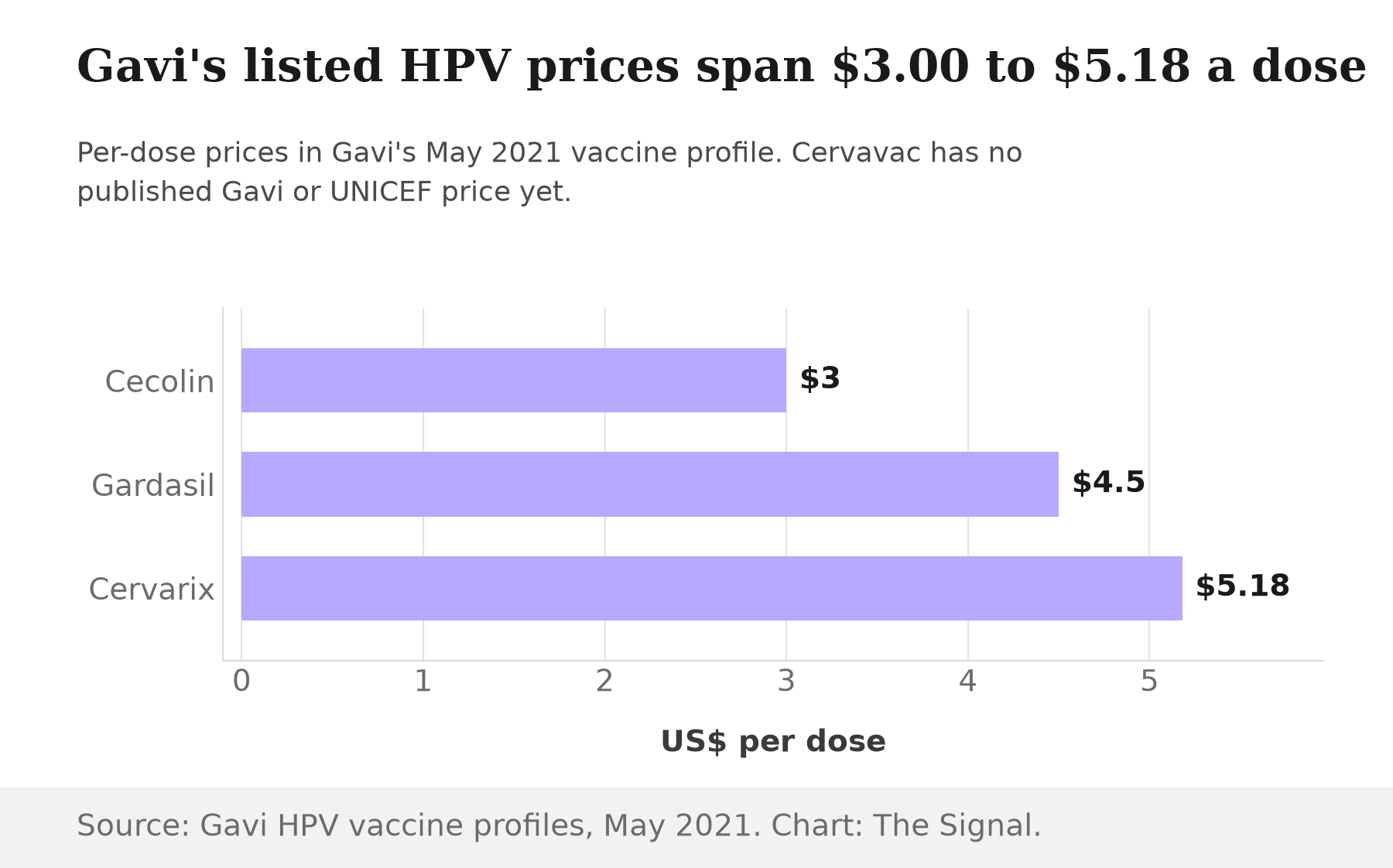
Short lists matter because the buyers behind them are large. Gavi's HPV vaccine profile listed the per-dose price of Cecolin at $3.00, Gardasil at $4.50 and Cervarix at $5.18 from 2022. That profile is from May 2021, so these are not current prices. They are the last published reference points, and they show what a sixth supplier is joining.
India's own demand is large, and already spoken for
India's programme gives the vaccine free to about 1.15 crore girls aged 14 each year, which is 11.5 million girls. At the $4.50 Gardasil price in Gavi's 2021 profile, one cohort of single doses would cost about $52 million. At Cecolin's $3.00, it would be $34.5 million. These are illustrations of scale, not what India paid, because no public source reviewed here gives the price India paid.
The government had also signalled a far bigger purchase. The Tribune reported that the health ministry was likely to float a global tender for 16.02 crore doses of HPV vaccine, to be supplied by 2026, with Serum Institute and Merck both expected to bid. That is about 14 times one year's cohort of 1.15 crore girls.
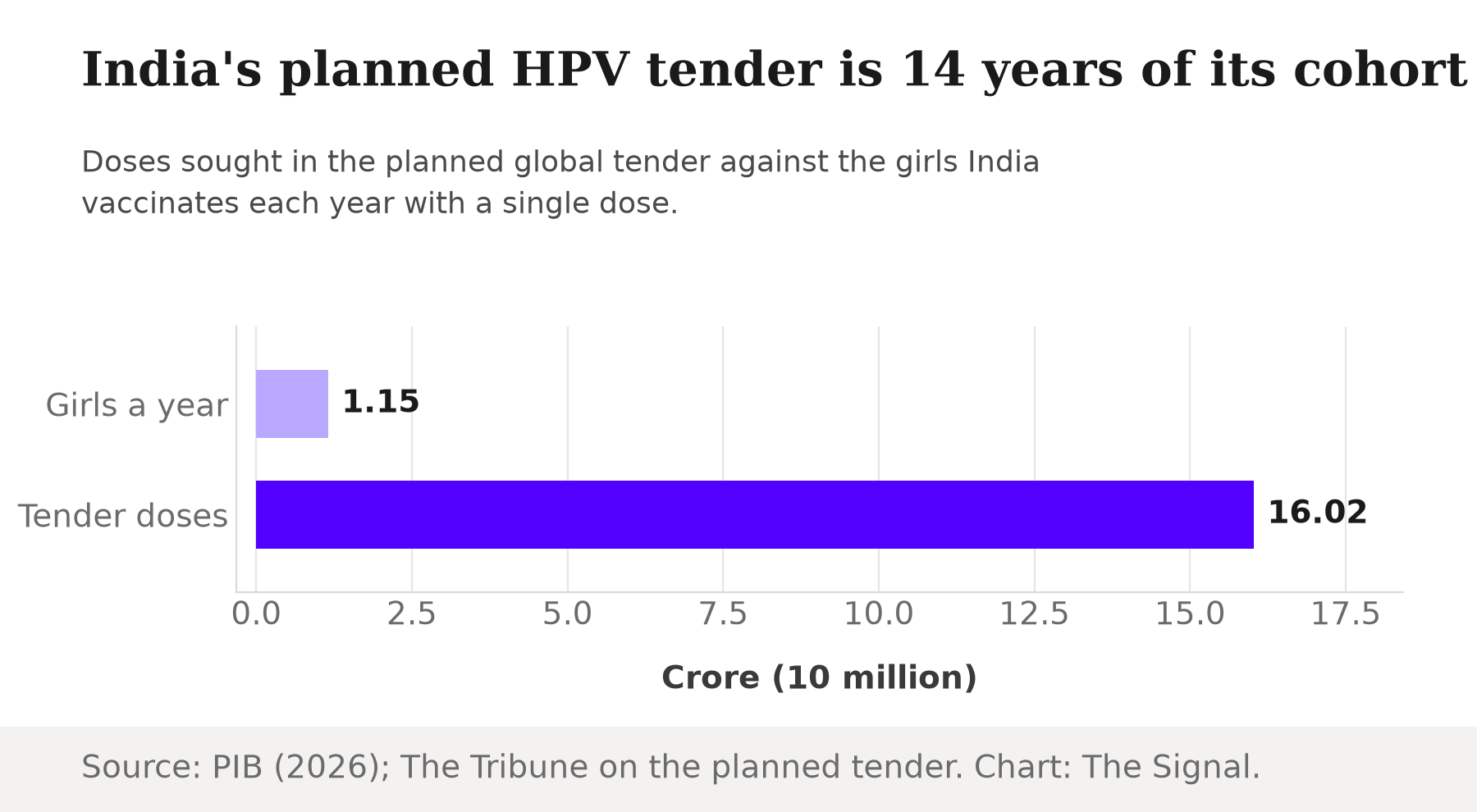
The gap between those two numbers is the point to watch. A tender sized for multi-dose schedules and catch-up cohorts is a very different market from one cohort of 14-year-olds on a single dose. The programme that actually launched is the smaller one, and it launched on Gardasil.
The honest objection
The strongest case against reading anything into this is timing. The Gardasil purchase was made through a programme that needed vaccine in February. Cervavac was not WHO-prequalified until September, and the PIB notes that Gardasil is procured in partnership with Gavi, the Vaccine Alliance. A buyer working with Gavi would reasonably want a prequalified product on day one. On that reading, the WHO listing is the thing that removes the obstacle, and Cervavac could win later rounds.
That case is fair, and the sources reviewed here do not say why India chose Gardasil. What they do show is that the order of events ran against the home product: the programme launched in February and the listing came in September.
The Signal
Prequalification turns Cervavac from a licensed Indian product into an eligible supplier for the UN system. The first test is not in India's programme but in published procurement prices: when a Cervavac price appears next to Gardasil's $4.50 and Cecolin's $3.00, the sixth supplier either pulls the range down or does not. Until then the facts are narrower than the celebration. India vaccinates 1.15 crore girls a year with someone else's vaccine, and the WHO has just certified its own.
Reporting basis: the prequalification date for Cervavac and Cecolin is from the WHO's list of prequalified vaccines, and the count of five earlier products and Cervavac's national-licence status are from a WHO publication on HPV product choice. The programme's cohort size, vaccine and Gavi procurement partnership are from a Press Information Bureau document. Per-dose prices are from a Gavi profile dated May 2021 and are not current. The tender figure rests on a single report by The Tribune. The 14-times ratio and the dollar cost of one cohort are The Signal's calculations from those figures.