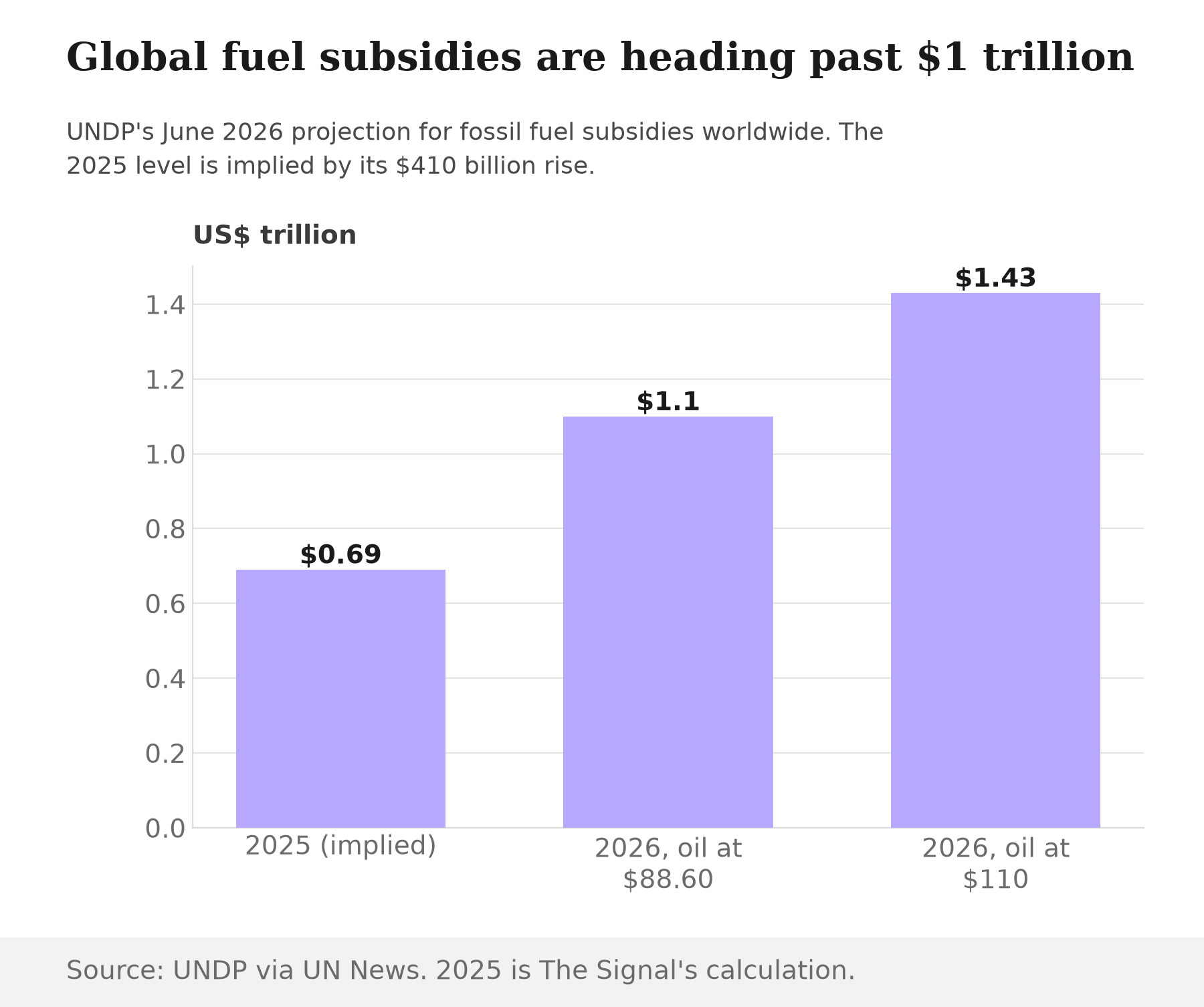
The headline number is easy to picture. The UN Development Programme projects that global fossil fuel subsidies will climb to $1.1 trillion in 2026, about $410 billion more than in 2025, if oil averages $88.60 a barrel. In its severe scenario, with oil at $110 a barrel, the total could reach $1.43 trillion. Subtract the rise from the 2026 figure and the 2025 level is about $690 billion. Governments are paying roughly 60 percent more to keep fuel cheap in a single year.
The natural way to read this for India is to look for the line in the Union Budget that pays for it. That is where the story goes quiet.
The subsidy line is small
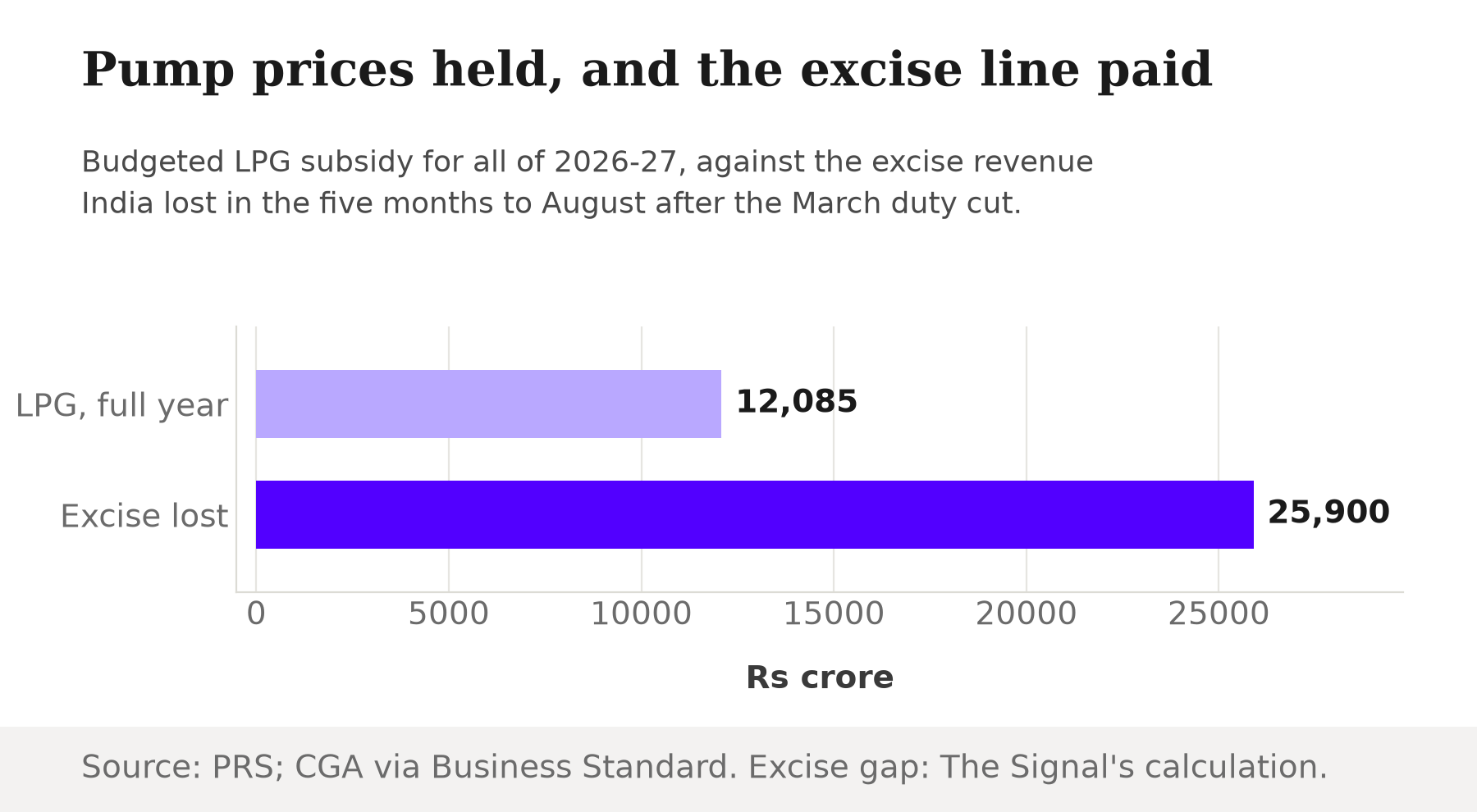
It is worth slowing down on that. The Union Budget estimates total subsidy spending at Rs 4,54,773 crore in 2026-27, according to PRS Legislative Research's analysis. The only fuel item in it is cooking gas, and the LPG subsidy makes up 2.6 percent of that total, or Rs 12,085 crore for the whole year. There is no line for petrol or diesel.
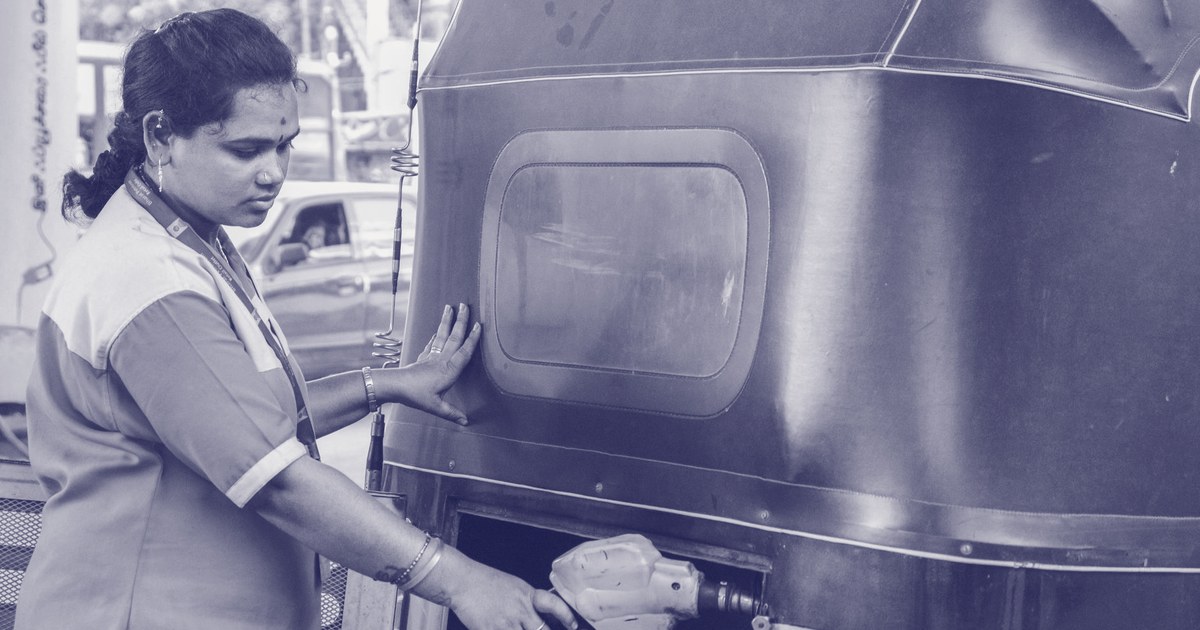
That does not mean India is not subsidising petrol and diesel. It means the subsidy is not booked as one. On 27 March 2026, after crude rose from about $70 to about $122 a barrel in a month, the petroleum ministry said in a PIB release that the government had cut excise duty by Rs 10 per litre on both petrol and diesel and that retail pump prices would not change. The ministry reported that fuel prices had risen 30 to 50 percent across South and South-East Asia, 30 percent in North America and 20 percent in Europe, and said India had held the line.
So India chose a different ledger. Instead of paying a subsidy out, it stopped collecting a tax. The cost is the same in kind, but it never appears under "subsidies".
The number that carries the story
The accounts for April to August 2026 show the size of it. The Controller General of Accounts data, as reported by Business Standard, put central excise collections down nearly 23 percent year on year at Rs 86,687 crore, as a result of the late-March cut in special additional excise duty on petrol and diesel.
Working backwards, a fall of nearly 23 percent to Rs 86,687 crore implies about Rs 1.13 lakh crore in the same months a year earlier, so roughly Rs 26,000 crore of excise did not arrive. That is our calculation, and it is approximate because the report says "nearly" 23 percent. It is also not purely the duty cut, since volumes and prices move too, though the report attributes the fall to the cut.
Set it against the budget line. The roughly Rs 26,000 crore of excise lost in five months is about twice the Rs 12,085 crore budgeted for the LPG subsidy across the entire year. The pump price held, and the excise line paid for it.
The excise cut covers only part of the loss
The ministry's own figures show why the cut was never the full price. At March crude prices, under-recoveries stood at about Rs 26 per litre on petrol and Rs 81.90 on diesel, around Rs 2,400 crore a day across the state-run oil marketing companies. A Rs 10 per litre cut covers roughly 38 percent of the petrol gap and about 12 percent of the diesel gap.
The remainder sits with Indian Oil, Bharat Petroleum and Hindustan Petroleum. It is a real cost with no row in the Budget at all. Those are March numbers at $122 crude, and the gap will have narrowed if oil has eased since, but the sources do not give a later figure, so the size of what remains on those balance sheets is unknown here.
The ledger is already moving
The part the Budget does show is shifting. The Centre's April to August fiscal deficit was Rs 7,10,249 crore, or 41.9 percent of the full-year target, against 38.1 percent a year earlier. The full-year goal, in the Budget, is 4.3 percent of GDP, down from 4.4 percent in 2025-26.
Subsidies are part of the reason. Spending on major subsidies rose nearly 25 percent to Rs 1.87 trillion in April to August, with fertiliser subsidies up nearly 21 percent. In the same piece the figure is put at 46 percent of the full-year budget estimate, against 39 percent a year earlier. Fertiliser is where the shock does reach a budget line. Crisil Intelligence said in April that the West Asia crisis had triggered a projected 20 to 25 percent surge in the FY27 fertiliser subsidy.
Add the lost excise and the rating agency ICRA estimates the fiscal deficit will overshoot the FY27 budget estimate by Rs 1.3 to 1.4 trillion, on the revenue shortfall plus extra fuel and fertiliser subsidy. That is a forecast, not an outcome, and it rests on assumptions about oil and tax collections that can still move.
The honest objection
The strongest defence of the choice is that the alternative was worse. Fuel prices rose 20 to 50 percent in the other regions the ministry compared, which means households there took the shock. The UN's own warning is that the median developing economy is expected to spend 9.5 percent of government revenue on debt service in 2026, double the share a decade ago. A government that protects pump prices is buying stability for consumers, and doing it while its debt costs rise. On that view, India is not hiding a cost. It is choosing which cost to take.
That case is fair, and nothing here shows it is wrong. But it answers a different question. Whether the choice was right is a judgment. Whether it is visible is a matter of accounting. A reader who checks the subsidy line for the oil shock will find Rs 12,085 crore for LPG and conclude it was cheap. The excise column and the oil companies' balance sheets say otherwise.
The Signal
The UN's trillion-dollar figure understates India's exposure, because India mostly does not pay in subsidies. It pays in forgone tax and in losses carried by state companies, and both are harder to see than a budget line. Watch three numbers: monthly excise collections, the Centre's deficit as a share of its 4.3 percent of GDP target, and whether the government restores some of the duty once crude settles. If excise recovers while the deficit holds near target, the price freeze was a bridge. If it does not, the bill moves to the next Budget. A cost kept off the subsidy line is still a cost.
Reporting basis: the global subsidy projections are UNDP's, as reported by UN News. The excise cut, under-recovery figures and peer-country fuel price rises are from the petroleum ministry's PIB release. Budget subsidy and deficit-target figures are from PRS Legislative Research's analysis of the Union Budget. The April to August excise, subsidy and deficit data are the Controller General of Accounts' figures, as reported by Business Standard (two reports on the same CGA release). The FY27 overshoot estimate is ICRA's, via Business Standard, and the fertiliser projection is Crisil Intelligence's, via Business Today. The UNDP report itself could not be opened directly, so its figures rest on UN News alone. The implied 2025 global subsidy level, the year-earlier excise figure, the excise shortfall and its comparison with the LPG budget, and the share of under-recoveries covered by the duty cut are The Signal's calculations from those figures.