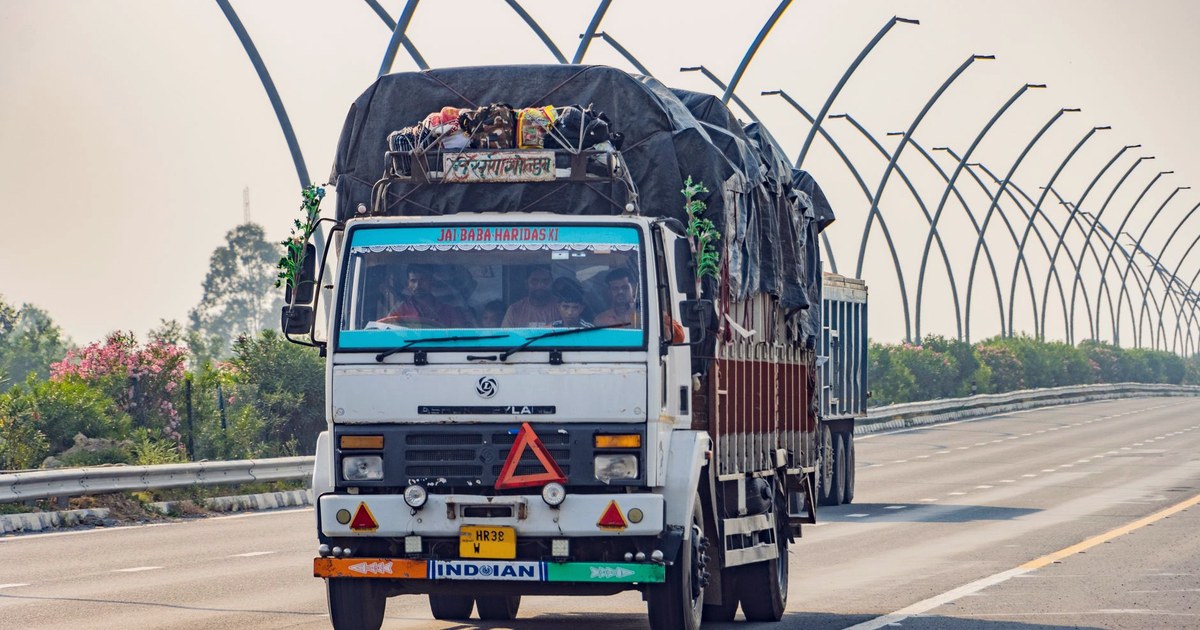
On August 26, 2026, a barrier lake collapsed on the Nepal-Tibet border and sent a wall of water and debris down a Himalayan river valley. By Friday, August 28, Nepal's prime minister's office had confirmed 469 people killed and 977 missing, with at least 3 more dead and 558 missing across the border in Tibet. India's Ministry of External Affairs said 288 Indian nationals remained unaccounted for as of Thursday, August 27, 2026. The flood also left a second hazard in its wake: a new barrier lake formed downstream on the Nepal-China border was reported breached on Friday, August 28, per Nepal's Rasuwa district administration, though authorities had yet to confirm how much additional water it released. The story reads, so far, as Nepal's disaster and India's rescue effort: a catastrophe next door, with Indian travelers caught in it.
Nepal's 2026 toll already dwarfs the glacial flood India lived through in 2023.
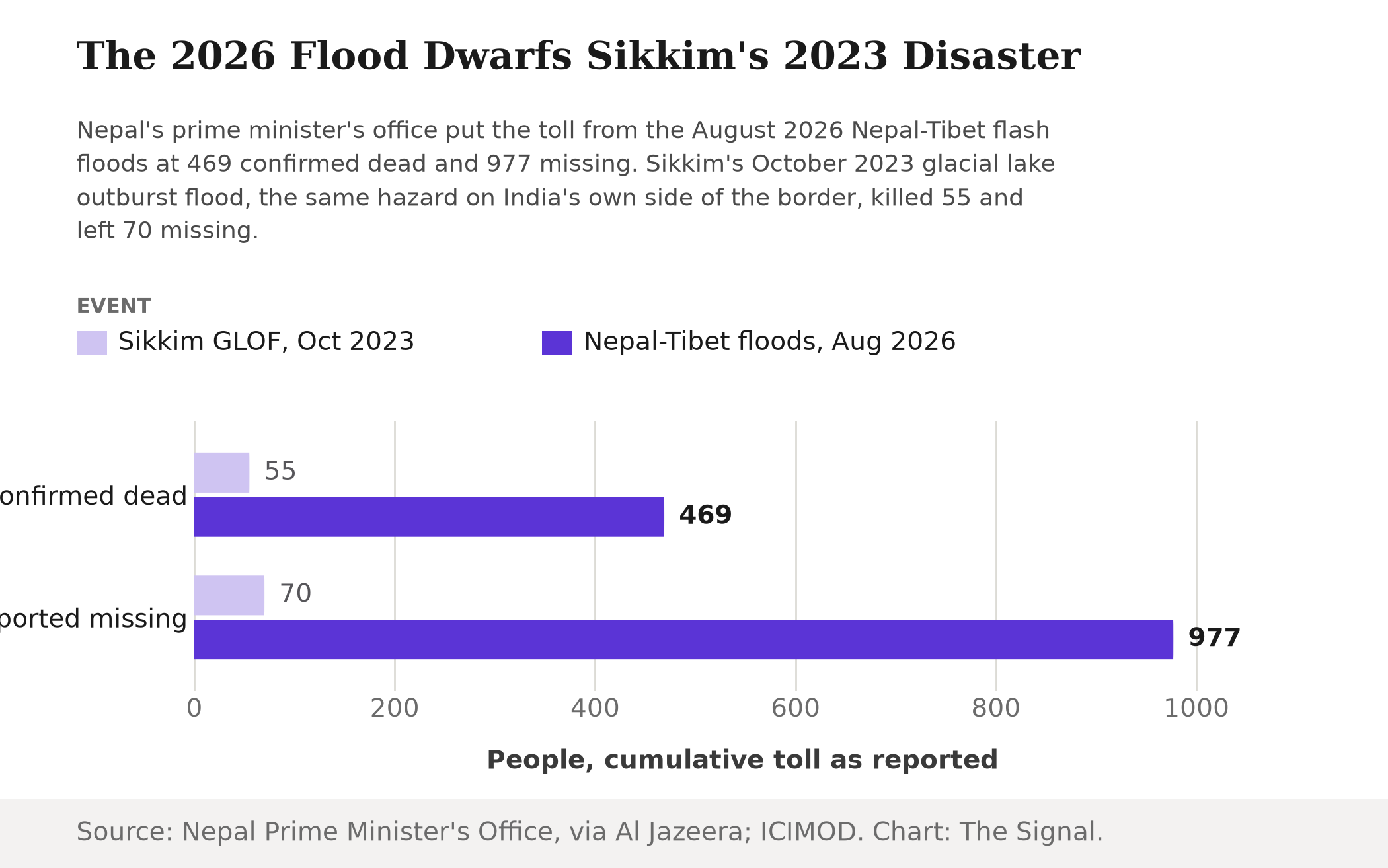
Source: Al Jazeera; ICIMOD. Chart: The Signal.
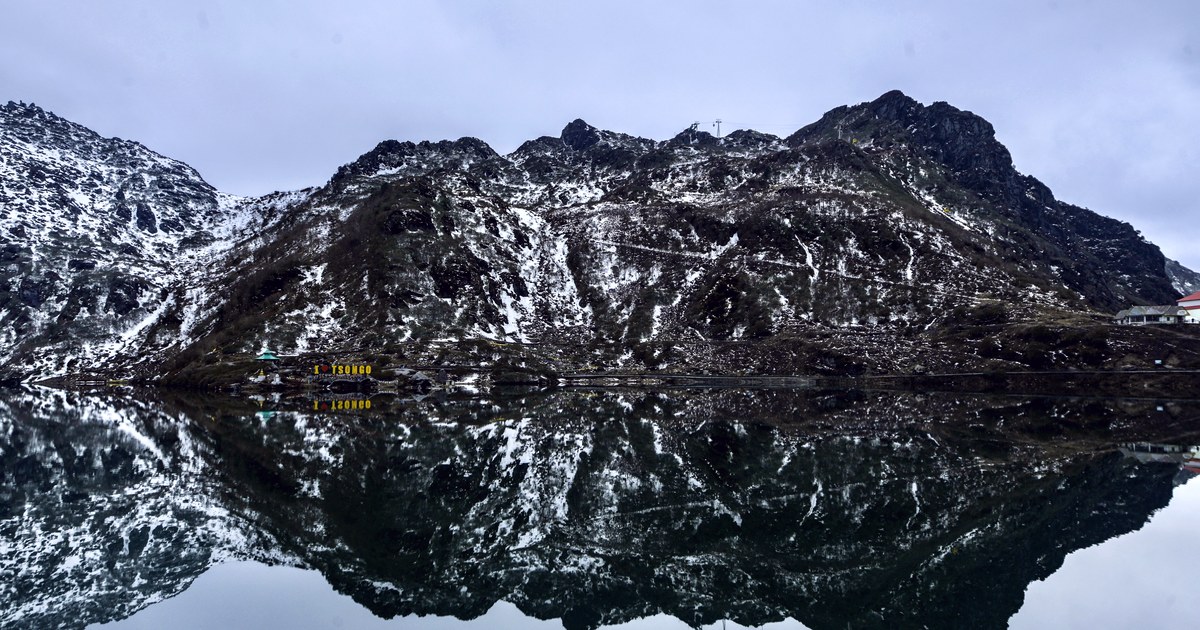
It is worth slowing down on that framing. The Nepal-Tibet floods were triggered by a hazard India has already lived through on its own soil, in its own mountains. In October 2023, a mass of frozen moraine, roughly 14.7 million cubic meters of it, collapsed into Sikkim's South Lhonak glacial lake and sent about 50 million cubic meters of water crashing down the Teesta valley, killing 55 people and leaving 70 missing. This is not a foreign category of disaster. It is the same one, on the Indian side of the range.
What a glacial flood costs when it hits
Source: ThePrint. Chart: The Signal.
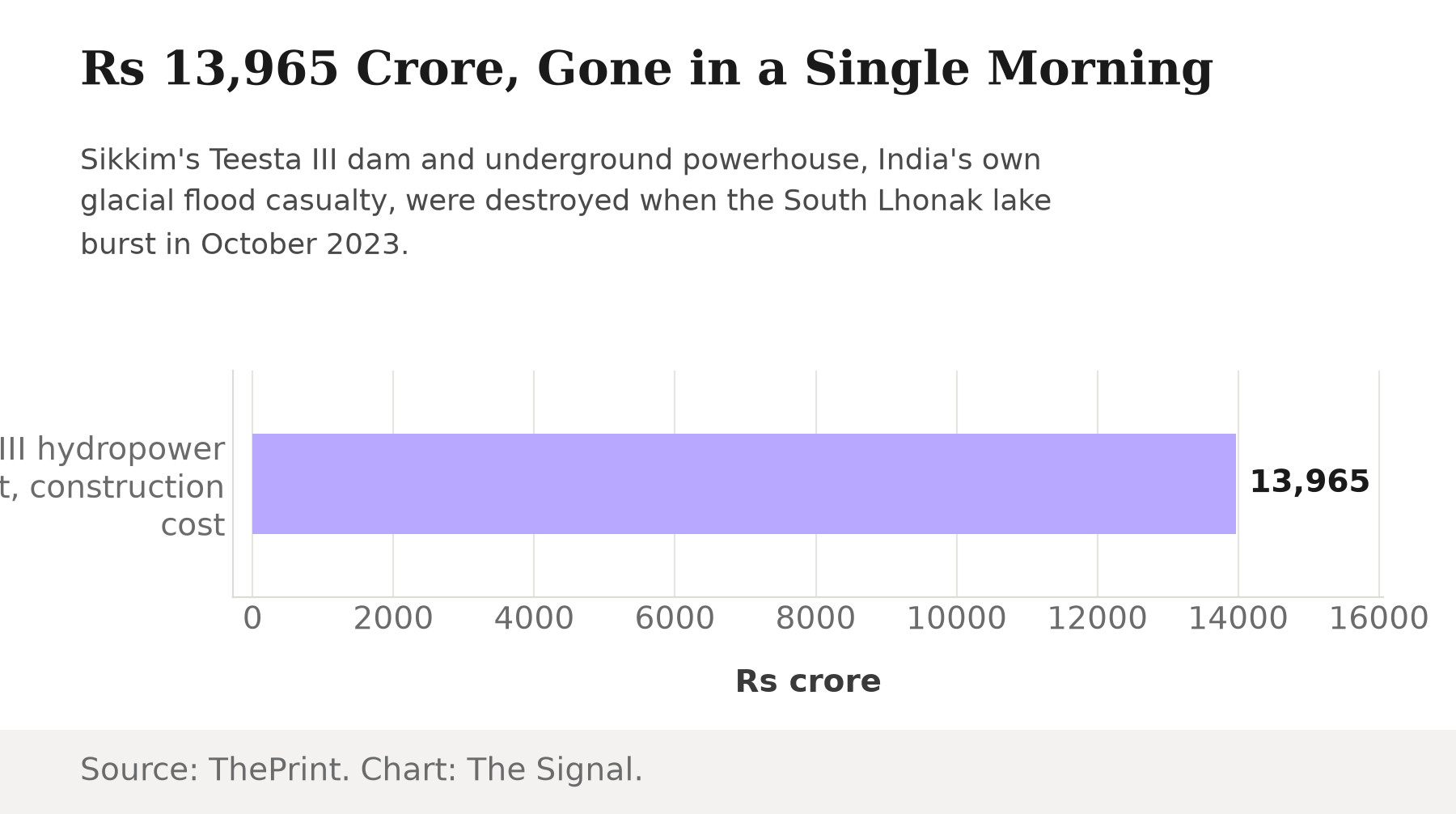
The 1,200 MW Teesta III hydropower plant, built at a cost of Rs 13,965 crore, had its dam washed away and its underground powerhouse submerged within hours of the 2023 outburst. A glacial lake is invisible from any highway, sitting far above the valley, until the moraine holding it back gives way. What is downstream, whether a village or a dam, finds out only when the water arrives.
The watchlist India already built
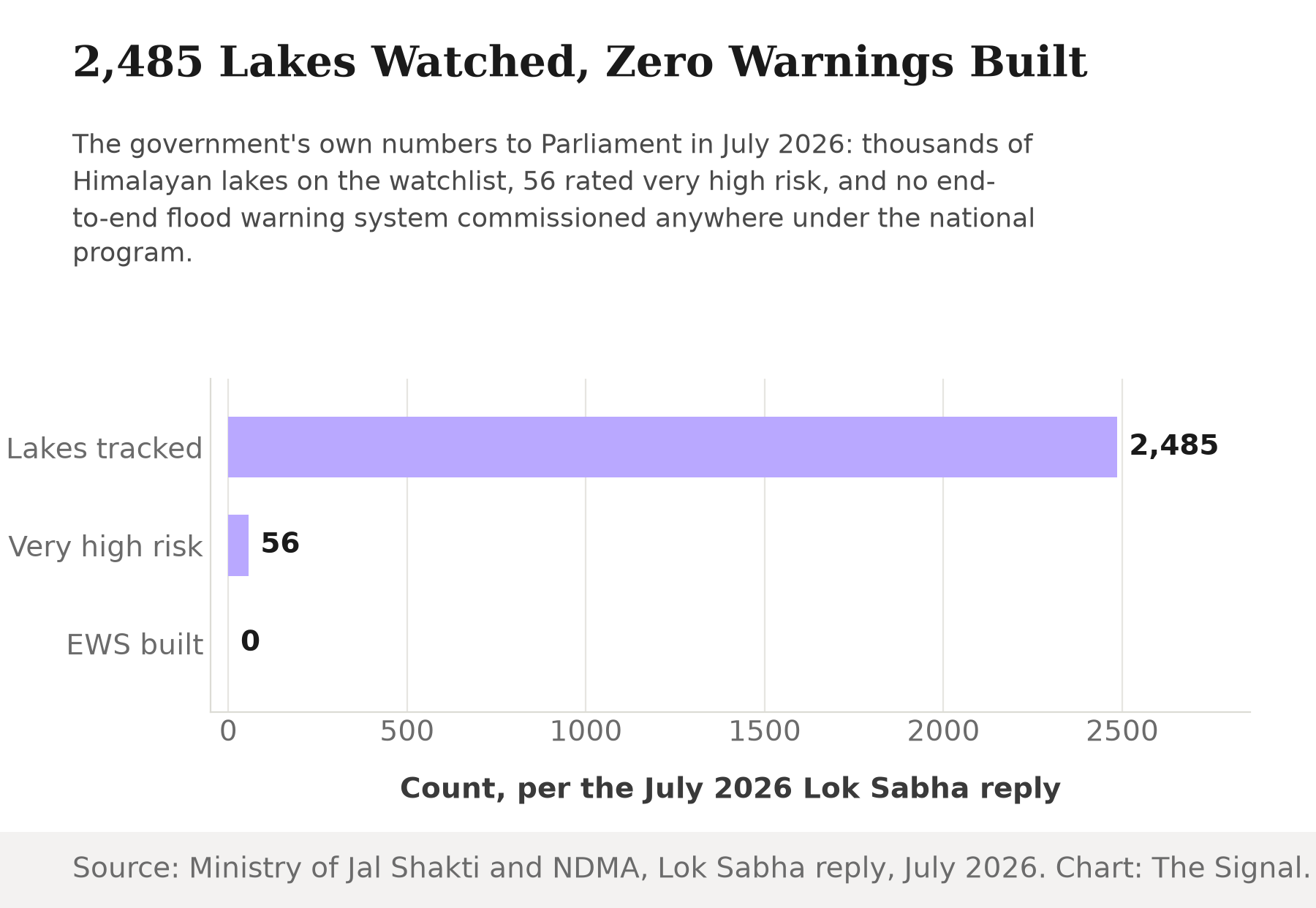
This is not a rare risk confined to one valley. A 2020 ICIMOD inventory identified 47 potentially dangerous glacial lakes within just the Koshi, Gandaki and Karnali river basins of Nepal alone, long before this month's disaster. India has run its own accounting, and on a larger scale: the Central Water Commission told the Lok Sabha in July 2026 that it is monitoring 2,485 glacial lakes larger than 10 hectares across the Himalayan river basins, of which 56 have been classified "very high risk".
India already knows which lakes are dangerous. It has not built the systems to warn about them.
| Watchlist | Count | As of |
|---|---|---|
| Nepal, potentially dangerous glacial lakes (Koshi, Gandaki, Karnali basins) | 47 | 2020 ICIMOD inventory |
| India, glacial lakes monitored across Himalayan river basins | 2,485 | July 2026, Central Water Commission |
| India, lakes classified "very high risk" | 56 | July 2026, based on a 2025 assessment |
| India, lakes classified high risk by NDMA | 189 | 2025 NDMA assessment, reported to Parliament July 2026 |
Source: ICIMOD; Millennium Post; Daily Excelsior.
Source: Millennium Post; Daily Excelsior. Chart: The Signal.
The number that carries this story is not on that watchlist. It is zero. Despite NDMA's 2025 scientific assessment naming 189 high-risk Himalayan glacial lakes, the government told Parliament in July 2026 that no end-to-end GLOF early warning system has yet been commissioned anywhere under the National GLOF Risk Mitigation Programme. India has spent years building the list. It has not switched on a single warning.
The lake that already proved the point
Sikkim did not need a hypothetical to learn what that gap costs. An early warning system for South Lhonak lake itself was due to be installed a year before the 2023 disaster, but field work only began in September 2023, weeks before the lake burst that October. The system meant to warn Sikkim arrived after the flood, not before it.
Nor is the risk retired. Three years after the disaster, South Lhonak lake still has not fully drained and remains highly susceptible to another outburst, with small-scale mass movements already visible on the failure slope. The lake that destroyed Teesta III in 2023 is still sitting there, unresolved, while the national program meant to prevent a repeat elsewhere has commissioned nothing.
The honest objection
The strongest case for patience is that these are among the hardest early warning systems to build anywhere. Sensors and transmitters have to survive extreme cold, avalanche and rockfall at altitudes above 5,000 meters, with no road access and a construction season measured in weeks. A national mitigation program still in its early years, working across a mountain range that spans several states, was never going to blanket 189 high-risk lakes overnight. Judged against that timeline, zero commissioned systems is a program still ramping up, not one that has failed.
That case is real, but South Lhonak already shows what actually went wrong was not the terrain. The lake's own warning system had a full year of lead time and still only began fieldwork weeks before the flood that made it famous: a scheduling failure, not a physics one. It is not a money problem either. The National GLOF Risk Mitigation Programme was approved with a Rs 150 crore outlay across the four states in August 2024, nearly two years before the government told Parliament it had commissioned none of it. And it was not a one-off, isolated to a program still finding its feet. Three years and one dedicated national program later, the count of end-to-end systems commissioned anywhere in India is the same as it was before Sikkim flooded: zero.
The Signal
Nepal's disaster is not a warning about someone else's mountains. It is a live demonstration of the exact failure mode India catalogued in its own Parliament last month: a government that can count its glacial lakes, rank them by risk, and still not build the one thing that would tell someone downstream to move. South Lhonak has not drained. It sits above the same valley it flooded in 2023, unmonitored by any end-to-end system, three years and one national program after it showed what happens when the warning comes late. Watch whether the Nepal-Tibet floods change that count. A government that can name 189 dangerous lakes and warn none of them is not short on information. It is short on urgency.
Reporting basis: the Nepal-Tibet flood toll is per Nepal's prime minister's office, as reported by Al Jazeera, with the count of unaccounted Indian nationals per the Ministry of External Affairs, as reported by Onmanorama, and the downstream barrier lake's reported breach per Nepal's Rasuwa district administration, as reported by The Kathmandu Post. The 2023 South Lhonak glacial lake outburst flood's casualty and volume figures are from ICIMOD's summary of a peer-reviewed study of the disaster; the same ICIMOD source separately reports the 2020 inventory of dangerous lakes in Nepal's Koshi, Gandaki and Karnali basins. The Teesta III hydropower plant's construction cost and the extent of its 2023 damage are per ThePrint. India's glacial lake monitoring and risk classification counts, and the confirmation that no end-to-end GLOF early warning system has been commissioned under the National GLOF Risk Mitigation Programme, both trace to the same July 2026 Lok Sabha written reply by the Ministry of Jal Shakti, as reported separately by Millennium Post and Daily Excelsior. The NGRMP's Rs 150 crore outlay is per ThePrint, citing government sources. The delay in South Lhonak's own early warning system is per an on-record NDMA official, as reported by Gulf News, and the lake's continued instability three years on is per Eos, the American Geophysical Union's science and news magazine.