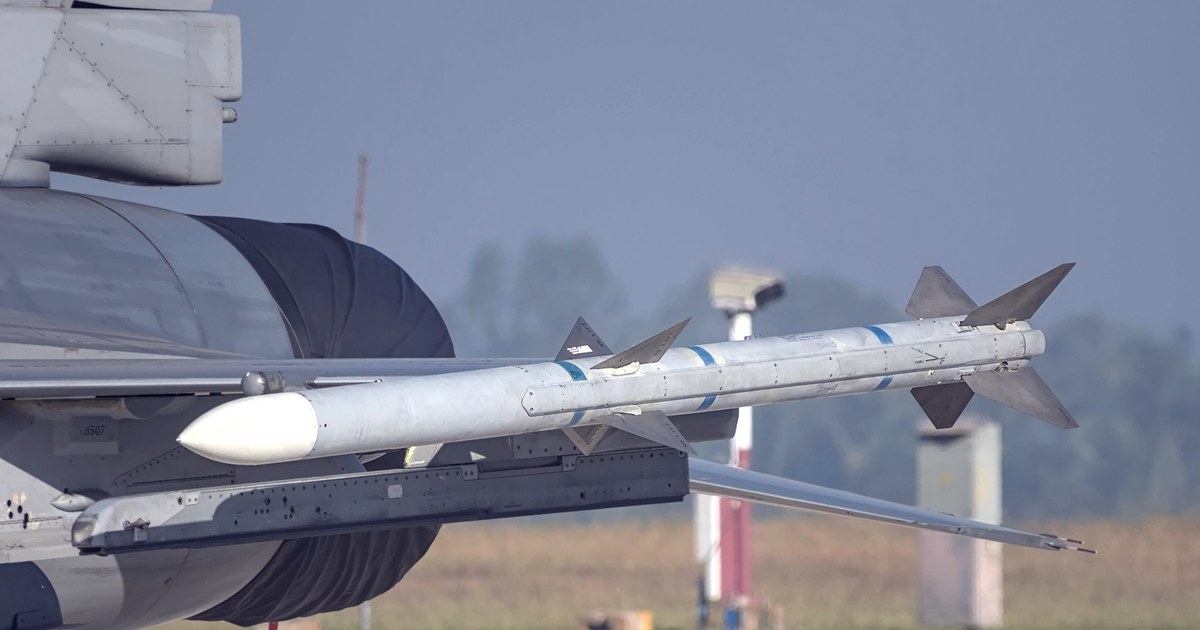
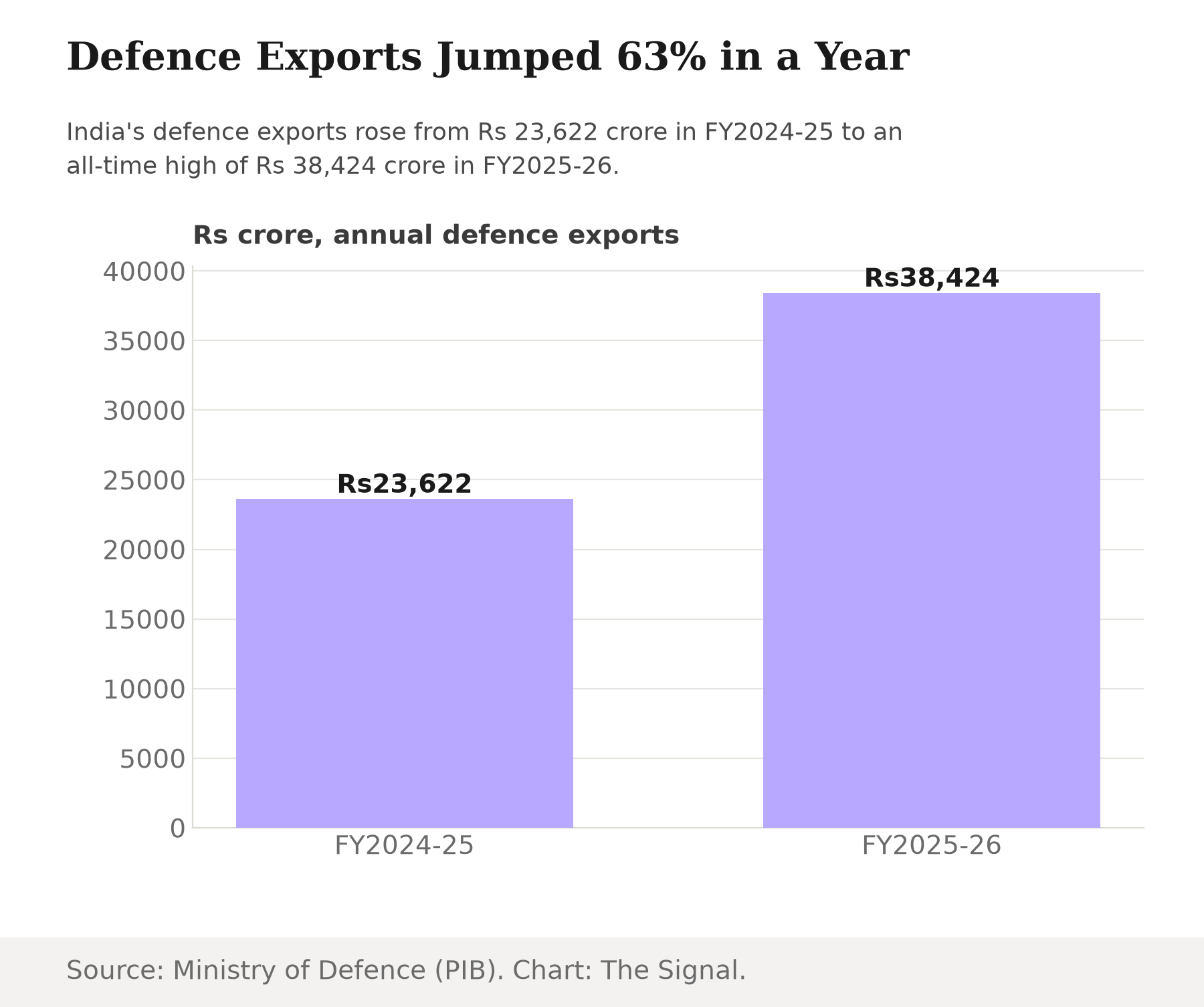
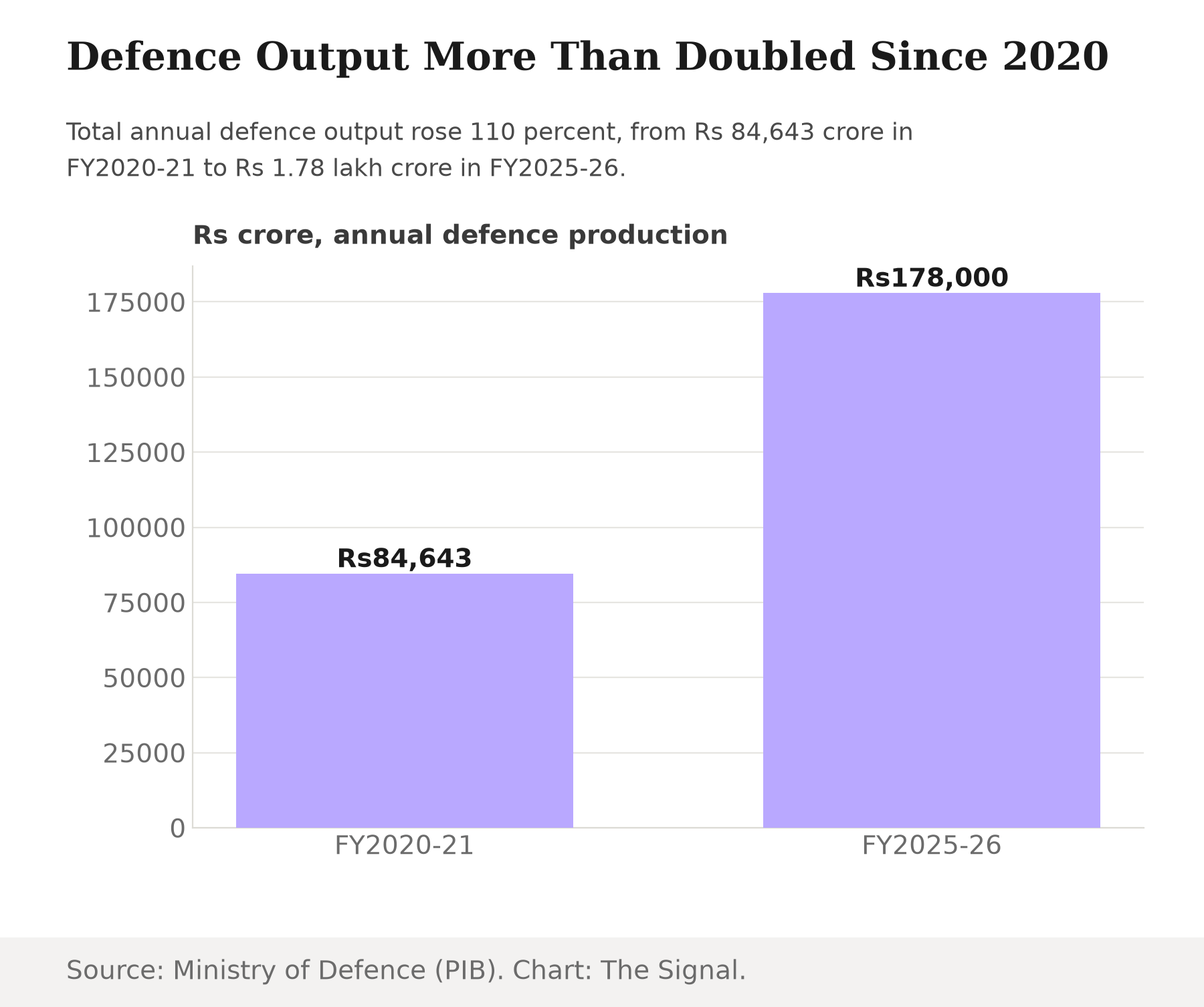
On May 13, 2026, Defence Secretary Rajesh Kumar Singh told the CII Annual Business Summit that there is now a growing willingness to transfer technology to private firms for various categories of ballistic missiles, and that "the time has come" to operationalise those plans. Seven weeks later, on July 5, Adani Defence & Aerospace broke ground on a Rs 2,500 crore missile ecosystem in Shivpuri, Madhya Pradesh, which the company calls the largest private-sector missile facility in South Asia. Both landed in a year of record government numbers: India's defence exports touched an all-time high of Rs 38,424 crore in FY2025-26, up 62.66% from Rs 23,622 crore the year before, and total defence production reached Rs 1.78 lakh crore, a 110% rise since FY2020-21. Read together, the story writes itself: after decades of state monopoly, India is finally letting private industry into its most sensitive weapons category, and the self-reliance drive is paying off.
It is worth slowing down on that read. Singh was not describing a fix for a domestic shortfall. His own framing rests on missiles' "increasing strategic importance in modern warfare" and a "growing willingness to transfer technology," not a production gap the state cannot fill on its own. And Adani's own account of its new plant is explicit that it is designed to meet the requirements of the Indian Armed Forces as well as trusted international partners: allied buyers are written into the plant's purpose at the groundbreaking, not added as an afterthought once it is built.
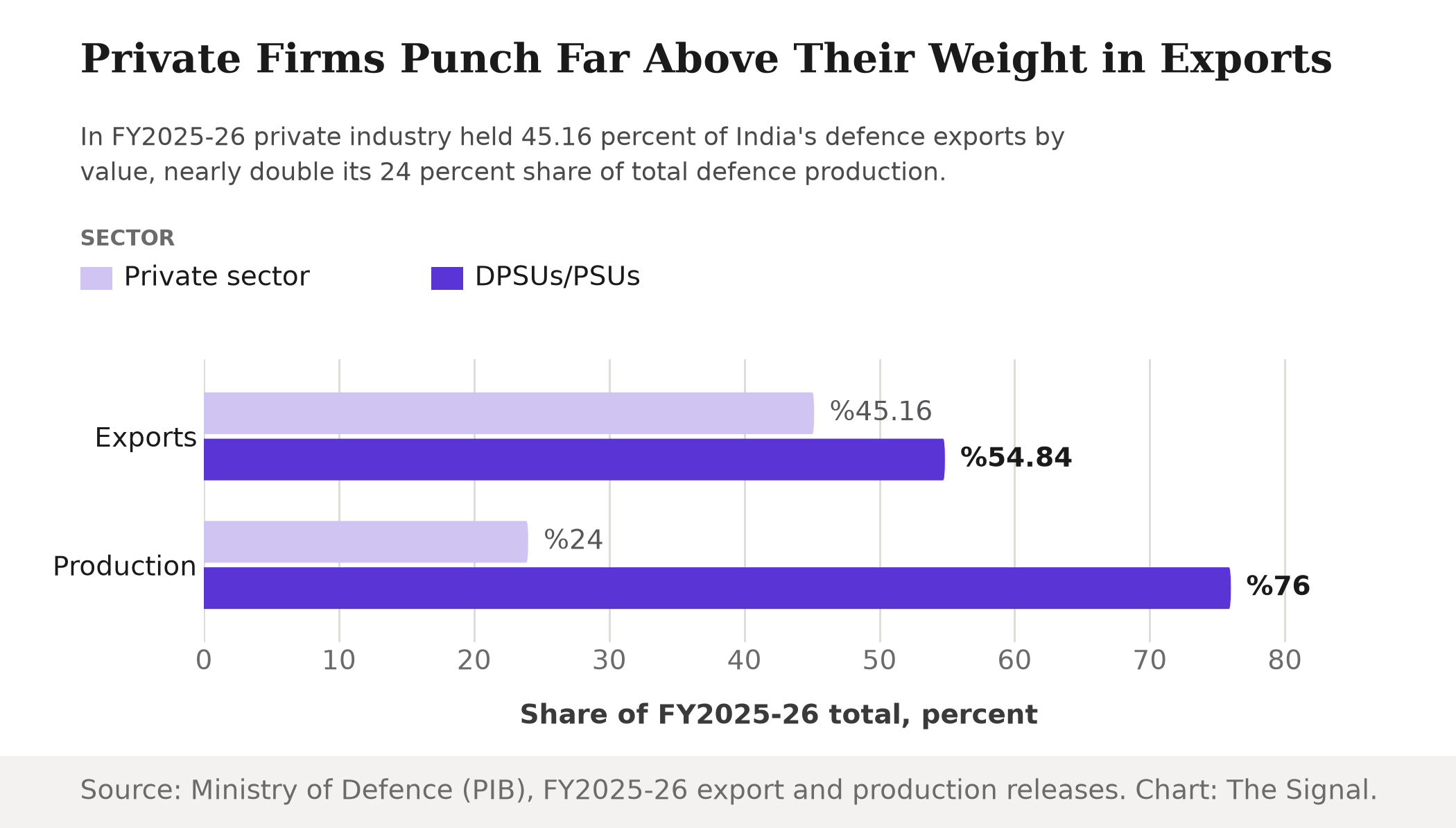
The number that makes that reading concrete sits inside the government's own release. Private firms contributed Rs 17,353 crore of FY2025-26's defence exports, 45.16% of the total, against DPSUs' Rs 21,071 crore, or 54.84%. But private industry's share of total defence production that same year was just 24%, around Rs 42,000 crore of the Rs 1.78 lakh crore total, up from 22% in FY2024-25. Private firms already supply nearly double the share of exports that they do of output, 45.16% against 24%. That gap is the shape of the whole story: private industry is disproportionately built for the order book abroad, and the missile opening follows the same shape.
Source: Ministry of Defence, FY2025-26 defence exports; Ministry of Defence, FY2025-26 defence production. Chart: The Signal.
The export math
The FY2025-26 export number is not a small revision. Exports rose from Rs 23,622 crore to Rs 38,424 crore in a single year, and the number of exporting firms rose to 145 from 128, reaching more than 80 countries. That is a market getting both bigger and more crowded at the same time, which is exactly the environment in which a government looks for more capacity to sell into, not more capacity to defend itself with.
Source: Ministry of Defence, FY2025-26 defence exports touch all-time high. Chart: The Signal.
Why missiles, specifically
Ballistic missiles sat outside the general private-sector opening for a reason: design authority over strike-range weapons has stayed with DRDO and public-sector integrators since independence. Singh's May 2026 remarks are a new, on-record signal from a sitting Defence Secretary that this specific category is now in play, and the timing is not incidental. It follows a wider licensing push that has already reshaped how deeply private firms sit inside DRDO's supply chain.
DRDO still sits at the center of every private partnership it has created.
| Metric (as of March 2026) | Figure |
|---|---|
| Companies partnered with DRDO as Development-cum-Production Partners or Production Agencies | 134 |
| Technology-transfer agreements signed | 2,180 |
| Intellectual property rights opened for industry use | 2,780+ |
Source: Ministry of Defence (PIB), March 2026.
Those numbers describe licensing, not ownership: DRDO opens its IP for industry to use, it does not hand the IP over. The draft Defence Acquisition Procedure 2026 raises the mandatory indigenous-content threshold for the "Buy Indigenous Design, Development & Manufacture" category from 50% to 60%, and separately revises how DRDO selects Development-cum-Production Partners "to ensure a level playing field" between public and private industry. A review aimed at creating a level playing field is itself an admission that the field has not been level. DRDO remains the party doing the selecting.
Adani's bet
Adani Defence & Aerospace is not waiting for that review to finish. Its Shivpuri plant combines missile system integration with composite propellant and TNT production at one site, an investment of Rs 2,500 crore expected to create 5,000 direct and indirect jobs. Housing propellant, explosives and final assembly together is a vertically integrated bet on volume, the kind of plant that makes sense when the buyer list includes export customers alongside the Indian Army, exactly as the company describes it. A single-country customer rarely justifies that scale of front-loaded capital before a single unit has shipped.
The honest objection
The strongest case against an export-first reading is that the whole pie is growing, not just the export slice. Total production is up 110% since FY2020-21, private industry's share of that output rose to an all-time high even in absolute terms, and the government's own long-term target, set by Rajnath Singh in February 2024, is annual production of Rs 3 lakh crore and exports of Rs 50,000 crore by FY2028-29. On that target, production is meant to grow roughly six times faster in absolute rupees than exports. If the ambition were really about filling an export backlog, exports would carry more of that plan.
Source: Ministry of Defence, annual defence production reaches Rs 1.78 lakh crore in FY2025-26. Chart: The Signal.
That case is real, and the broader industrial base genuinely is expanding. But it describes the sector overall, not the specific decision to open ballistic missiles now. The trigger Singh named for that decision was strategic importance and allied demand, not a domestic capacity gap, and the mechanism for entry that DRDO and the draft DAP 2026 have built keeps technology licensed and partner selection state-controlled rather than handing over independent design authority. A rising tide can lift the whole industry while one specific, newly opened category still gets built to someone else's order book.
The Signal
The willingness to arm private industry with missile technology now exists inside the Ministry of Defence; that much is new and real. What is not new is who is asking. It is allied buyers and an export order book that has grown 63% in a year, not the Indian Army citing a shortfall it cannot fill through DRDO and the DPSUs. Watch what the finalised Defence Acquisition Procedure 2026 actually does to Development-cum-Production Partner selection: if it hands private firms independent sign-off on missile design, the opening is real liberalisation. If DRDO keeps selecting partners and licensing IP the way it does for the 134 companies already inside that system, private industry stays a production line for a state that still owns the blueprint. A missile plant built to someone else's export order is not the same thing as an independent one built for your own army.
Reporting basis: the FY2025-26 defence export and production figures, the DRDO industry-partnership count, the 2028-29 production and export targets, and the draft Defence Acquisition Procedure 2026 changes are all from the Ministry of Defence, via Press Information Bureau releases issued between February 2024 and March 2026. Defence Secretary Rajesh Kumar Singh's remarks on ballistic-missile technology transfer are as reported by The Week from the CII Annual Business Summit in May 2026. The Shivpuri plant's investment size, scope and stated dual purpose are Adani Defence & Aerospace's own account of its plans, not an independently audited figure. The private sector's share of exports relative to its share of production, and the six-times gap between the government's production and export targets, are The Signal's calculations from those figures.