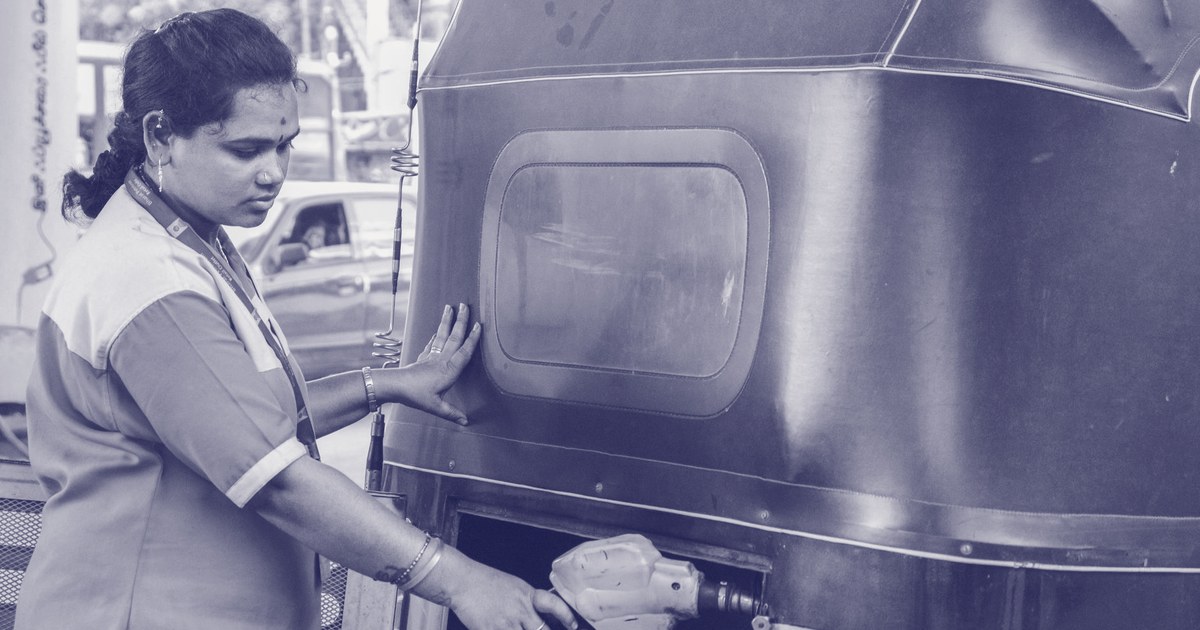
Indraprastha Gas Limited, the company that sells CNG and piped gas across Delhi and its neighbours, had its first quarter above 10 million cubic metres a day. Average sales reached 10.06 million standard cubic metres a day in July to September 2026, up from 9.31 million a year earlier, and crossed 10 million for the first time. CNG volumes grew 9 percent and piped gas volumes 8 percent. Revenue from operations rose to ₹5,615.38 crore from ₹4,445.96 crore, a gain of about 26 percent. By any volume measure, the business is thriving.
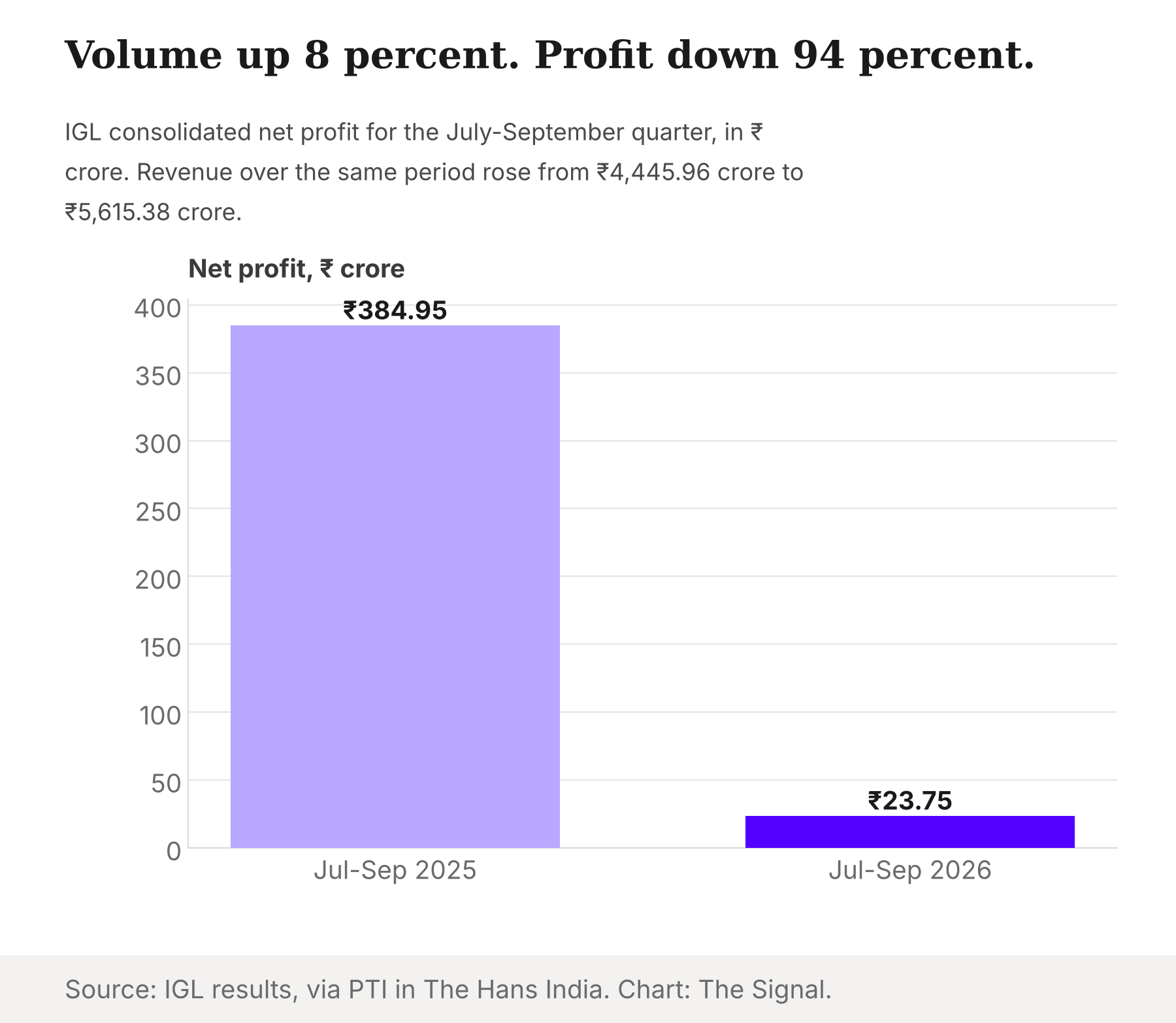
The profit line says otherwise. Consolidated net profit fell 93.83 percent to ₹23.75 crore, against ₹384.95 crore in the same quarter a year earlier. Volume grew about 8 percent. Revenue grew 26 percent. Profit fell by more than nine-tenths.
The margin went where the gas went
The company's own explanation is short: rising gas procurement costs impacted margins. The more useful question is why those costs rose so much faster than what customers pay.
Divide profit by revenue. A year ago, ₹384.95 crore of profit on ₹4,445.96 crore of revenue left a margin of about 8.7 percent. This quarter, ₹23.75 crore on ₹5,615.38 crore left about 0.4 percent. Revenue rose by about ₹1,169 crore, and profit fell by about ₹361 crore. The extra revenue did not reach profit.
Imported gas doubled. The pump price did not.
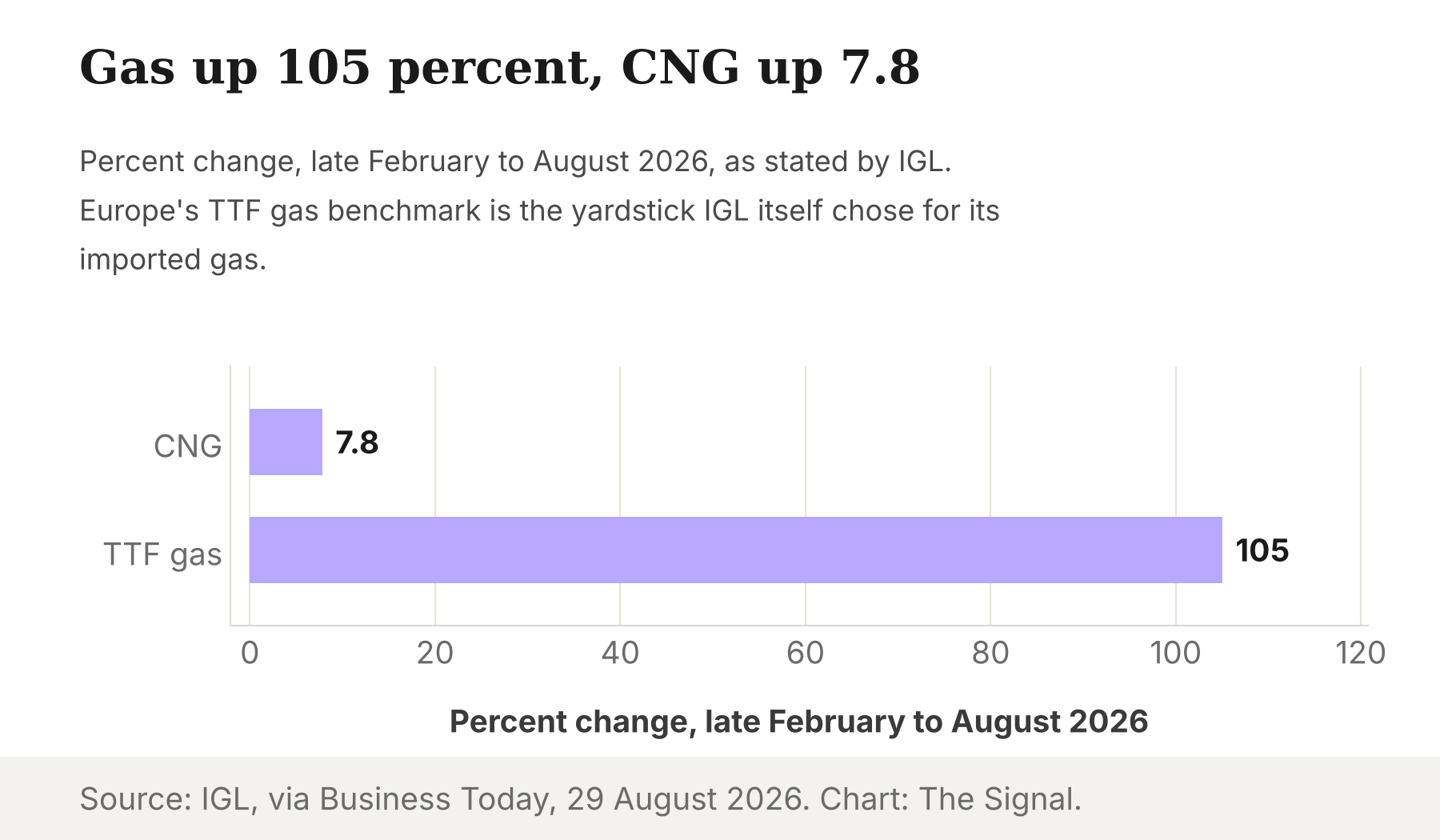
IGL's own account of the squeeze is in its August price notice. IGL said Delhi's retail CNG price rose about 7.8 percent between late February and August 2026, while Europe's TTF gas benchmark rose about 105 percent, from $11.36 to $23.35 per million British thermal units. TTF is a European benchmark, but it is the one IGL chose to measure what its gas costs.
The gap matters because of where the gas now comes from. IGL said a significant portion of input gas for the CNG segment is being met through imported spot LNG, and that global LNG prices had nearly doubled from their pre-crisis levels. The reported numbers are consistent with that: sales volume rose about 8 percent and revenue about 26 percent, yet profit collapsed.
The company has raised prices, but slowly. The 29 August revision lifted Delhi CNG to ₹86.98 a kg from ₹83.09, a rise of about 4.7 percent in one step. At the start of the year the price was ₹77.09, so the cumulative increase to 29 August is about 12.8 percent. IGL called the August step a calibrated revision, which is a fair description of a price that has been moving in small steps while the input moved in large ones.
The cheap gas is a shrinking cushion
City gas companies are supposed to have a buffer. Part of their supply comes from domestically produced gas at administered prices, called APM gas, which is far cheaper than spot LNG. The sector regulator publishes how much of the industry's sales that cheap gas covers. Across all city gas distributors, APM gas contributed 26 percent of total sales between August 2025 and July 2026, with the lowest share in June 2026 at 19 percent. The PNGRB's report a month earlier put the twelve-month share at 27 percent.
These are industry-wide figures, not IGL's own mix, which the sources here do not give. But they show the direction. CNG is the largest segment, 61.8 percent of city gas sales over the same period, and CNG is where IGL says spot LNG is filling the gap. A month with a low cheap-gas share leaves more of the supply to be bought at market prices.
The honest objection
The strongest defence of IGL is that this is a timing problem, not a business problem. Prices follow costs with a lag, and a company that raises pump prices in small steps keeps its customers while the shock passes. IGL itself called its August increase a calibrated revision. If LNG prices ease, margins could recover without further large rises.
That case is real, but it has limits. It explains a quarter, not a structure, and the sources here do not show how much of the 94 percent drop is the gas mix and how much is other items, since the reported figures are the headline profit, revenue and volume, not a full cost breakdown. The attribution of the fall to gas costs is the company's, as reported, and it is consistent with the price and volume numbers, but it rests on one origin.
The Signal
IGL's result is a lesson in what a volume milestone can hide. The company sold more gas and earned 93.83 percent less, while its stated gas benchmark rose about 105 percent against 7.8 percent for its pump price. Watch two things. First, whether the price keeps stepping up: the August rise was ₹3.89 a kg, and a margin near 0.4 percent leaves little room. Second, the cheap-gas share in the regulator's monthly reports: a return toward the 26 percent average would ease the pressure, while another month near 19 percent would not. Selling more is not the same as earning more.
Reporting basis: IGL's quarterly profit, revenue and volume figures are from the company's results, as reported by PTI in The Hans India, and have not been checked against the filing itself. The CNG price, the TTF comparison and the spot LNG remarks are IGL's own statements, as reported by Business Today and DT Next, which are two outlets relaying one company statement and count as one origin. The APM shares are from the Petroleum and Natural Gas Regulatory Board's June and July 2026 city gas distribution reports and cover the whole industry, not IGL. The profit margins, the 26 percent revenue growth, the 8 percent volume growth, the 4.7 percent and 12.8 percent CNG price rises and the ₹1,169 crore and ₹361 crore changes are The Signal's calculations from those figures.