The forecast is severe. In its 8 October 2026 discussion, the US NOAA Climate Prediction Center says that "chances remain high for a historic event that would exceed the strength of previous El Niño events dating back to 1950", with a strong-to-very strong El Niño likely through January to March 2027. India has already had a taste. The IMD reports that the 2026 southwest monsoon ended at 87% of its long period average, and that the South Peninsula got only 76%. The RBI responded on 7 October, raising the repo rate 25 basis points to 5.50% and changing its stance to calibrated tightening.
The easy read is a food-security story: a failed monsoon, a bigger El Niño coming, and a country short of grain. That read is wrong about the grain, and it misses where the pressure is landing.
The granary is not the weak point
Start with what India holds. FCI data show that on 1 September 2026 the Central Pool held 479.92 lakh tonnes of wheat and 390.53 lakh tonnes of rice, 870.45 lakh tonnes in all. The same report puts that at almost 2.8 times the 1 October stocking norm of 307.70 lakh tonnes. Stocks could fall by more than 560 lakh tonnes before they touched the norm.
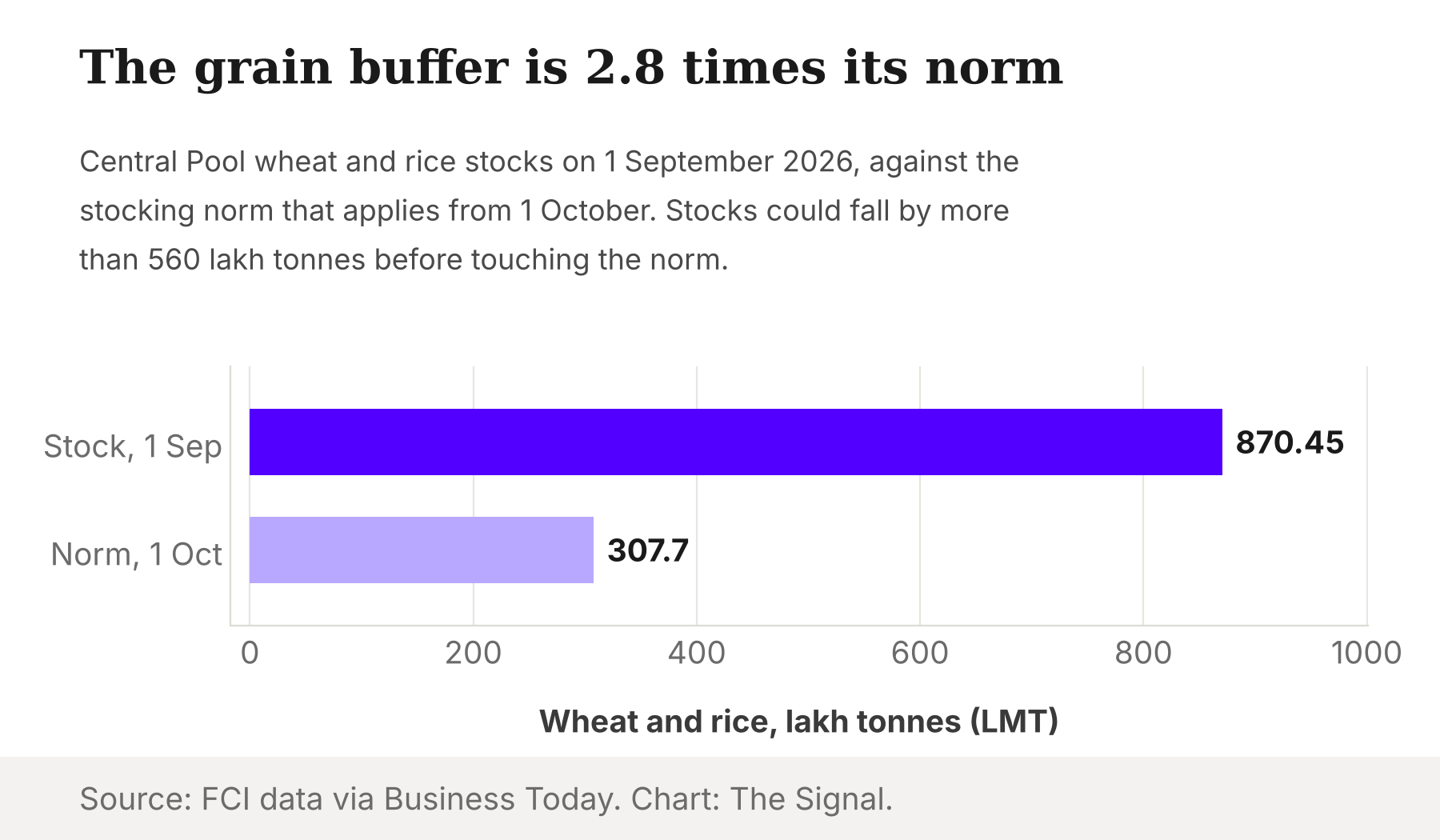
A weak monsoon does not change that arithmetic overnight. A government that holds nearly three times its norm in wheat and rice is not facing a shortage of the staples that anchor the public distribution system.
The basket is
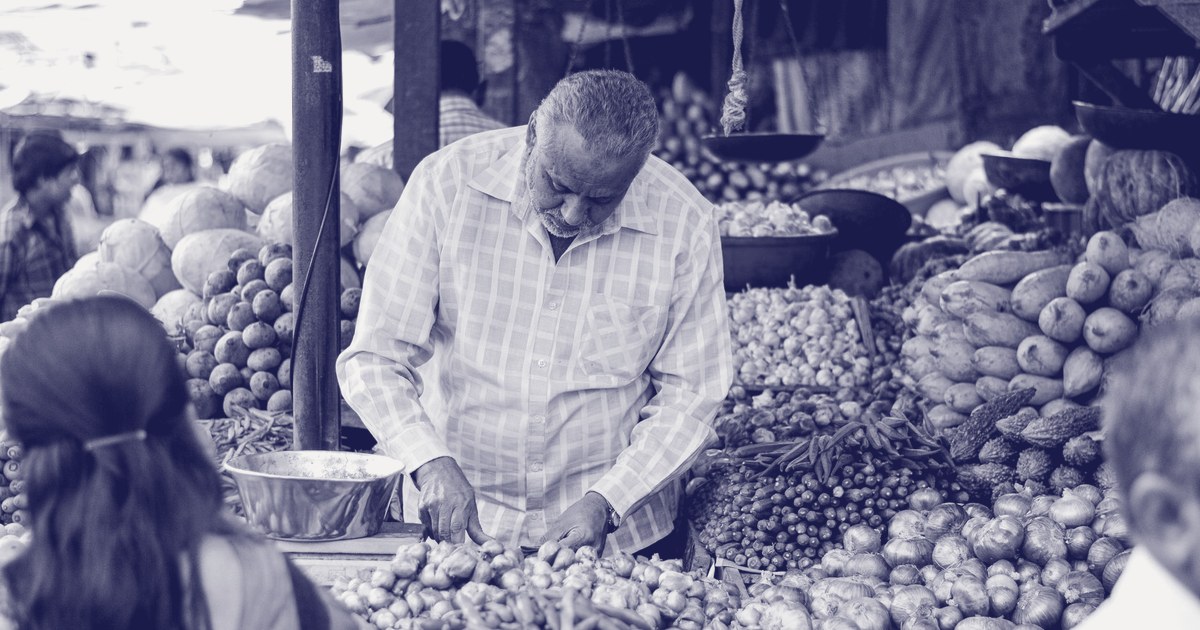
Now look at what households buy outside the ration shop. MoSPI's release for September 2026 shows retail inflation at 5.54%, up from 4.83% in August. Food inflation on the Consumer Food Price Index was 7.74%, up from 5.97%. Onion prices were up 108.09% on a year earlier, against 48.78% in August.
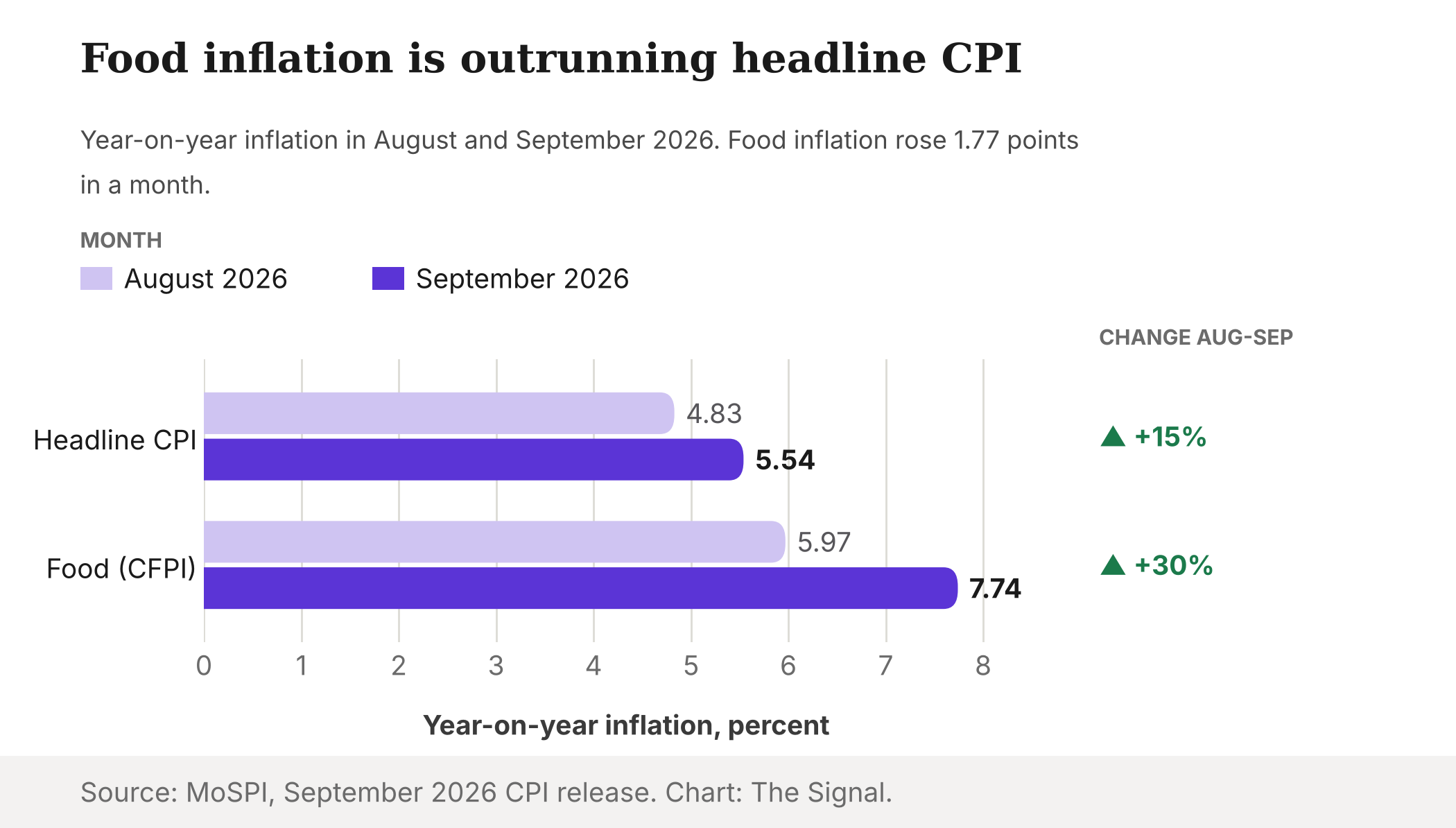
Food inflation is running about 2.2 points above the headline rate. The RBI says as much. Its statement notes that food price increases have become more broad-based, "along with notable spikes in certain items such as sugar". It projects CPI inflation of 5.2% for 2026-27, with the third quarter at 6.0%.
That is the mismatch. The buffer covers cereals, held by the state. The inflation sits in perishables and sugar, which are not. A larger stockpile does nothing for the price of an onion.
What history says about a strong El Niño
The IMD's table of El Niño years lists 17 events since 1951. Seven of them ended with seasonal rainfall more than 10% below the long period average: 1972 at -22.3%, 2002 at -20.9%, 1965 at -18.6%, 1987 at -14.3%, 1951 at -13.2%, 2015 at -12.7% and 1982 at -11.4%. The one event the table labels strong, in 1997, finished at +0.2%.
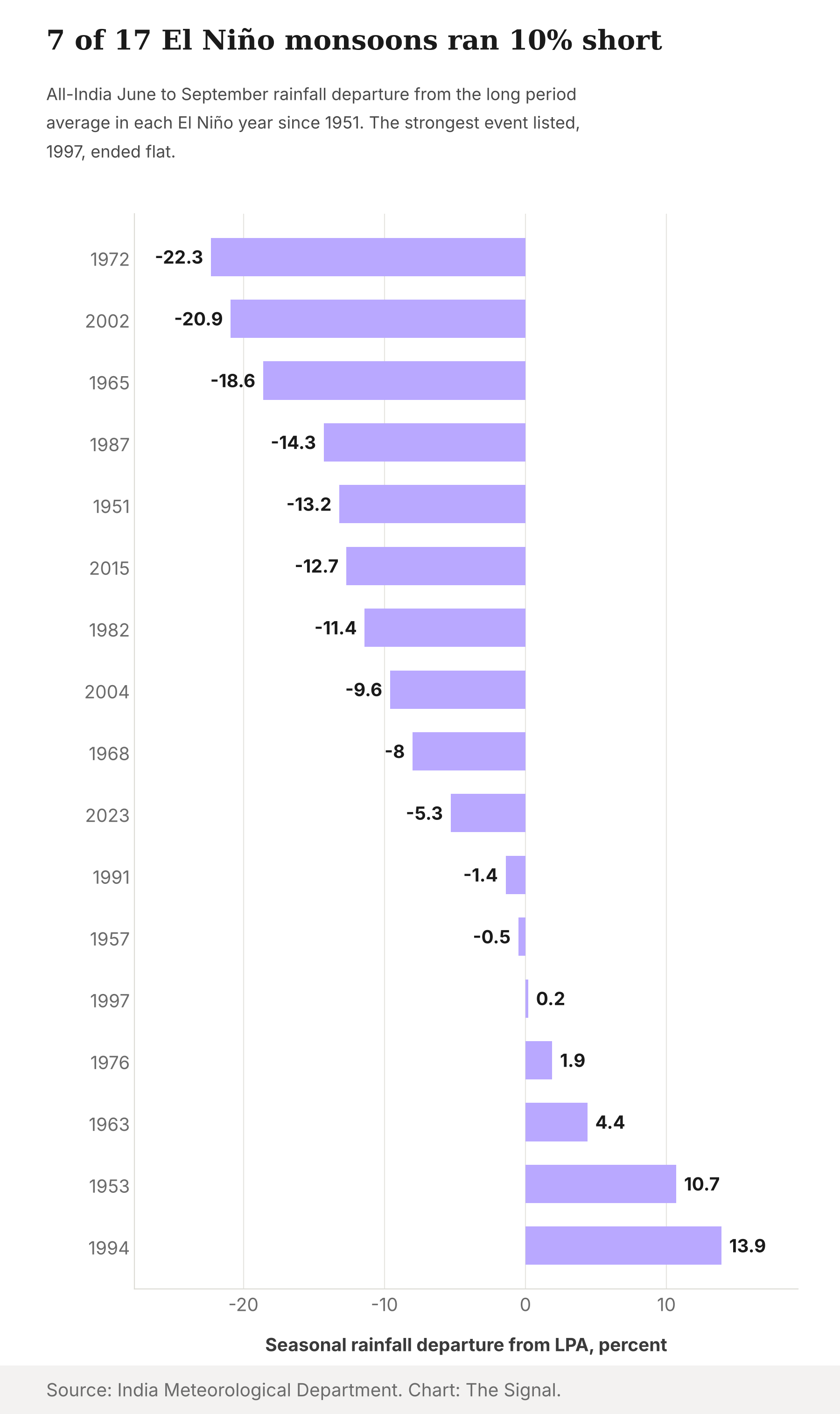
So El Niño raises the odds of a bad monsoon without guaranteeing one, and its strength is a poor guide to the damage. This year already sits in the bad group. Whatever comes next in the winter months arrives after the shortfall, not before it.
The honest objection
The strongest case against this argument is that it is complacent about the grain. The RBI itself warns that the "weak southwest monsoon along with strong El Niño conditions may impact the upcoming rabi season and rural demand". A poor rabi crop would eat into wheat, the very stock that makes the buffer look so comfortable. And one strong event in the IMD table, 1997, is a sample of one, so it cannot prove that a record El Niño will be kind.
That case has force on the cereal side, and it is a reason to watch the rabi harvest. But it moves the risk to next spring, while the price pressure is already visible this autumn. The buffer also gives the government room to absorb a rabi shortfall before it shows up at the ration shop.
The Signal
The consensus asks whether India will have enough grain, and FCI data say it will, at 2.8 times the norm. The better question is what a rate hike can do about a food-price shock that starts in a field. The RBI has moved to calibrated tightening with food inflation at 7.74% and its own projection for the third quarter at 6.0%. Tighter money works on demand. It does not bring forward a vegetable crop.
The next food print in the MoSPI series is the first thing to watch, since perishables are where the pressure shows first. The rabi sowing and wheat outlook come next, the one place the buffer could erode. Last is whether the RBI's next move is another hike or a pause, because a central bank that has spent its rate move on a supply shock has less to offer if demand-side inflation follows. A full granary protects the plate. It does not protect the price.
Reporting basis: the El Niño outlook is from NOAA's Climate Prediction Center, and the El Niño year table and the 2026 monsoon totals are from the India Meteorological Department. The repo rate decision, stance, inflation projection and rabi warning are from the Reserve Bank of India's Governor's statement of 7 October 2026. Retail and food inflation and the onion figure are from MoSPI's September 2026 CPI release. Central Pool stocks and the stocking norm are per Business Today, reporting Food Corporation of India data, and rest on that single secondary source. The buffer headroom and the food-versus-headline gap are The Signal's calculations from those figures.