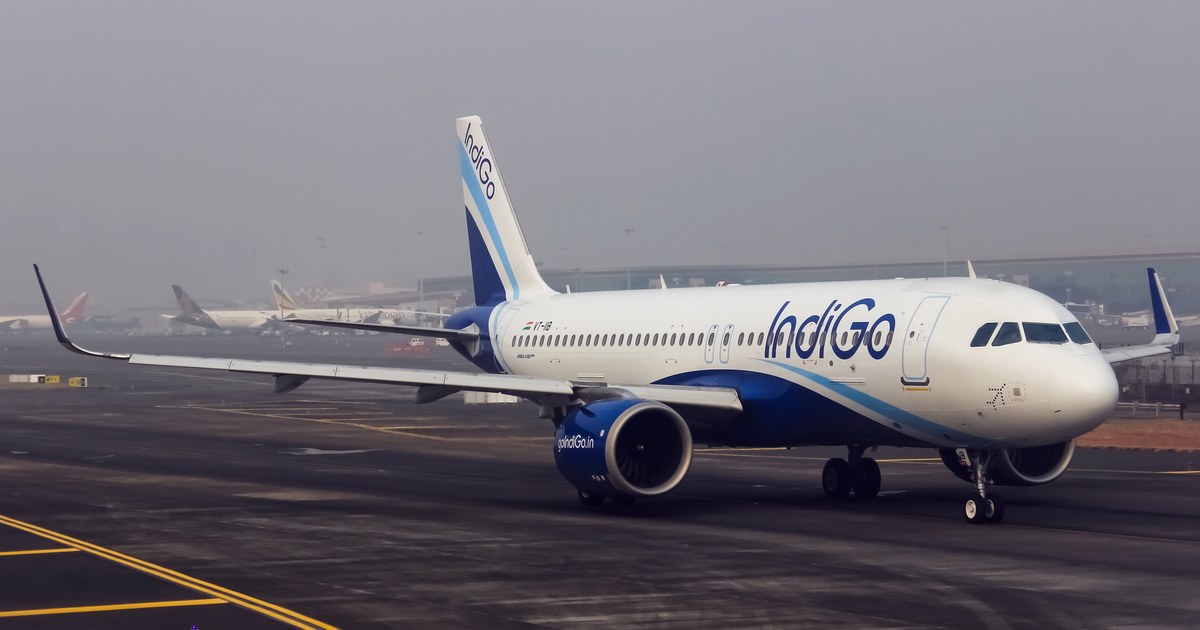
On September 17, 2026, IndiGo revised a set of domestic ancillary charges, and by the standards of an airline fee schedule, the revisions were not subtle. The next day, IndiGo's shares closed up 2.32 percent at Rs 4,854 on the BSE. Read only the headline of that sequence and it looks like routine airline economics: a dominant carrier tweaks its price list, the market shrugs and moves on.
It is worth slowing down on what actually moved. The airfare itself, the number every fare-comparison site tracks and every flier checks first, did not change. What changed were the charges that sit beside it: what it costs to bring an infant, to check an extra bag, to send an unaccompanied child, and to board first.
IndiGo's infant travel fee rose 50 percent, the steepest of the four changes.
The domestic infant charge rose from Rs 2,000 to Rs 3,000 per infant per sector, a half-again increase on a fee that a parent flying with a baby cannot decline. Three other charges moved the same week: domestic excess baggage rose from Rs 700 to Rs 800 per kilogram, the unaccompanied-minor fee for children aged five to twelve rose from Rs 5,000 to Rs 5,999, and priority check-in and boarding rose from Rs 450 to Rs 650. Stacked together, the pattern is not four unrelated tweaks. It is one direction, applied everywhere except the ticket.
Four charges, one direction
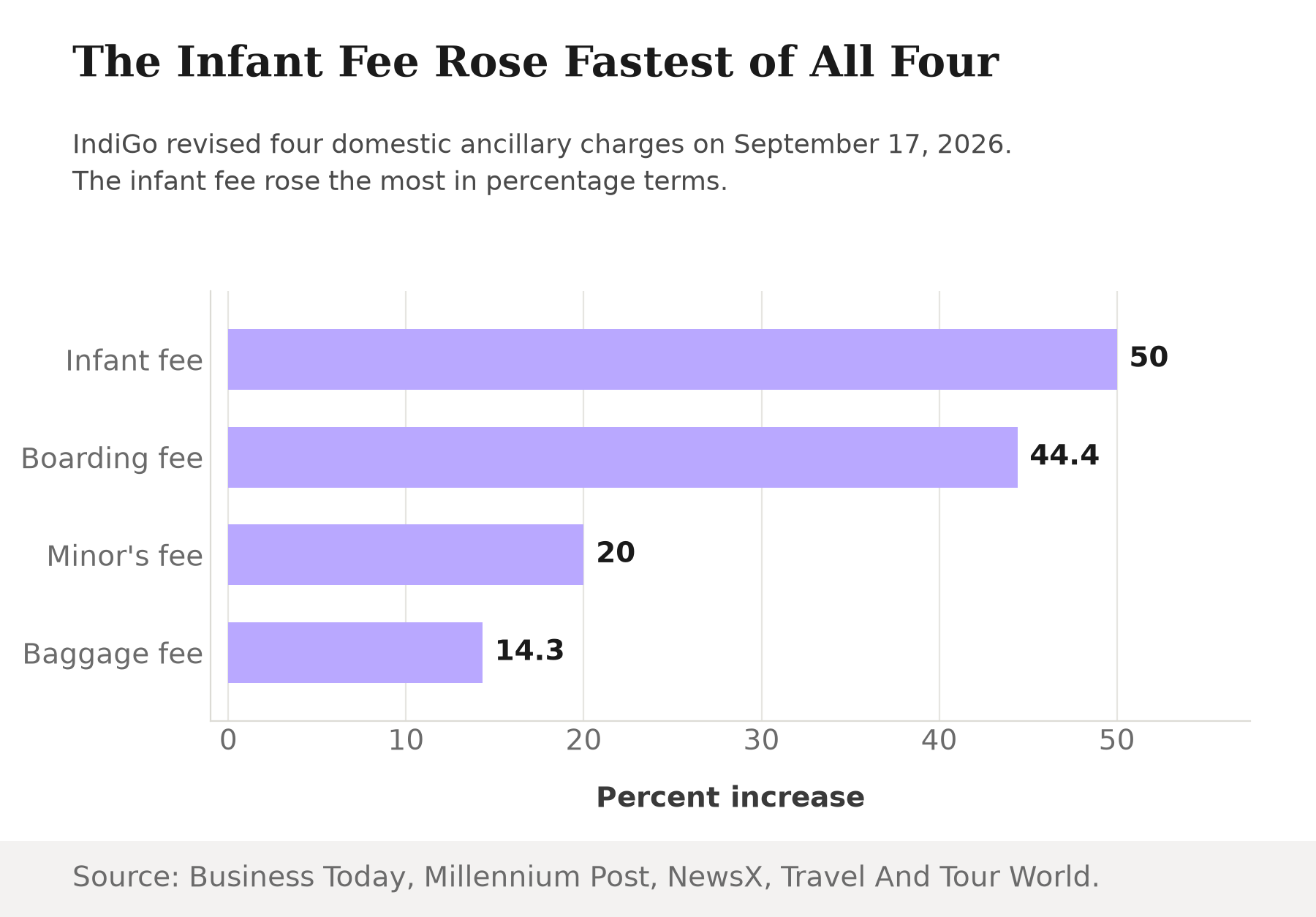
The four charges do not share a customer. A family travelling with an infant, a solo flier checking excess luggage, a parent sending a child alone, and a business traveller paying to board early are different fliers making different decisions. What they share is timing: they discover the charge after they have already chosen IndiGo, at the counter or the booking's final screen, not while comparing fares across airlines. That is a structurally different kind of pricing power than raising the base fare, which a flier can compare, in real time, against a rival's before they commit.
A market with nowhere else to go
Analysts told Business Standard that the increases would not cost IndiGo passengers: "IndiGo is the market leader, and aviation remains one of the growing sectors in India despite high crude oil prices. The increase in excess baggage and infant fares will help the airline generate additional revenue and provide some support to profitability," according to WealthMills Securities analyst Kranthi Bathini. That reading rests on a specific fact: IndiGo's share of India's domestic air traffic hit a record 66.3 percent in June 2026, as DGCA data showed rival Air India Group's share falling.
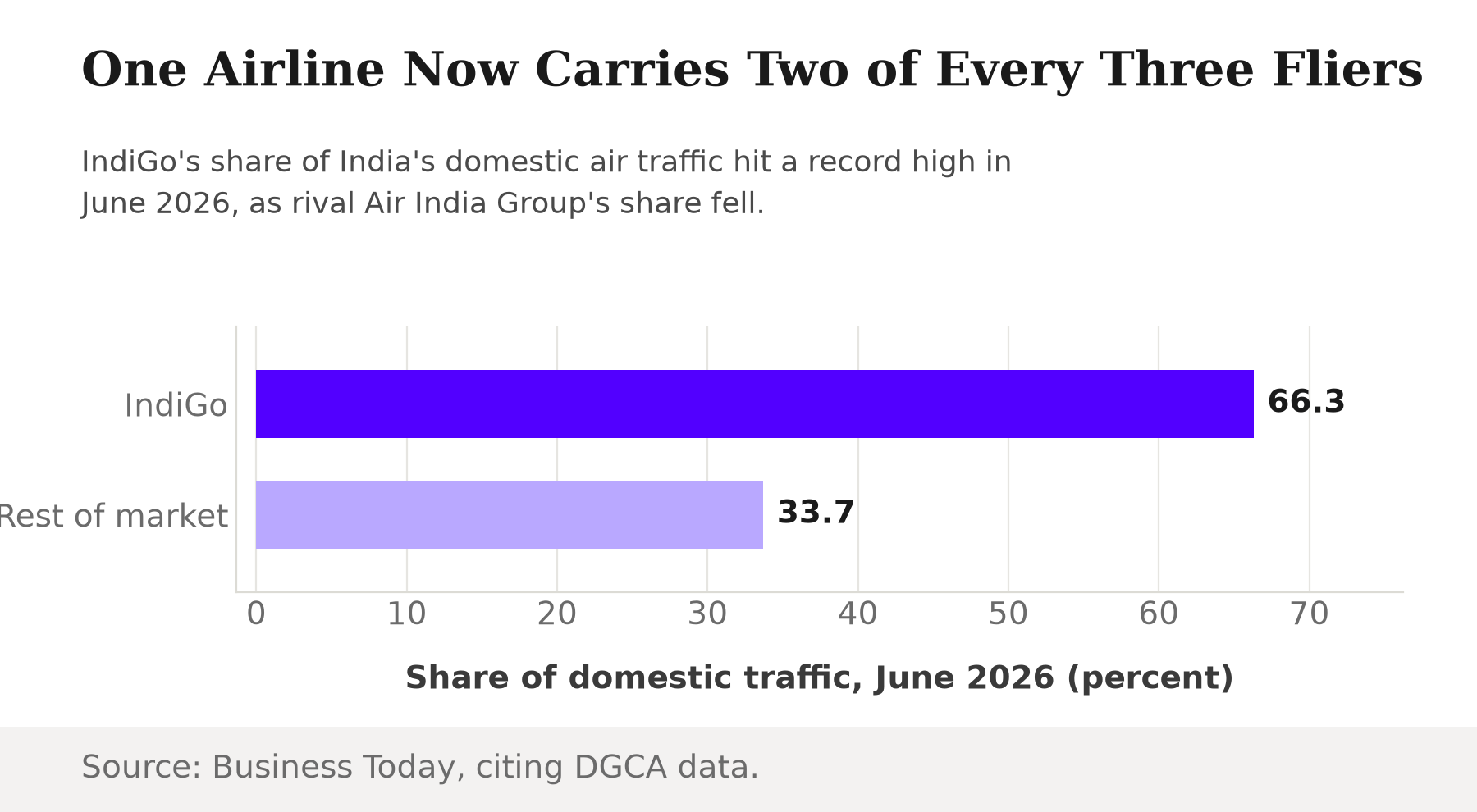
Two of every three domestic Indian air trips now run on IndiGo. At that scale, a family that dislikes the new infant fee does not have much of an alternative route to the same city on the same day. The dominance that makes the airline a target for scrutiny on delays and cancellations is the same dominance that makes an ancillary fee hike close to riskless: the flier being charged has little competing capacity to switch to. That is the mechanism behind the analyst's confidence, and it is also why the stock moved up, not down, on the news.
This is happening inside a market large enough that the arithmetic matters at scale. India has become the world's third-largest domestic aviation market, with its airports handling over five lakh passengers a day, according to the Ministry of Civil Aviation, as of that ministry's March 2026 statement. A fee increase measured in a few hundred rupees, multiplied across a five-lakh-a-day network in which one carrier carries two-thirds of the traffic, adds up to real revenue without a single headline fare moving.
The pressure behind the timing
The hikes also land right after a quarter that gave IndiGo a reason to look for revenue anywhere it could find it. In Q1 FY27, the quarter ended June 2026, IndiGo's parent InterGlobe Aviation swung to a Rs 238 crore net loss even as revenue rose about 20 percent, because fuel costs surged 86 percent year on year.
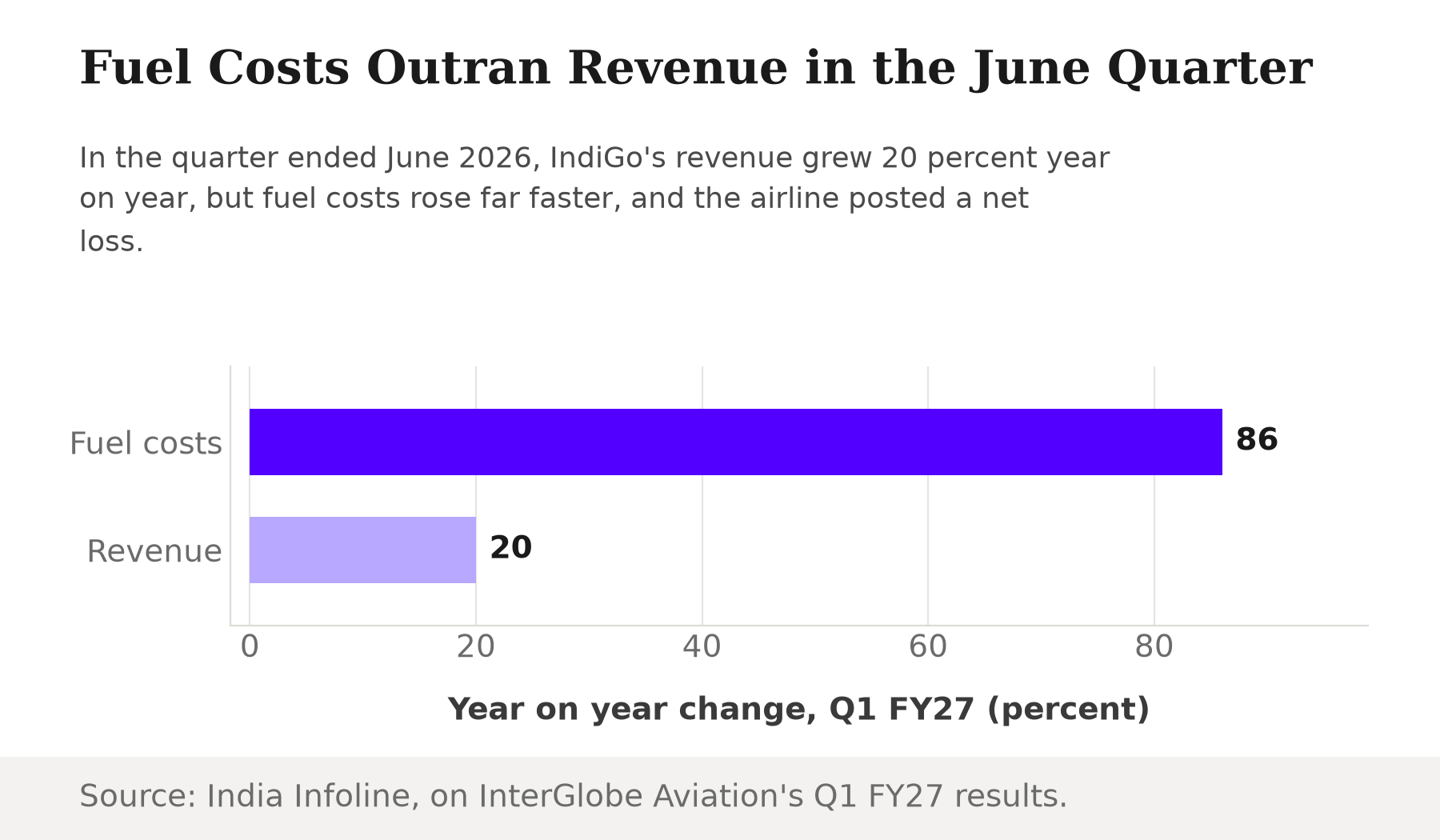
Revenue climbing 20 percent while the company still posts a loss is the kind of result that puts every available lever for margin, not just growth, on the table. Ancillary fees are one of the few levers an airline can pull without republishing a base fare that a comparison engine flags the same afternoon.
There is a reason the base fare carries that extra scrutiny in India specifically. During IndiGo's flight-cancellation crisis in December 2025, the Civil Aviation Minister directly ordered the airline to ensure there was no increase in airfares while it worked to normalise operations. That order was tied to a specific crisis, not a standing price cap, and it says nothing about why IndiGo revised its ancillary fees nine months later. But it is a clear marker of which number draws a government minister's direct attention in Indian aviation. The airfare is the price the public and the regulator watch. Infant fees, baggage rates, and boarding charges are not.
The honest objection
The strongest case against reading anything strategic into this is that these are small, ordinary adjustments. A rise from Rs 700 to Rs 800 per kilogram of excess baggage, or Rs 450 to Rs 650 for priority boarding, is a few hundred rupees, the kind of periodic repricing every airline runs as fuel and handling costs drift, not a calculated substitute for a fare increase it is somehow barred from making. Airlines revise ancillary schedules routinely, and nothing in the record shows this round was planned as a workaround for anything.
That case holds for any one of the four changes in isolation. It is harder to hold once all four move the same week, in the same direction, on charges that share no customer but share the trait of being invisible to a fare-comparison search: only the number a flier compares before booking stayed flat. Investors did not have to know the motive to read the result. A dominant carrier finding new revenue in the fees fliers cannot shop around, in the same week it is under no comparable pressure on the fare they can, is a low-risk story either way, and the stock priced it as one.
The Signal
The airfare is the number a comparison site tracks, a rival can undercut, and a minister can order frozen mid-crisis. The infant fee, the baggage rate, the boarding charge, none of them face that same test, because none of them are visible until the flier has already committed. IndiGo just showed which of those two categories room to move sits in, and its shareholders rewarded the answer. Watch what happens the next time IndiGo's costs rise: if the fare itself starts moving as freely as the fees did this week, the two categories have converged. Until then, the ticket price is the one number in Indian aviation that still has to behave.
Reporting basis: the September 17, 2026 fee revisions are per Business Today's report citing airline sources, with the individual baggage, unaccompanied-minor, and priority-boarding figures corroborated by Millennium Post, NewsX, and Travel And Tour World respectively. The stock's September 18 close is per Business Today's report of BSE trading, and the analyst view on margin impact is per Business Standard, quoting WealthMills Securities' Kranthi Bathini. IndiGo's June 2026 market share is per Business Today's report of DGCA data. The Q1 FY27 results, including the net loss, revenue growth, and fuel cost increase, are per India Infoline's report on InterGlobe Aviation's earnings. India's aviation market scale is per a Ministry of Civil Aviation press release via the Press Information Bureau, and the December 2025 ministerial directive on airfares is per a separate Ministry of Civil Aviation release. The 33.7 percent "rest of market" figure and the percent changes in the first chart are The Signal's calculations from those reported figures.