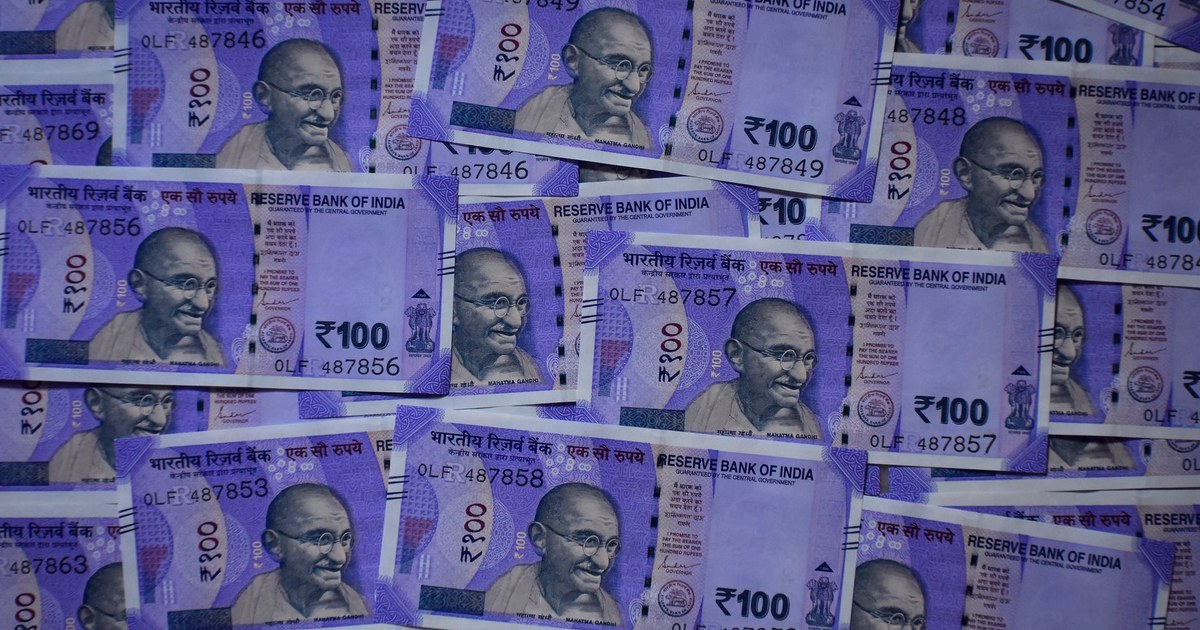
Mumbai's wholesale milk rate is set to rise by Rs 9 a litre on September 1, 2026, from Rs 93 to Rs 102, crossing Rs 100 a litre for the first time. Business Today attributes the move to rising cattle feed and oil cake costs, and reports the new rate will hold from September 1, 2026 through February 28, 2027. It follows a smaller, statewide move just three weeks earlier: Maharashtra retail milk prices rose Rs 2 a litre from August 11, 2026, a hike the industry body tied partly to a Rs 10 a litre rise in diesel prices. Read together, the story writes itself: input costs are up, and every dairy in the state is passing the increase straight to the consumer.
It is worth slowing down on that. Feed and diesel genuinely cost more. But rising input costs alone do not explain why cooperative giants and private dairies across Maharashtra tend to move within weeks of each other. Competitors that are each free to absorb costs differently would normally stagger those increases instead. Part of the reason sits in a document from January 2024 that many readers of the Rs 100 headline have never seen.
A Government of Maharashtra resolution makes it legally binding for cooperative and private dairy plants alike to pay farmers a minimum of Rs 27 a litre for cow milk of standard quality (3.5 percent fat, 8.5 percent solids-not-fat), topped up by a Rs 5 a litre state subsidy paid directly into farmers' bank accounts: a guaranteed farmgate floor of Rs 32 a litre, regardless of what any individual dairy might otherwise be willing to pay.
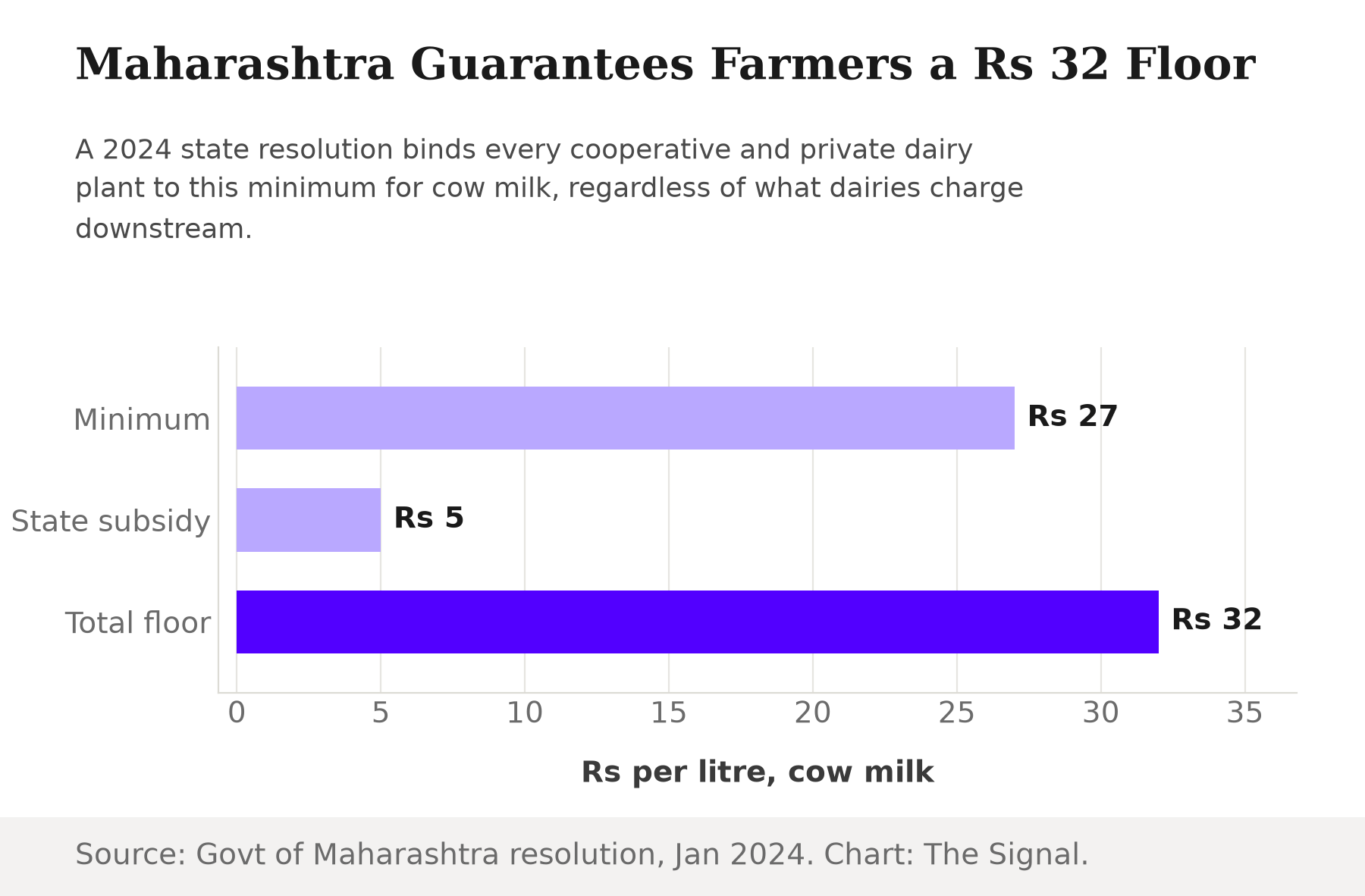
That floor does not move with demand, brand strategy, or how badly one dairy wants to undercut another on the shelf. It is fixed by government order and applies to every cooperative and private dairy plant in the state alike. When an input cost, cattle feed, transport diesel, packaging, rises, a dairy has exactly one lever left: the price it charges downstream. It cannot quietly claw the increase back from the farmer, because the law has already set the floor beneath that negotiation. That is the mechanism a "competitive market" headline leaves out. The competition that dairies would normally run, squeezing suppliers to hold the shelf price steady, is closed off at the base. So cost increases tend to arrive at the register in full, and roughly together, because every dairy in the state is working from the same floor and facing similar input shocks at similar times.
This is not unique to Mumbai's wholesale market. Amul, India's largest dairy cooperative, raised consumer prices Rs 2 a litre nationwide from May 14, 2026, saying the price it pays farmers had risen 3.7 percent since its last revision in May 2025. Mother Dairy, in the same window, said its farmer procurement costs had risen about 6 percent over the preceding year and that it was passing through only part of that increase. Two of India's largest dairy cooperatives, competing directly for the same shelf space, cited the same underlying pressure within days of each other rather than one undercutting the other on price.
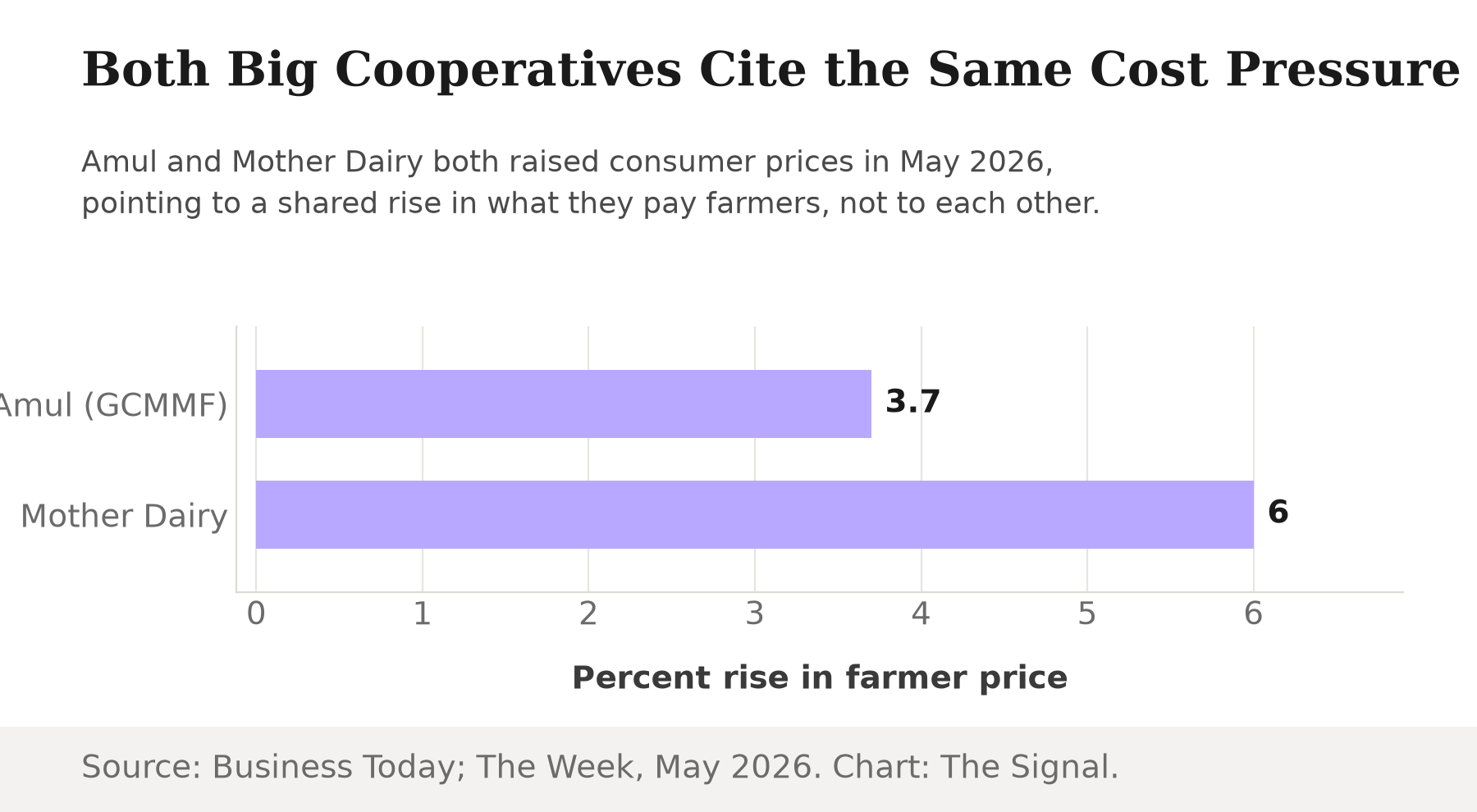
Four milk price moves across Maharashtra and India, 2026
| Payer | Increase | Effective date | Stated reason |
|---|---|---|---|
| Amul (GCMMF), nationwide | Rs 2 a litre | May 14, 2026 | Farmer procurement price up 3.7% since May 2025 |
| Mother Dairy, nationwide | Partial pass-through | May 2026 | Farmer procurement cost up about 6% over the past year |
| Maharashtra retail, statewide | Rs 2 a litre | August 11, 2026 | Diesel prices up Rs 10 a litre |
| Mumbai wholesale rate | Rs 9 a litre (Rs 93 to Rs 102) | September 1, 2026 | Higher cattle feed and oil cake costs |
Source: Business Today; The Week; The Free Press Journal.
Nowhere does a national number cap any of this. The Central government told the Lok Sabha on July 21, 2026 that it has no proposal to fix a national Minimum Support Price for milk, and that prices remain determined by cooperatives and private dairies. That answer is accurate as far as it goes, but it describes the absence of one national floor, not the absence of any floor. Maharashtra has built its own, state by state, and every dairy operating inside it prices milk against a mandate the Centre is not being asked about and does not track.
The pass-through dwarfs the general price level. Mumbai's wholesale rate rises from Rs 93 to Rs 102 in a single move, about 9.7 percent, against Maharashtra's overall retail inflation of 4.09 percent for July 2026, the most recent month MoSPI has reported: more than double the general rate.
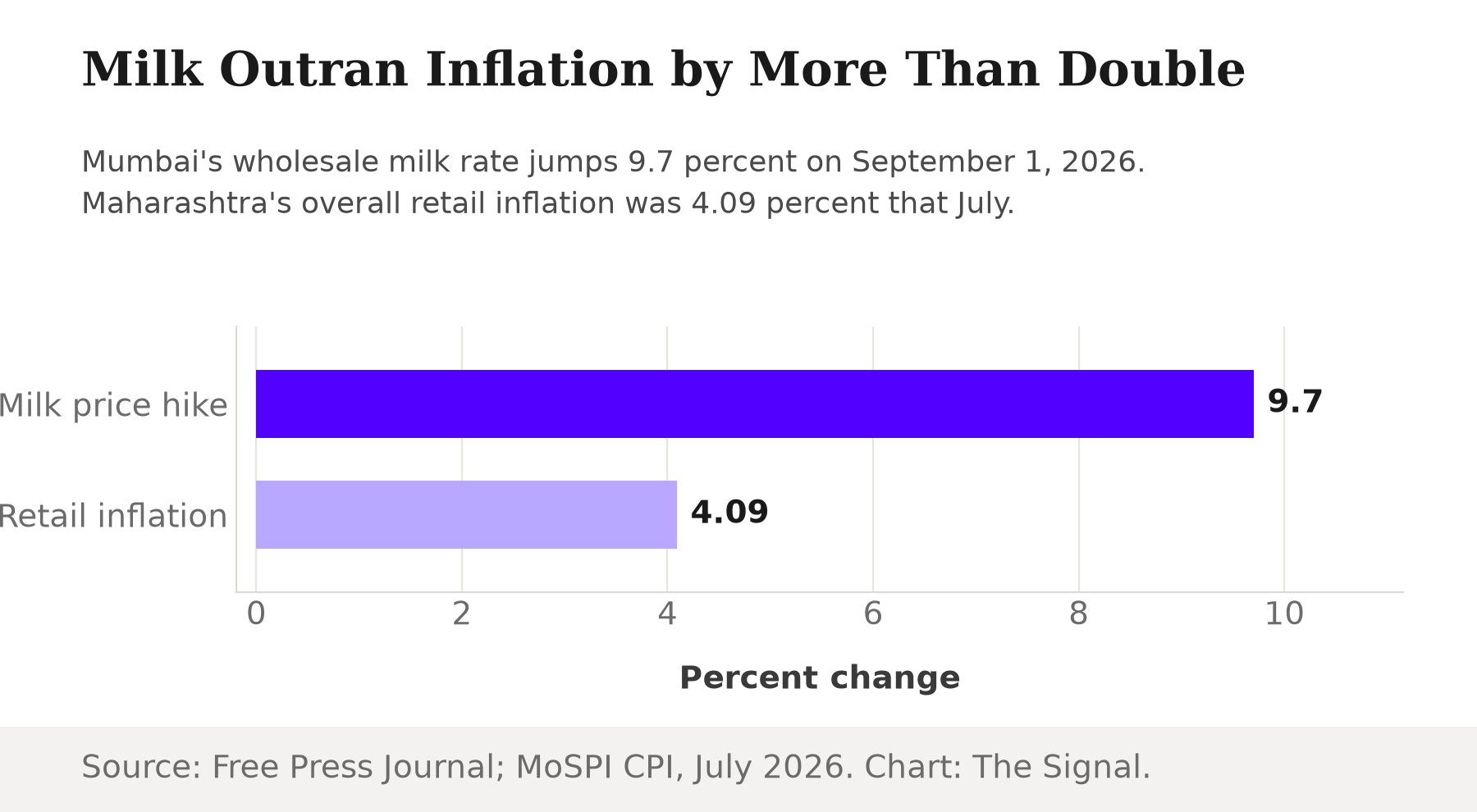
The honest objection
The strongest case against this reading is timing. The Rs 27 plus Rs 5 floor was fixed in January 2024, more than two and a half years before this particular Rs 9 hike; it cannot, by itself, explain why the increase lands in September 2026 specifically rather than some other month. The immediate trigger is genuinely the input costs Business Today names: feed, oil cake, diesel.
That objection describes the trigger, not the transmission. A floor that has held for two and a half years is exactly what removes the shock absorber a purely competitive market would otherwise use: a dairy facing a feed-cost spike can no longer choose to pay farmers less for a season and hold the shelf price instead, so the shock has nowhere to go but the retail price, for every dairy bound by the same order, at close to the same time. The floor's role is different: it closes off every other place that shock could go.
The Signal
Mumbai's milk aisle looks like a normal competitive market: several brands, a range of prices, buyers who can switch between them. But the price at the bottom of that market, the farmgate rate every dairy must clear before it sells a single litre, is not set by any of those brands. It is set by a state order that many consumers reading about Rs 100 a litre have never seen, and it does not move with demand. Watch two things from here. First, whether the Centre's position that it has no plan for a national MSP holds. A single national floor would replace Maharashtra's state-by-state patchwork with one number every dairy in the country prices against. Second, and more immediately telling, watch for the next revision to Maharashtra's own resolution rather than the next brand's price announcement, because by the time a dairy raises the shelf price, the floor underneath it has usually already moved first. The milk is not pricing itself. The floor is pricing it, for every dairy at once.
Reporting basis: the Mumbai wholesale rate and its September 2026 effective date are per the Free Press Journal, with the cost attribution and the rate's validity through February 2027 per Business Today. The statewide August 2026 retail increase and its diesel-cost rationale are also per the Free Press Journal. Amul's May 2026 price increase and its farmer-price rationale are per Business Today; Mother Dairy's procurement-cost disclosure for the same period is per The Week. The farmgate minimum price and state subsidy are from a Government of Maharashtra resolution dated January 2024. The Lok Sabha reply on a national MSP for milk is per The Tribune. Maharashtra's July 2026 retail inflation reading is from MoSPI's Consumer Price Index release. The percentage increase in Mumbai's wholesale rate and the total farmgate floor are The Signal's calculations from those figures.