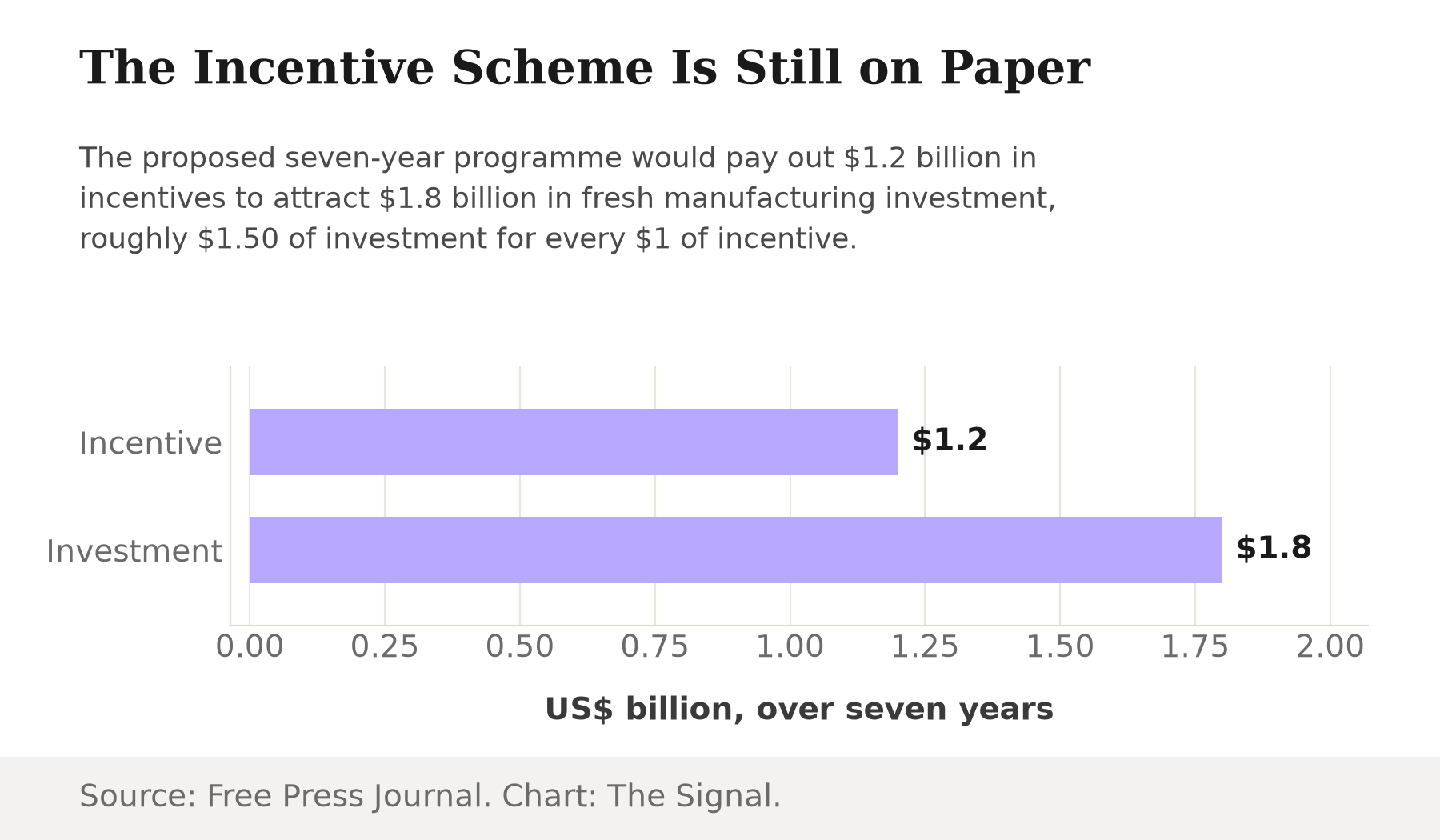
India's government has proposed a seven-year incentive scheme worth about $1.2 billion, designed to attract roughly $1.8 billion in fresh investment in domestic manufacturing of construction equipment, including tunnel boring machines, firefighting systems and high-rise elevators. Read as a headline, it is the standard Make in India story: New Delhi puts money behind a category of heavy machinery the country still imports, and hopes a local supply chain follows.
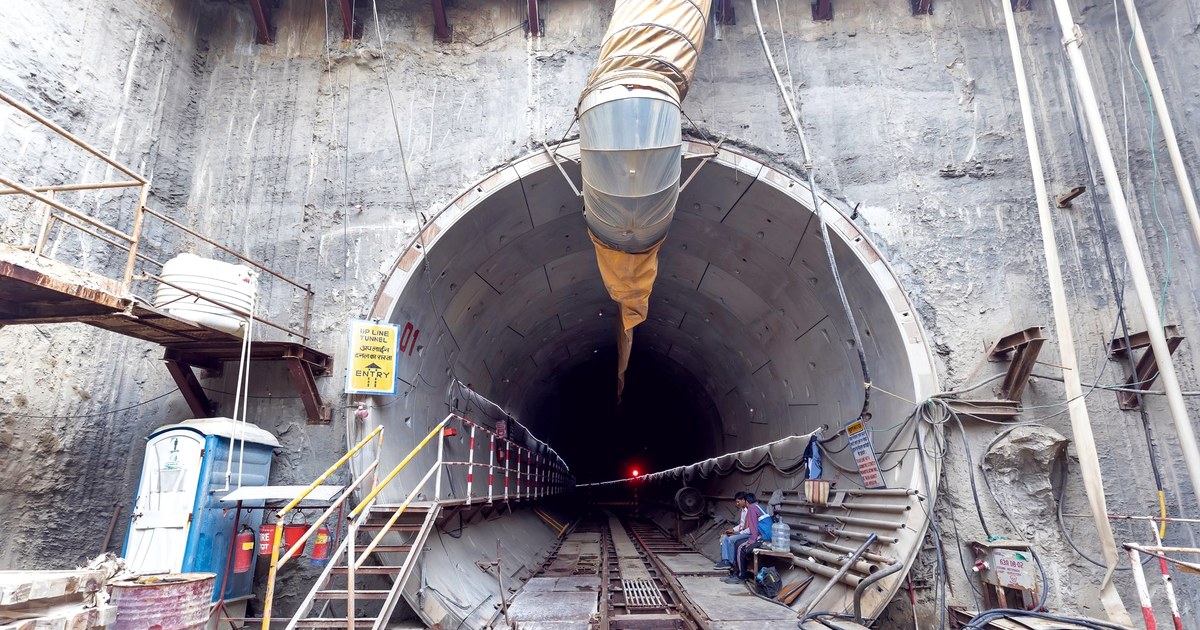 Photo: Anil Sharma on Pexels.
It is worth slowing down on that framing, because the most concrete case of a tunnel boring machine maker actually moving into India did not wait for this scheme. In 2024, China held up export customs clearance for tunnel boring machines bound for India, and that delay pushed German manufacturer Herrenknecht to start setting up local production in India instead, according to Germany's own ambassador to India. The incentive scheme is still a proposal. The customs hold, and the factory decision it triggered, already happened.
A Chinese customs delay, not an Indian subsidy, produced the industry's clearest localization move so far.
The machines already at work
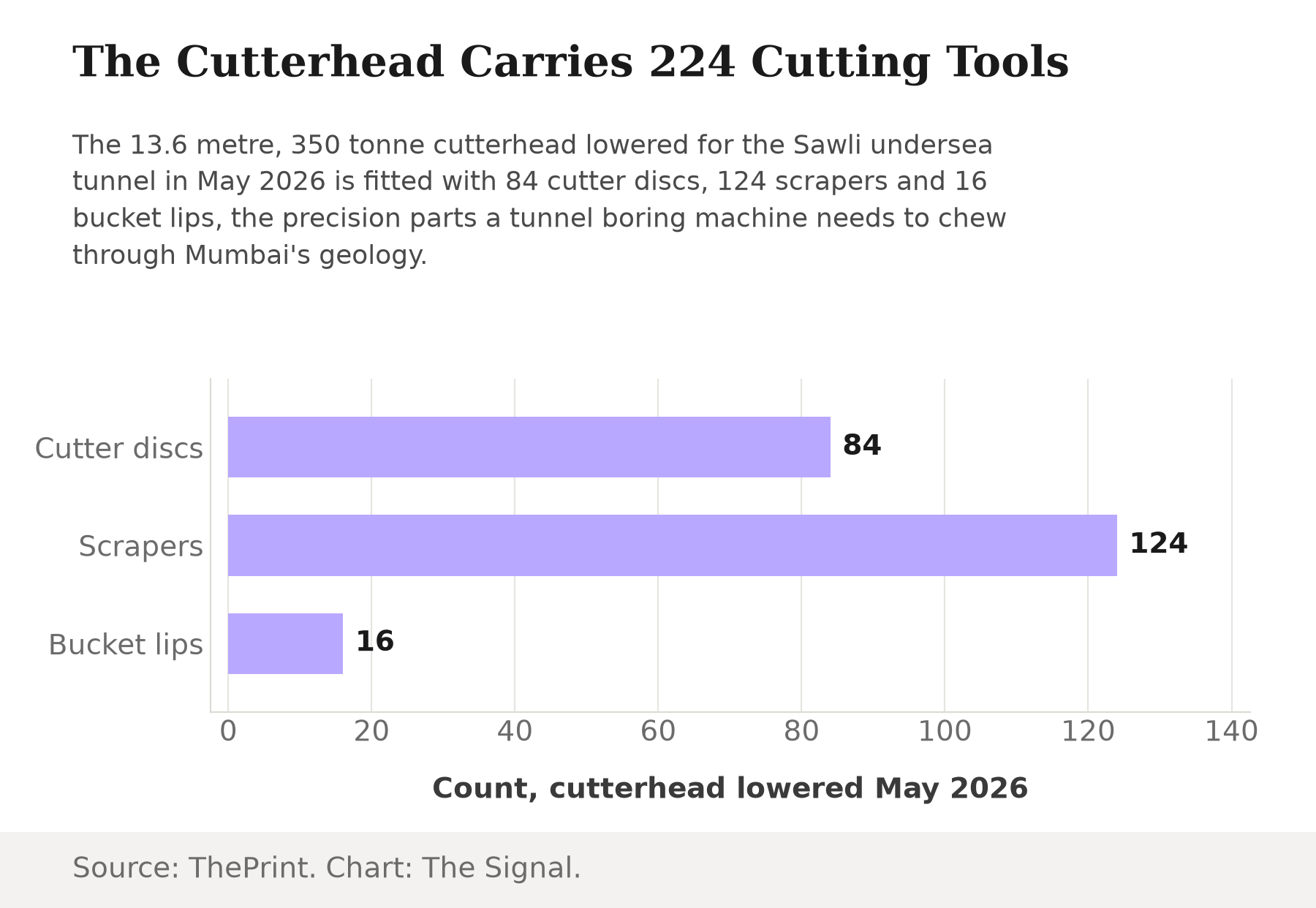
Whatever the scheme eventually funds, the tunnels are not waiting for it, and neither is the import line the scheme is meant to redirect. As recently as 23 March 2026, the tunnel boring machines delivered to Mumbai for this same undersea tunnel section were manufactured not at Herrenknecht's new Chennai plant but at the company's own unit in China, the very supply line the 2024 customs hold was supposed to have pushed the company away from. Two months after that delivery, on the same corridor, a tunnel boring machine cutterhead lowered in May 2026 for the undersea tunnel section at Sawli measures 13.6 metres in diameter, weighs 350 tonnes, and is fitted with 84 cutter discs, 124 scrapers and 16 bucket lips, the precision parts that let the machine chew through rock and soil without stalling.
A second machine on the same corridor is bigger still. The tunnel boring machine that began excavating the 7 kilometre undersea stretch beneath Thane Creek in July 2026 shares that 13.6 metre cutterhead diameter but weighs nearly 3,200 tonnes as a complete unit, built to hold its line through Mumbai's mixed geology under a tidal creek. These are not scale models or pilot units. They are the machines cutting India's first undersea rail tunnel, right now, in 2026.
The project has already produced breakthroughs to show for it. On 2 January 2026, the railway minister announced a 1.5 kilometre tunnel breakthrough on the Virar-Boisar stretch in Palghar, Maharashtra, and at a second mountain-tunnel breakthrough in Palghar on 3 February 2026, the minister said many of the advanced construction technologies and large machines used on the project are manufactured in India. That claim, made by the government about its own flagship project, is doing real work: it asserts an existing domestic base wider than a single foreign manufacturer's factory decision.
What the scheme actually buys
Set against machines this large, the proposed scheme's own numbers are modest. The $1.2 billion in incentives is designed to draw about $1.8 billion in fresh investment, a little over $1.50 of private investment for every dollar of government incentive, spread across seven years and three different equipment categories, not tunnel boring machines alone.
That is a real number, but it is a starting bid, not a finished factory. Herrenknecht's move already happened without it. The scheme's job now is to see whether a government subsidy can do, deliberately and at scale, what a Chinese customs officer did by accident: make it worth a foreign manufacturer's while to build in India rather than ship in.
The honest objection
The strongest case for the scheme is that one foreign factory is not an industry. Herrenknecht's decision was a single company reacting to a single supply shock; it says nothing about whether India can build the deeper bench of component suppliers, engineers and specialised foundries that heavy tunnel boring equipment needs. A dedicated incentive scheme, backed by the government's own money over seven years, is a more deliberate and repeatable lever than hoping Beijing keeps making the same mistake. And the railway minister's statement that many of the bullet train project's advanced technologies and large machines are already manufactured in India points to a domestic base that may already be broader than the Herrenknecht case alone suggests.
That case is real, but it does not change the sequence: the scheme still has no confirmed launch date in the reporting so far, while the customs hold and Herrenknecht's response already happened. An incentive can widen a supply chain that already has a foothold. It has not yet been shown to create one from nothing.
The Signal
The lesson sitting inside this story is uncomfortable for industrial policy: the most effective forcing function for India's tunnel-machine localization to date was not a rupee of subsidy, it was a customs decision made in Beijing. That is leverage India does not control. If China's export posture eases, or another government offers a manufacturer better terms, the pressure that pushed Herrenknecht into India could simply lift. Watch whether other tunnel boring machine makers follow Herrenknecht for reasons that have nothing to do with China, and whether the $1.2 billion scheme actually gets funded rather than just proposed. A supply chain built on someone else's customs decision is not yet a supply chain India owns.
Reporting basis: the proposed incentive scheme's size and structure are per Free Press Journal's report. Herrenknecht's move to set up local production, and the 2024 Chinese customs hold that preceded it, are per ThePrint, citing Germany's ambassador to India. The March 2026 delivery of China-built tunnel boring machines for the same undersea tunnel section is also per ThePrint. The Sawli cutterhead specifications and the Thane Creek tunnel boring machine's dimensions are per ThePrint and Metro Rail News respectively. The Virar-Boisar tunnel breakthrough and the railway minister's statement on domestically manufactured technologies are per the Ministry of Railways, as carried by All India Radio's News on Air. The per-dollar investment multiple on the incentive scheme is The Signal's calculation from those figures.