In July 2026, the government announced that India had crossed 300 gigawatts of non-fossil fuel based installed electricity generation capacity, more than 60 percent of the 500 GW target the country set for 2030, per All India Radio, citing the Ministry of Power. The Central Electricity Authority's own monthly numbers put the milestone even higher by the end of June: as of 30 June 2026, non-fossil sources (nuclear, large hydro and MNRE-tracked renewables combined) made up 54.18 percent (297.4 GW) of India's total installed power capacity of 548.9 GW, against coal's 224.2 GW, about 41 percent, according to the CEA's June 2026 Executive Summary on Power Sector. Read those two numbers together and the milestone looks decisive: more than half of the country's power plants, measured by capacity, no longer burn coal.
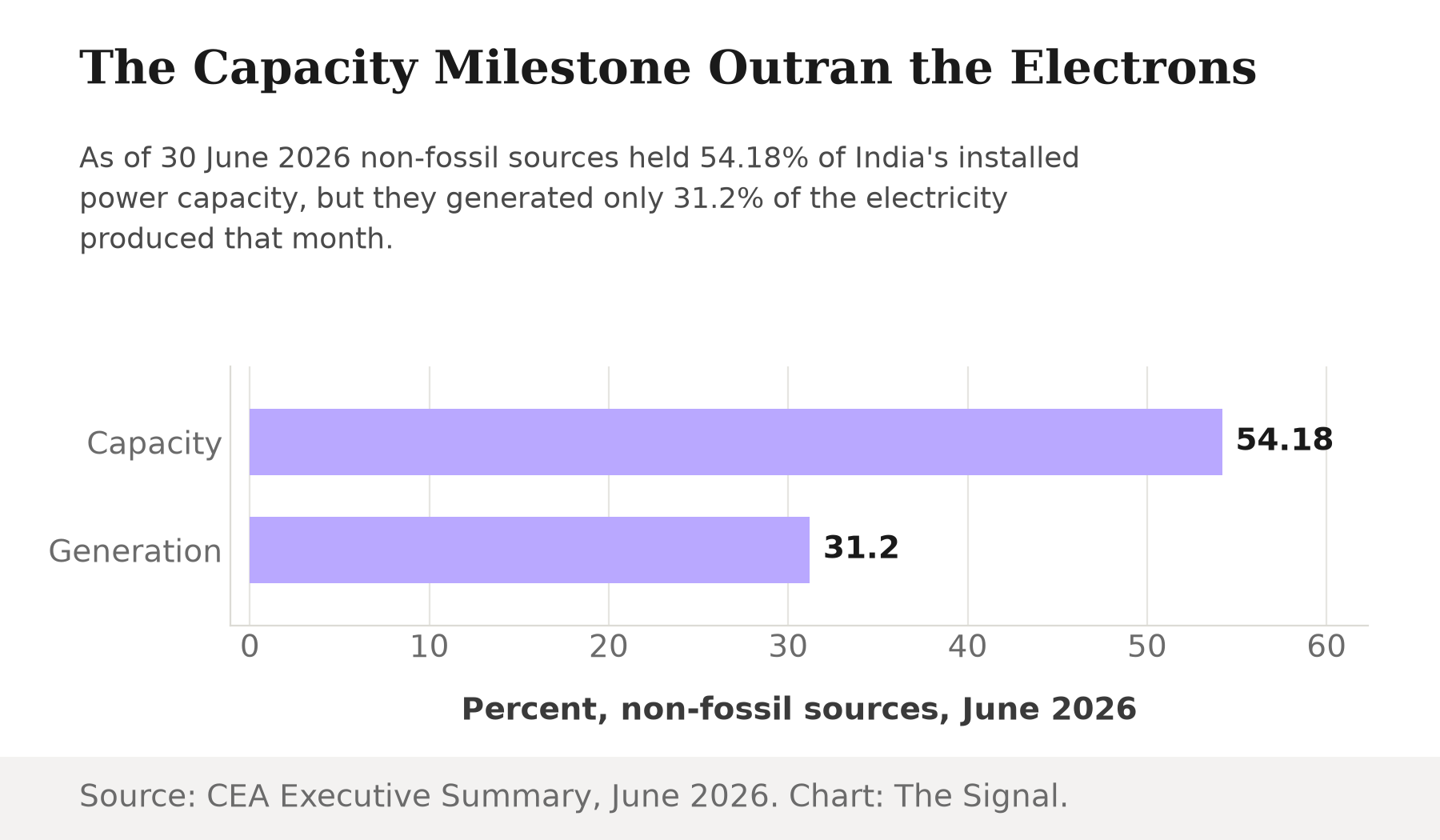
It is worth slowing down on that. Installed capacity measures what a plant could produce running flat out, not what it actually produces. In June 2026, thermal power plants, coal-dominated, generated 122.49 of India's 179.12 billion units of electricity that month, 68.4 percent of the total, while nuclear, large hydro and renewables combined generated just 55.91 billion units, 31.2 percent, even though non-fossil sources held 54 percent of installed capacity that same month, per the same CEA Executive Summary.
The milestone shrinks once the two shares are compared directly. Non-fossil capacity converted into electricity at about 58 percent of the rate its capacity share alone would predict, 31.2 divided by 54.18, our calculation from the CEA's own capacity and generation tables. A gigawatt of solar or wind on the nameplate is not a gigawatt of coal at the socket.
Where the electrons actually come from
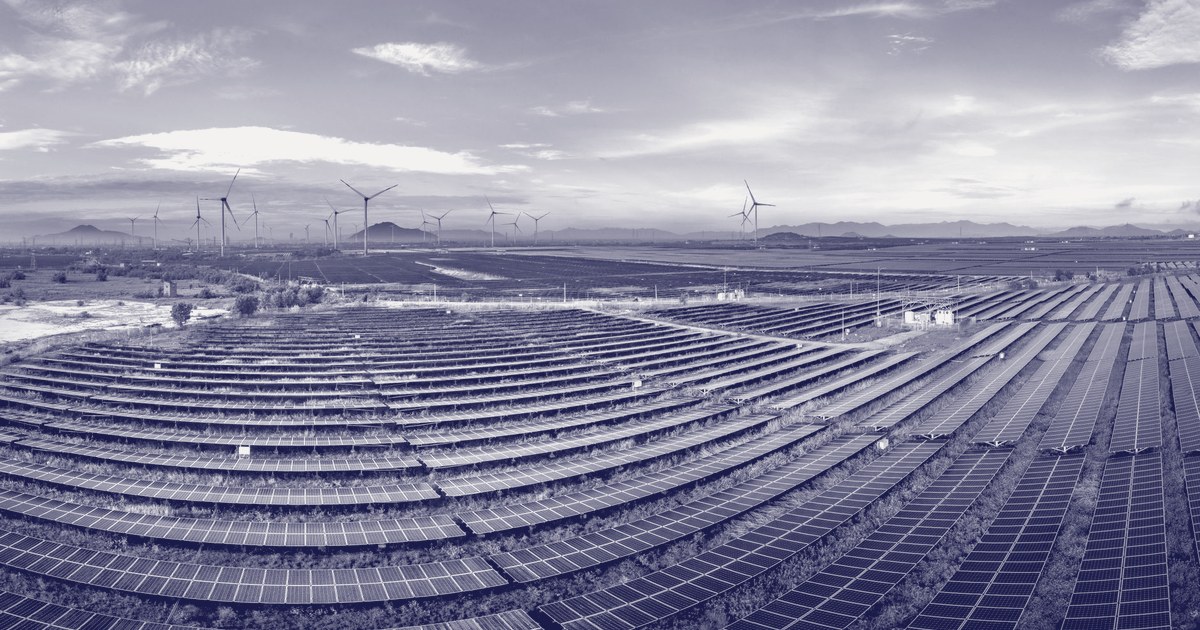
The gap has a simple mechanical cause: utilization. India's coal-dominated thermal fleet, excluding gas, ran at an all-India plant load factor of 72.39 percent in June 2026, per the CEA, meaning those plants were generating at nearly three-quarters of their rated capacity around the clock, day and night. Solar panels produce nothing after dark and wind turbines run only when the wind blows; neither can match that kind of utilization by design, whatever their installed capacity. The renewable fleet behind the milestone is itself heavily solar: as of 30 June 2026, solar accounted for 162.2 GW and wind for 57.4 GW of India's installed capacity, the two dominant non-fossil sources behind the 300 GW figure, per the CEA, and solar's daily on-off cycle is exactly the kind of intermittency a plant load factor calculation punishes.
India's power capacity is now majority non-fossil. Its electricity supply is not.
| Source | Installed capacity, 30 Jun 2026 | Share of total capacity |
|---|---|---|
| Coal | 224.2 GW | 41% |
| Solar | 162.2 GW | 29.5% |
| Wind | 57.4 GW | 10.5% |
| All non-fossil sources | 297.4 GW | 54.18% |
| Total installed capacity | 548.9 GW | 100% |
Source: CEA Executive Summary on Power Sector, June 2026.
The storage bottleneck behind the gap
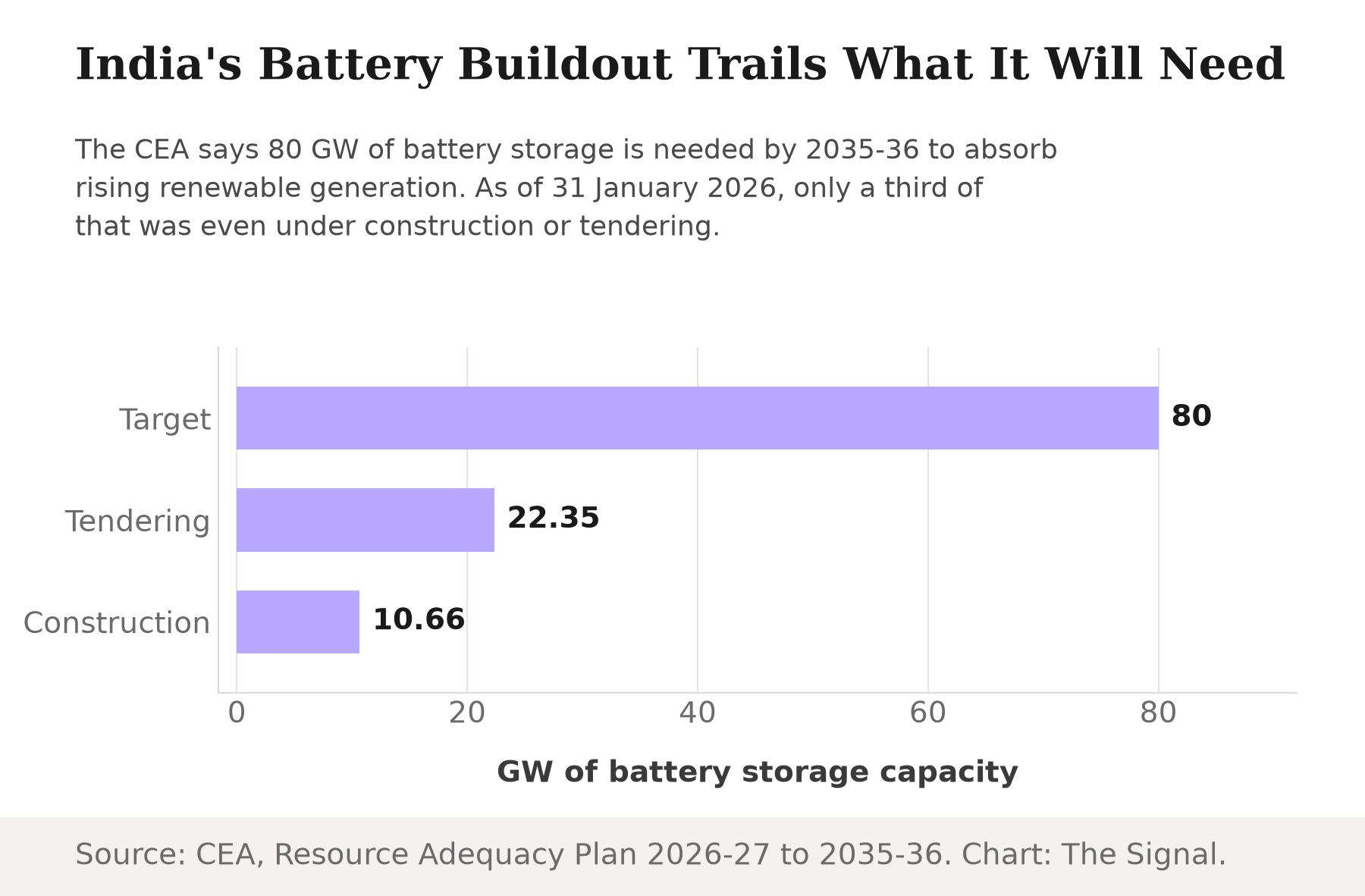
The CEA's own long-term planning explains why closing this gap will take years, not months. The authority estimates India will need about 174 GW and 888 GWh of energy storage by 2035-36 to absorb its rising share of renewable generation, split between 80 GW/321 GWh of battery storage and 94 GW/567 GWh of pumped hydro storage, according to the CEA's Long-Term National Resource Adequacy Plan for 2026-27 to 2035-36. Battery storage is the piece furthest behind schedule. As of 31 January 2026, only 10,659 MW (28,739 MWh) of battery storage was under construction nationally, with a further 22,347 MW (69,837 MWh) under tendering, per the same plan. Added together, that is about 33 GW, only 41 percent of the 80 GW battery target, our calculation from the plan's own construction and tendering figures.
Coal's grip doesn't loosen by 2035-36 either
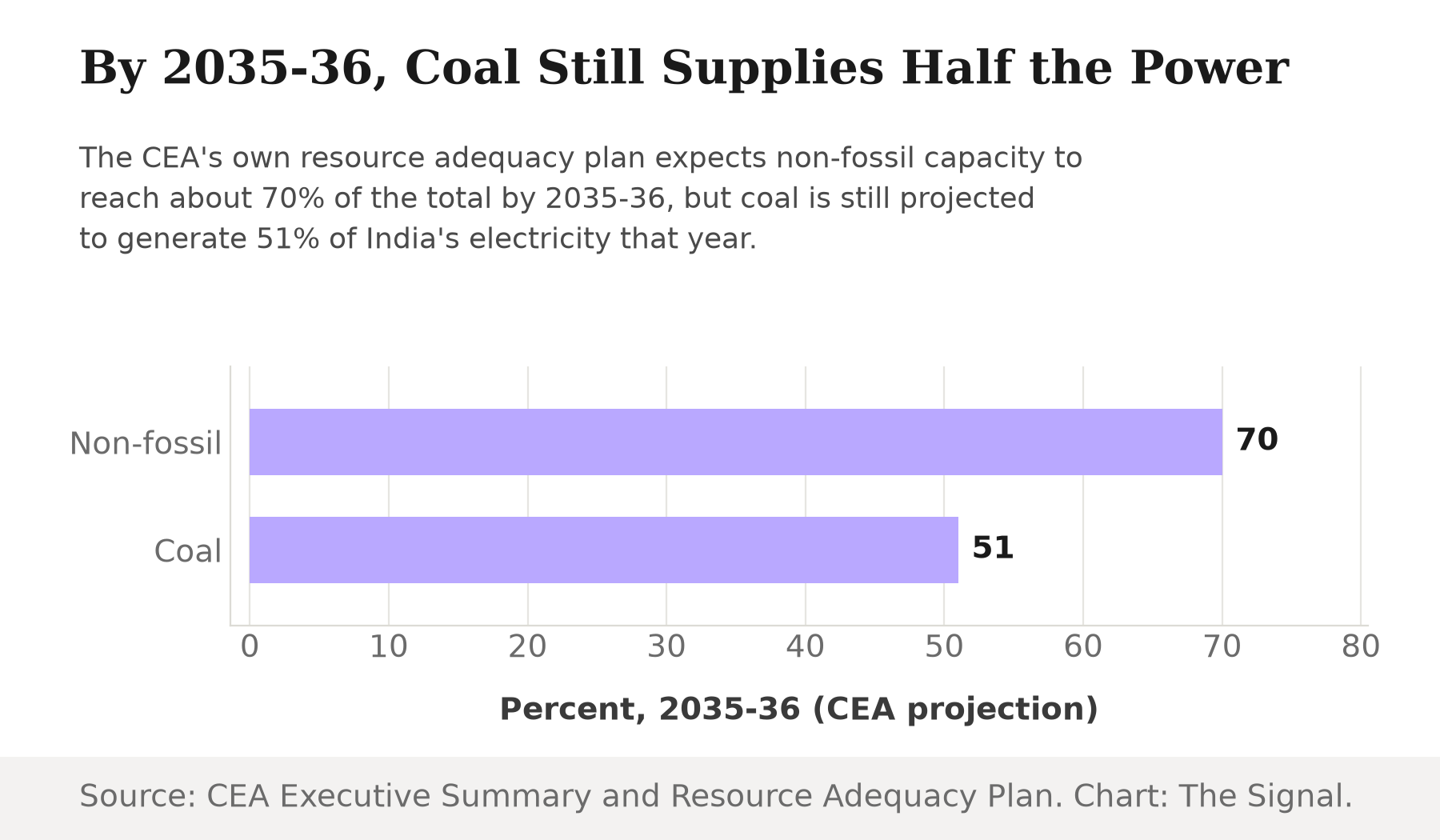
The CEA's forecast for the next decade does not show this gap closing on its own. Even after non-fossil capacity is projected to reach about 70 percent (786 GW) of India's total installed capacity by 2035-36, the authority still expects coal to generate 51 percent of the country's electricity that year, 1,819 of a projected 3,596 billion units, according to the same resource adequacy plan. A decade of further capacity growth, on the CEA's own numbers, still leaves coal supplying roughly half the grid.
The honest objection
The strongest case for treating the 300 GW figure as real progress is that capacity is a leading indicator, not a lagging one. It takes years to build a power plant, and locking in that capacity now is what makes a higher renewable generation share possible once storage and transmission catch up, whatever the current generation numbers say. Government messaging leans on exactly that logic, framing the crossing of the 500 GW target's 60 percent mark as evidence the country is ahead of its own 2030 schedule.
That case is real, and capacity genuinely is a precondition for higher generation. But it strains against the CEA's own decade-long forecast. If the constraint were simply a matter of construction lag, the coal generation share should fall sharply as capacity added through the late 2020s comes fully online and storage buildout catches up. Instead, the CEA's own planners, using their own capacity and storage assumptions, still put coal at 51 percent of generation in 2035-36. A body forecasting its own future storage and transmission buildout, and still landing on roughly half the grid running on coal a decade out, is not describing a temporary lag. It is describing a structural one.
The Signal
The 300 GW announcement measures the wrong thing if the question is how much of India's electricity is actually clean. Capacity crossed the halfway mark in June 2026. Generation did not, and the CEA's own long-range plan does not expect it to get there by 2035-36 either. The binding constraint is not turbines or panels, both of which India is adding at pace, it is the 174 GW of storage the grid will need to actually shift that capacity into electrons on demand, of which only about a third was even under construction or tendering as of January 2026. The number to watch from here is not the next capacity milestone. It is the battery storage build rate against that 80 GW target, because that is what will decide whether the next "India crosses X GW" headline changes the coal share of the grid, or just the paperwork behind it.
Reporting basis: the 300 GW non-fossil capacity milestone and its comparison to the 2030 target are as reported by All India Radio (Prasar Bharati), citing the Ministry of Power's announcement. All capacity, generation and plant load factor figures for June 2026, including the coal, solar and wind capacity breakdowns, are from the Central Electricity Authority's Executive Summary on Power Sector for June 2026. The energy storage requirement, the battery storage construction and tendering pipeline, and the 2035-36 capacity and generation projections are all from a single Central Electricity Authority planning document, its Long-Term National Resource Adequacy Plan for 2026-27 to 2035-36. The realization rate of non-fossil generation against its capacity share, and the battery storage pipeline's share of the 2035-36 target, are The Signal's calculations from those figures.