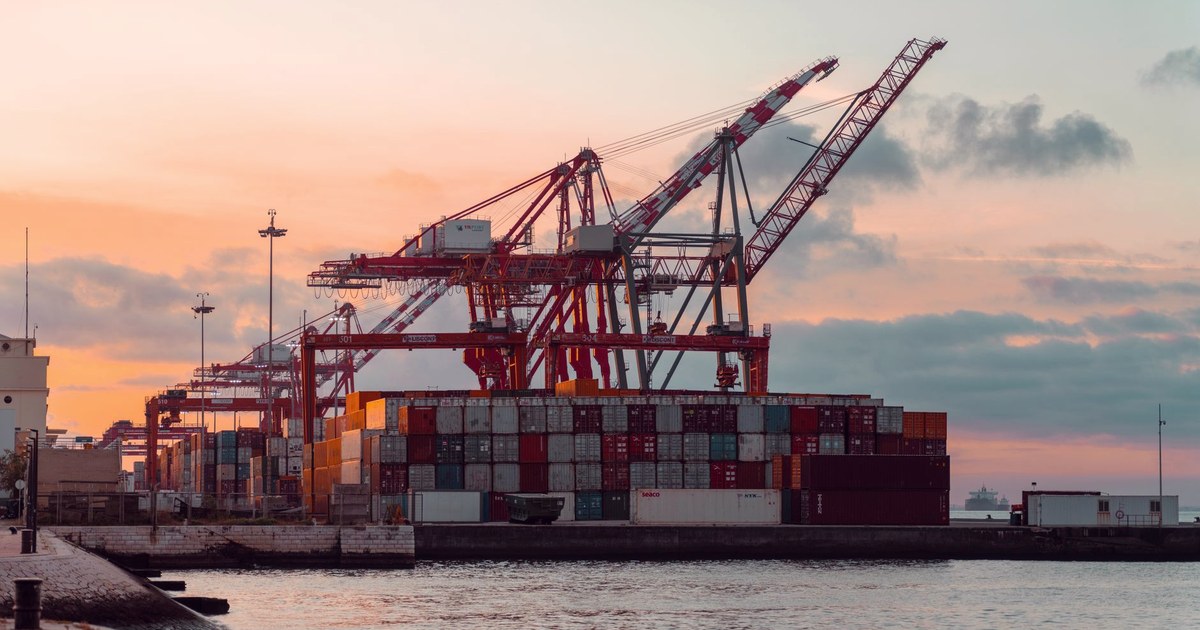
Made in India carries the headlines. The Production Linked Incentive scheme has become the emblem of India's industrial ambition: incentive outlays running into the lakhs of crores of rupees, ministers announcing fresh investment commitments, and a promise that the factories now filling industrial corridors will finally give India the export-earning manufacturing base it has chased for decades. Read the announcements and policy looks like the engine behind India's next wave of foreign exchange.
It is worth checking where the dollars that actually reached India's accounts last year came from.
In 2024, Indians working abroad sent home an estimated $129 billion in remittances, the largest inflow into any single country that year and nearly double the $68 billion that went to Mexico, the second-largest recipient, the World Bank's Migration and Development Brief reports. No factory, and no single policy scheme, moved anywhere close to that amount of foreign currency into the country over the same period.
The RBI's own comparison
The Reserve Bank of India's own data make the same point over a longer run. India's inward remittances have more than doubled, from $55.6 billion in 2010-11 to $118.7 billion in 2023-24, and the RBI's Sixth Round Remittances Survey states plainly that remittance receipts have generally stayed higher than the country's gross inward FDI. In that same fiscal year 2023-24, gross FDI inflows came to $71.28 billion: remittances ran nearly two-thirds higher, in the exact same twelve months.
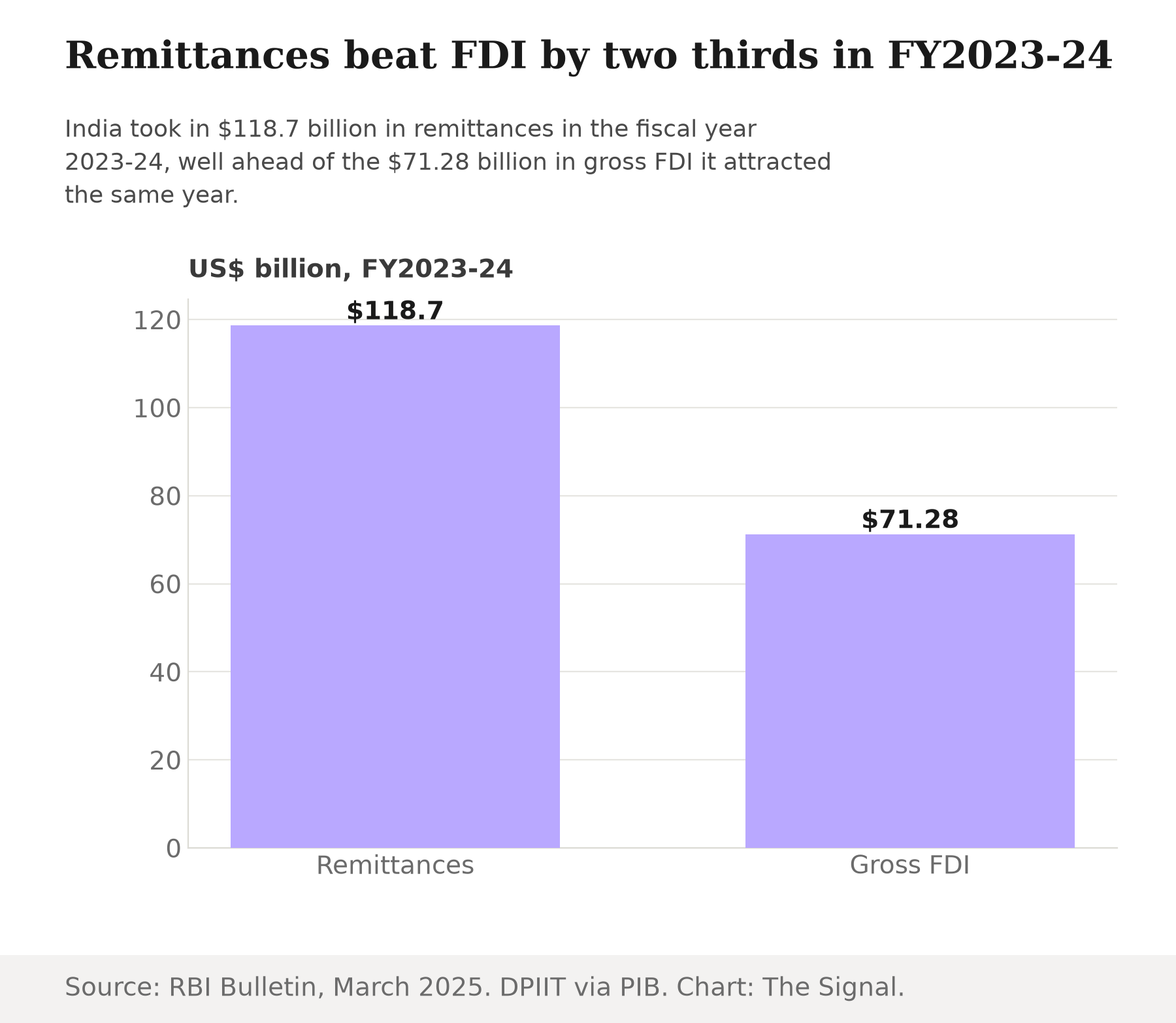
Source: Reserve Bank of India, Sixth Round Remittances Survey; Press Information Bureau, Department for Promotion of Industry and Internal Trade. Chart: The Signal.
The following year, FDI improved: gross inflows rose 14 percent to $81.04 billion, provisional, in FY2024-25. Set beside that, India's remittances reached an estimated $129 billion in calendar 2024, a different twelve-month window, but on a scale that still dwarfs the FDI figure. The direction, not just one year's snapshot, has held for over a decade.
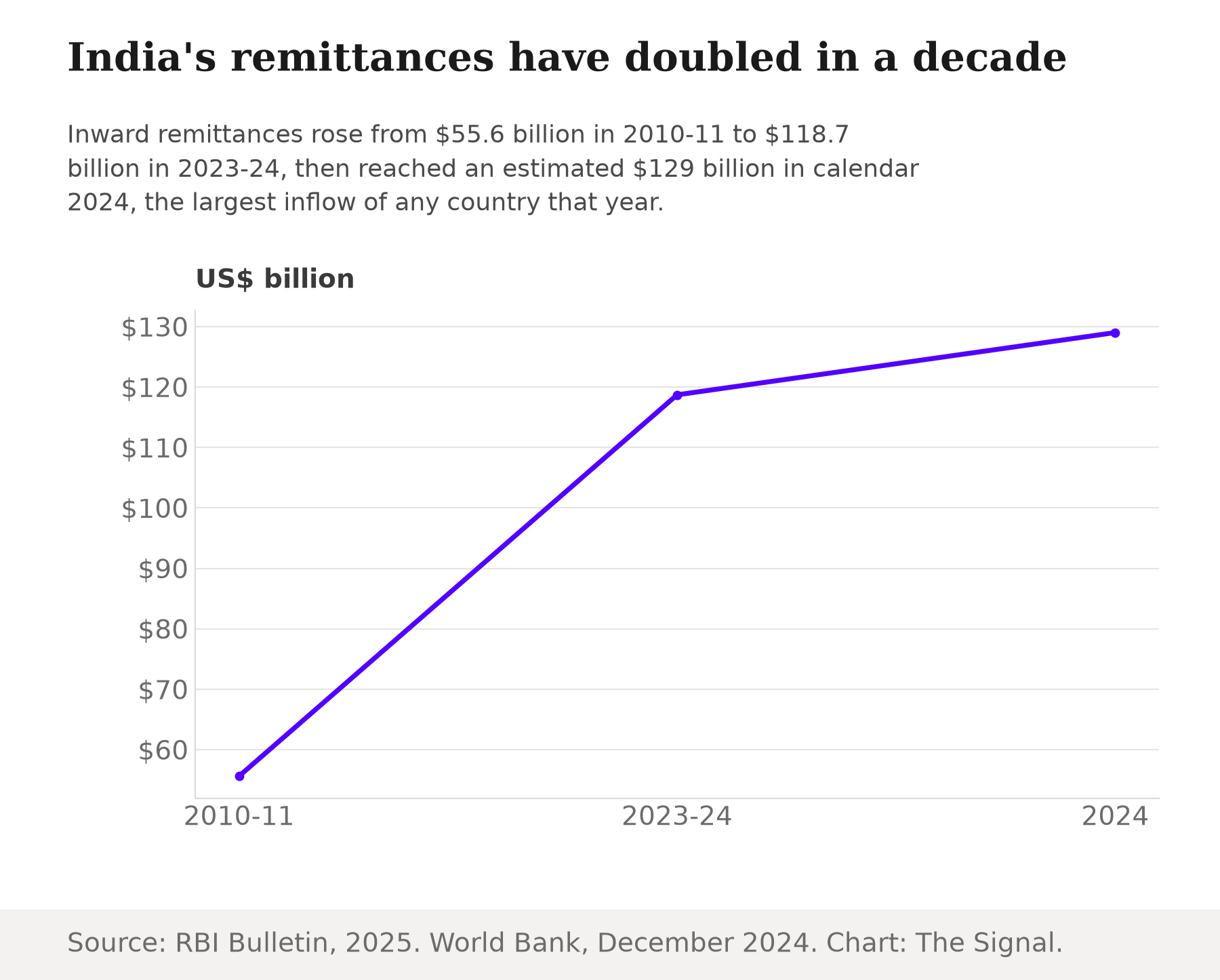
Source: Reserve Bank of India, Sixth Round Remittances Survey; World Bank, Migration and Development Brief. Chart: The Signal.
Part of the latest leg of that growth traces to conditions abroad, well outside anything India's own policy touched: remittances rose 7.5 percent to $120 billion in 2023, supported by strong labor markets in the United States and Europe, the World Bank said at the time. The dollars are not a policy output. They are wages, earned by people working outside India who choose to send part of that income home. That exposure reaches well beyond Western labor markets too: Indians working in the six Gulf Cooperation Council countries alone accounted for almost 40 percent of India's $118.7 billion in remittances in fiscal year 2023-24, led by workers in the UAE, Saudi Arabia and Qatar.
What the factory subsidy has actually paid out
Now compare that to the scheme built explicitly to earn manufacturing dollars. The Production Linked Incentive scheme carries a total incentive outlay of 1.91 lakh crore rupees across 14 sectors. As of 31 December 2025, only 28,748 crore rupees of that had actually been disbursed: about 15 percent of the amount promised, more than four years into the scheme's run.
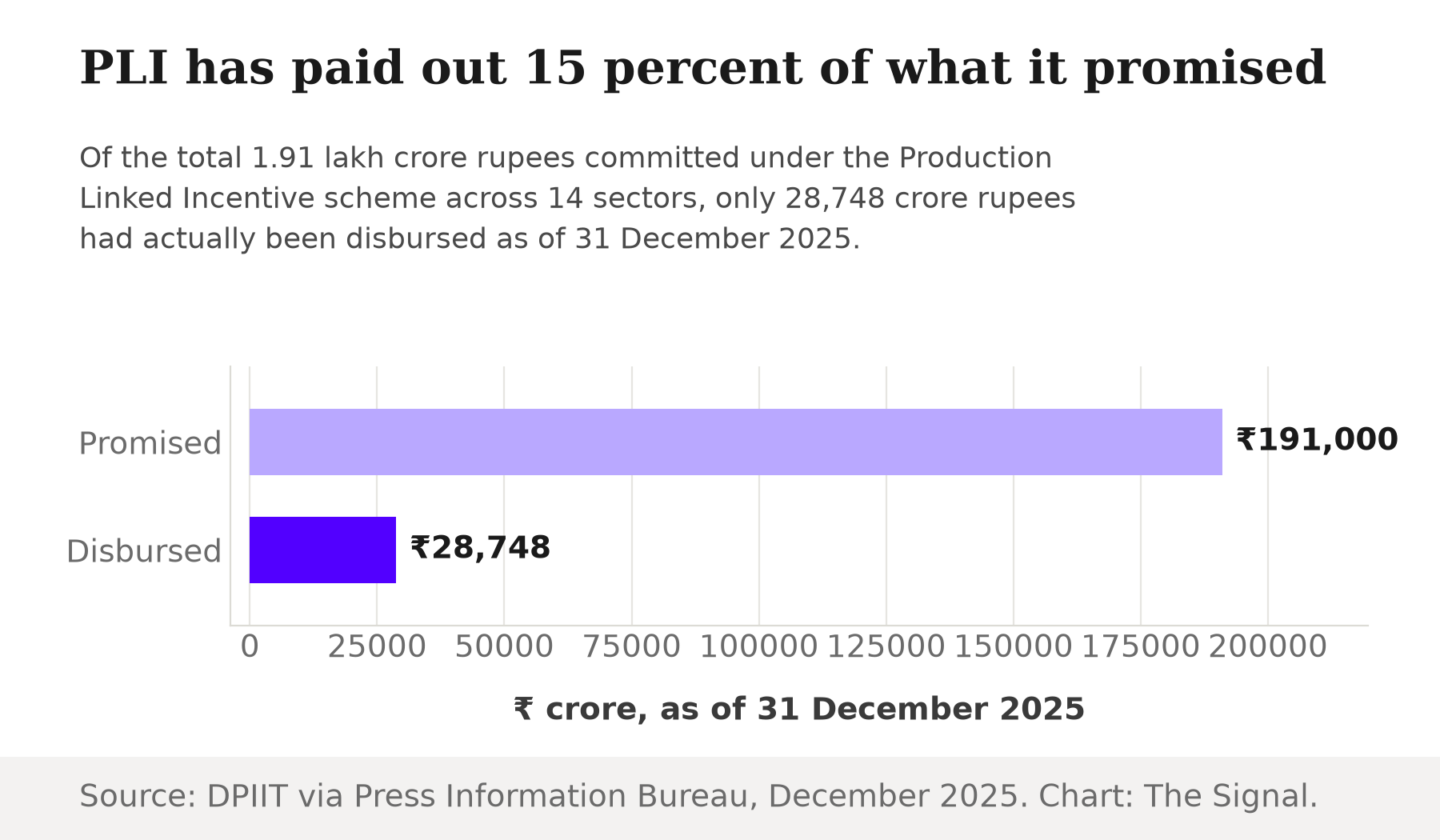
Source: Press Information Bureau, PLI scheme cumulative performance as on 31 December 2025. Chart: The Signal.
That is not the whole picture. Companies had drawn 2.16 lakh crore rupees in cumulative realized investment under the scheme by the same date, a sum that exceeds the entire incentive pot on offer. Real capacity has been built. But the incentive money itself, the direct government outlay rather than a company's own capital, has moved at roughly the same 15 percent pace against the promised outlay. Measured in the currency policymakers control, the factory dollars are a trickle next to the remittance river. Converted at the rupee's official November 2025 average rate of ₹88.826 to the dollar, the latest month in the government's own exchange-rate series, that 28,748 crore rupee disbursement comes to roughly $3.2 billion. That is about 4 percent of the $81.04 billion FDI brought in during FY2024-25, and about 2.5 percent of the $129 billion remittances delivered in calendar 2024.
The quarter that makes the case starkest
The clearest single snapshot sits in the RBI's balance of payments data for the December quarter of FY2024-25. India ran a current account deficit of $11.5 billion that quarter, foreign direct investment recorded a net outflow of $2.8 billion, reversing an inflow of $4.0 billion in the same quarter a year earlier, even as personal transfers, mainly remittances, rose to $35.1 billion for the quarter, up from $30.6 billion a year earlier.
Remittances ran more than three times the size of that quarter's entire current account deficit, in a quarter when foreign investment was net leaving the country.
| Q3 FY2024-25 (Oct-Dec 2024) | US$ billion |
|---|---|
| Current account deficit | 11.5 |
| Foreign direct investment, net | -2.8 (outflow) |
| Personal transfers (remittances) | 35.1 |
Source: Reserve Bank of India, balance of payments press release.
The honest objection
The strongest case for the factory-first framing is that remittances and FDI are not doing the same job, and scale alone does not decide which one matters more. FDI brings technology, equipment, management practice and export capacity that a wage transfer never will; a dollar earned abroad and sent home to a bank account behaves differently in the economy than a dollar invested in building a plant. The PLI scheme's own realized-investment figure of 2.16 lakh crore rupees makes part of that case: it is real productive capacity that did not exist before the scheme, exactly the kind of asset remittances cannot build.
That case is real, and it is why industrial policy exists. But it is an argument about function, not financing. On the financing question, the one that determines how comfortably India covers its current account, the scoreboard is lopsided: remittances have generally run higher than gross FDI for years, the RBI's own bulletin states, and the December-quarter data show why that matters in practice. When FDI actually reversed into an outflow, remittances did not so much as pause.
The Signal
Policy attention and dollar reality have drifted apart. The subsidies, the ministerial announcements and the industrial-corridor groundbreakings are all aimed at a manufacturing base that, by the PLI scheme's own accounting, has disbursed about 15 percent of what it promised. The money that is actually arriving, at a scale the factory scheme is nowhere near matching, is wages sent home by Indians working abroad. That means the bigger risk to India's external accounts is not a slower factory rollout. It is a shock to the labor markets millions of Indians work in, the kind of shock a subsidy budget cannot legislate around. Watch the remittance data as closely as the PLI disbursement figures: the scheme is a bet on the future. The wages already paid the bill.
Reporting basis: the 2024 global remittance ranking and the 2023 remittance growth figure are from the World Bank's Migration and Development Brief and an accompanying World Bank press release. The longer remittance trend and its comparison with FDI are from the Reserve Bank of India's Sixth Round Remittances Survey, published in the RBI Bulletin of March 2025. India's FDI inflow figures for FY2023-24 and FY2024-25 are from a Department for Promotion of Industry and Internal Trade release via the Press Information Bureau. The Production Linked Incentive scheme's outlay, disbursement and investment figures are from a separate DPIIT release via the Press Information Bureau, current as of 31 December 2025. The December-quarter 2024 current account, FDI and remittance figures are from the Reserve Bank of India's balance of payments press release. The Gulf Cooperation Council's share of India's remittances is from an Arab News report on the RBI's remittances survey. The rupee's November 2025 average exchange rate is from the Ministry of Finance's Economic Survey 2025-26 Statistical Appendix, sourced there to the RBI. The percentage and multiple comparisons, remittances against FDI in FY2023-24, the PLI disbursement share, the dollar conversion of that disbursement, and remittances against the current account deficit, are The Signal's calculations from those figures.