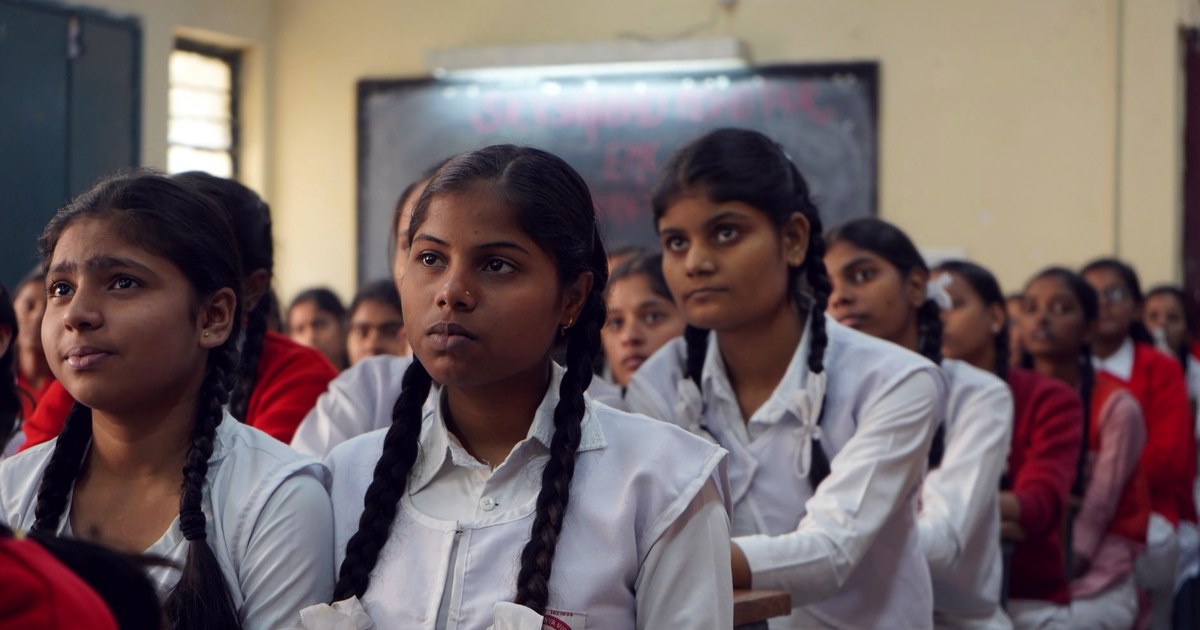
Dharmendra Pradhan resigned as India's Union Education Minister on July 25, 2026, submitting his resignation to Prime Minister Narendra Modi after ten days of student protests over irregularities in the NEET-UG 2026 medical entrance exam, All India Radio's News Services Division reports. The exam at the centre of it was already a criminal matter. The National Testing Agency had conducted NEET-UG 2026 on May 3, 2026. Acting on a complaint from the Department of Higher Education itself, the CBI registered an FIR on May 12, 2026 over alleged irregularities and a paper leak in that exam, a Press Information Bureau release states. The agency did not stop at referring the matter: it cancelled that exam outright and ordered a fresh one, after central agencies and law-enforcement findings showed the exam's integrity had been compromised. The re-conducted exam, held seven weeks later on June 21, 2026, pulled close to 20 lakh candidates back to 5,440 centres, of whom 11.21 lakh ultimately qualified. India runs one of the largest school systems on earth to feed exams like this one: 24.69 crore students across 14.71 lakh schools and more than 1.01 crore teachers, as of UDISE+ 2024-25 data cited in the Economic Survey 2025-26. A minister resigning after a national exam scandal, in a system that size, reads like a story that writes itself: an overstretched, underfunded state finally cracking under its own scale.
Neither education department's Union budget was cut over two years. Both hit records.
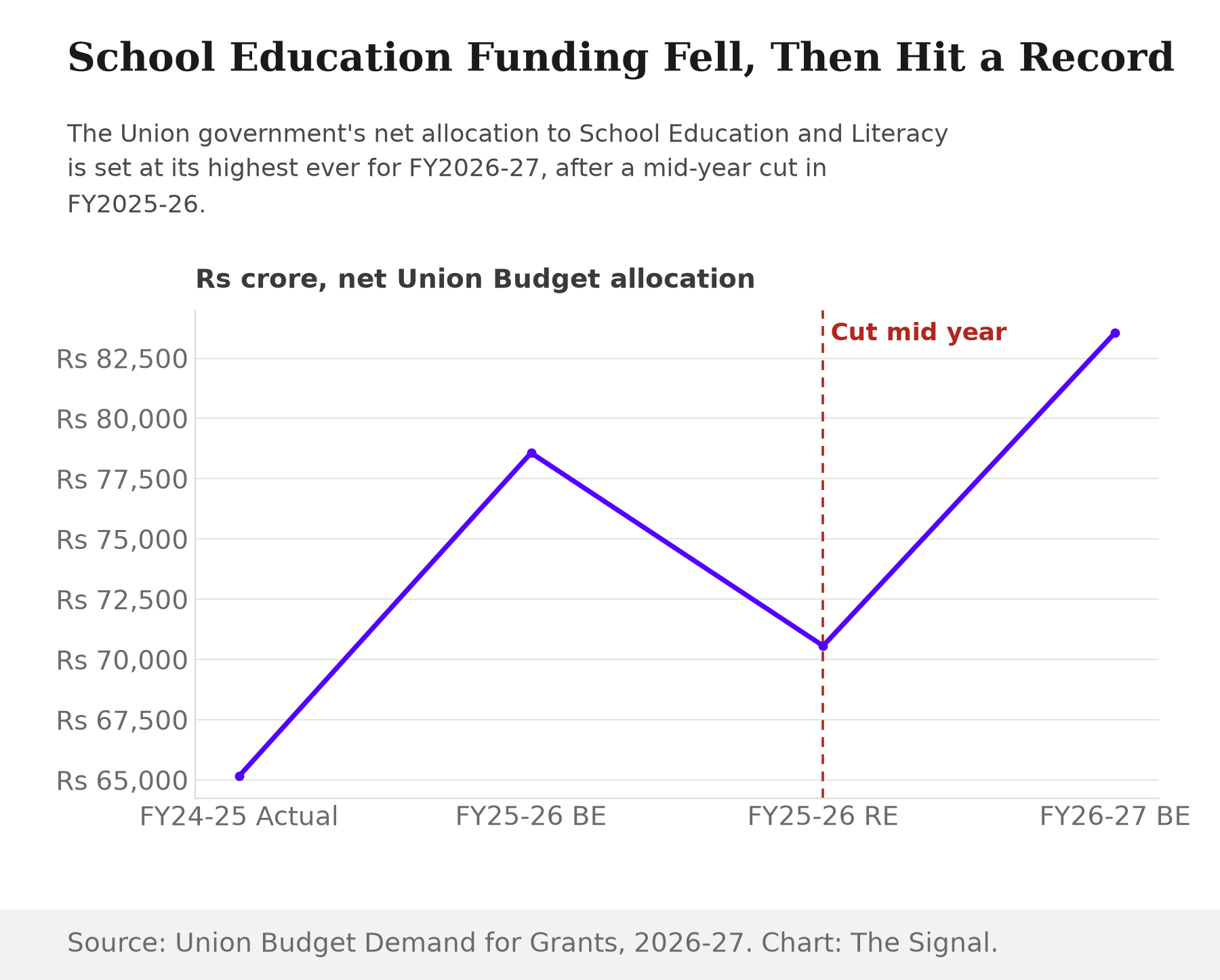
It is worth checking that assumption against the actual money. The Union Budget's Notes on Demands for Grants for 2026-27 show the Department of School Education and Literacy's net allocation rising to a Budget Estimate of ₹83,562 crore for FY2026-27, up from an actual ₹65,159 crore in FY2024-25, a gain of about 28 percent in two years. The Department of Higher Education's allocation rose on a similar path, from ₹45,577 crore to a Budget Estimate of ₹55,727 crore over the same span, up about 22 percent. Whatever forced Pradhan out, a starved education budget is not the obvious candidate.
The trigger sits in the exam room, not the ledger. The CBI's case followed the ministry's own complaint against the agency that runs the test deciding medical college seats for a slice of that 24.69-crore-student system. Ten days of protest over a compromised exam, not over a budget line, is what the government's own account puts before the resignation.
The cut nobody protested
Zoom into the budget's mid-year revision and a genuine cut does appear, just not where the protests were. School Education's allocation was trimmed mid-year, from a Budget Estimate of ₹78,572 crore for FY2025-26 down to a Revised Estimate of ₹70,567 crore, a cut of about 10 percent from what had been promised months earlier. In the very same revision, Higher Education's allocation moved the other way, from a Budget Estimate of ₹50,078 crore up to a Revised Estimate of ₹51,382 crore, a gain of about 3 percent. One ministry, one budget cycle, two directions.
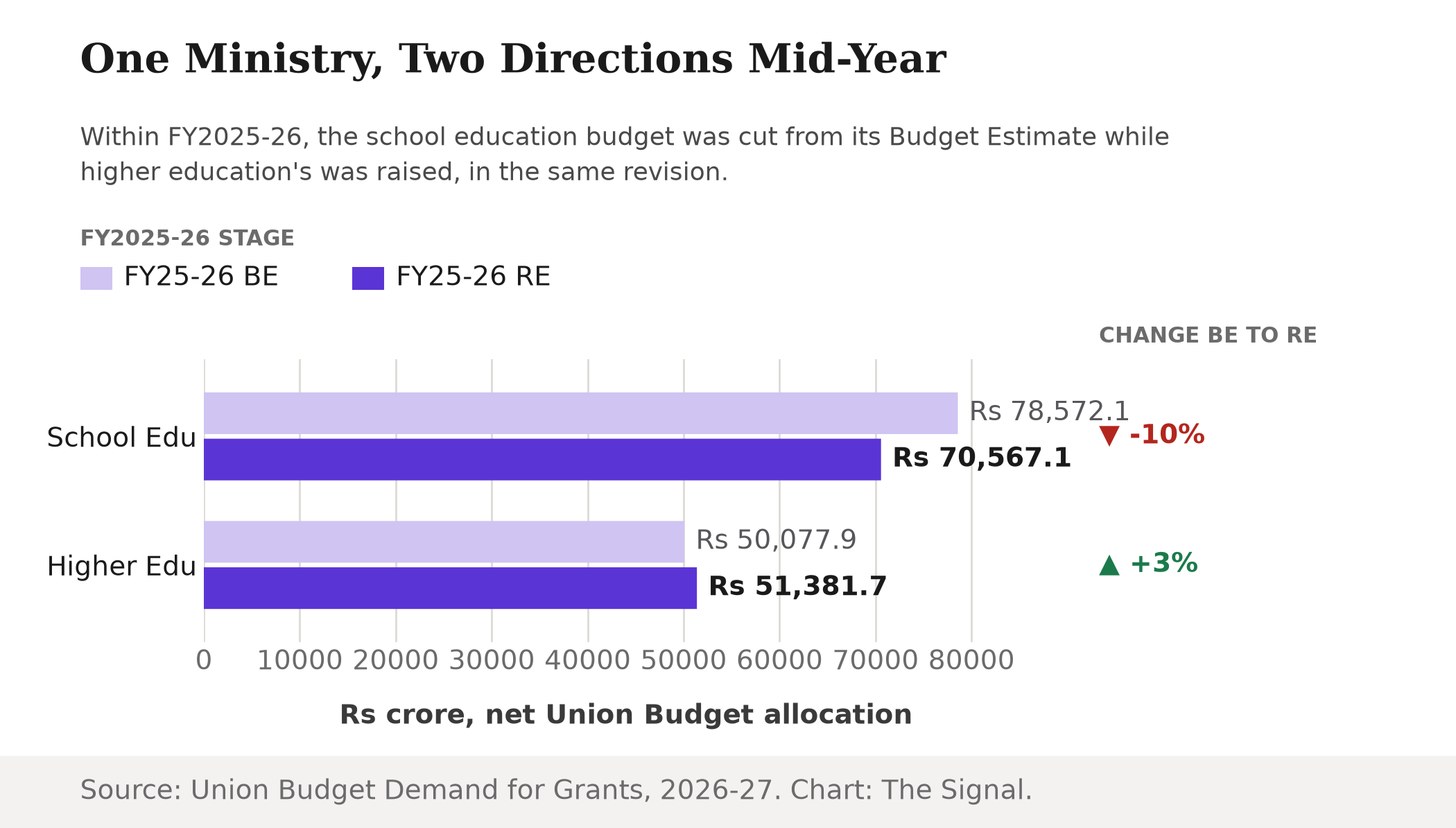
That cut drew no protests at all. The one that did, arriving five months later, was about an exam, not an allocation. FY2026-27's Budget Estimate then reversed course again: School Education was restored to ₹83,562 crore, its highest figure yet.
The Union's combined education line grew faster than its overall spending.
| Metric | FY2024-25 (actual) | FY2026-27 (Budget Estimate) |
|---|---|---|
| Education expenditure | ₹1,10,736 crore | ₹1,39,289 crore |
| Total central government expenditure | ₹46,52,867 crore | ₹53,47,315 crore |
| Education's share of total expenditure | 2.38% | 2.60% |
Source: The Union Budget's "Budget at a Glance 2026-27". Share-of-expenditure figures are The Signal's calculation.
The Union government's combined 'Education' expenditure line grew from ₹1,10,736 crore to ₹1,39,289 crore over the same two years, an increase of about 26 percent, against a rise of only about 15 percent in total central government expenditure. Education's share of the whole Union budget therefore rose, not fell, over this period. It remains a small slice of a large economy: at ₹1,39,289 crore against an estimated ₹3,93,00,393 crore in nominal GDP for FY2026-27, the Union's education line comes to roughly 0.35 percent of GDP.
What households actually feel
The household side of the ledger complicates the "squeeze" story further. MoSPI's Household Consumption Expenditure Survey 2023-24 press note shows education's share of average rural household spending easing slightly to 3.24 percent in the 2023-24 survey round, from 3.30 percent in 2022-23, while the urban share rose to 5.97 percent, from 5.78 percent. Urban households already devote nearly twice the budget share to education that rural households do, and that gap widened slightly in the latest round. Rural India, on this measure, saw no increase in burden at all.
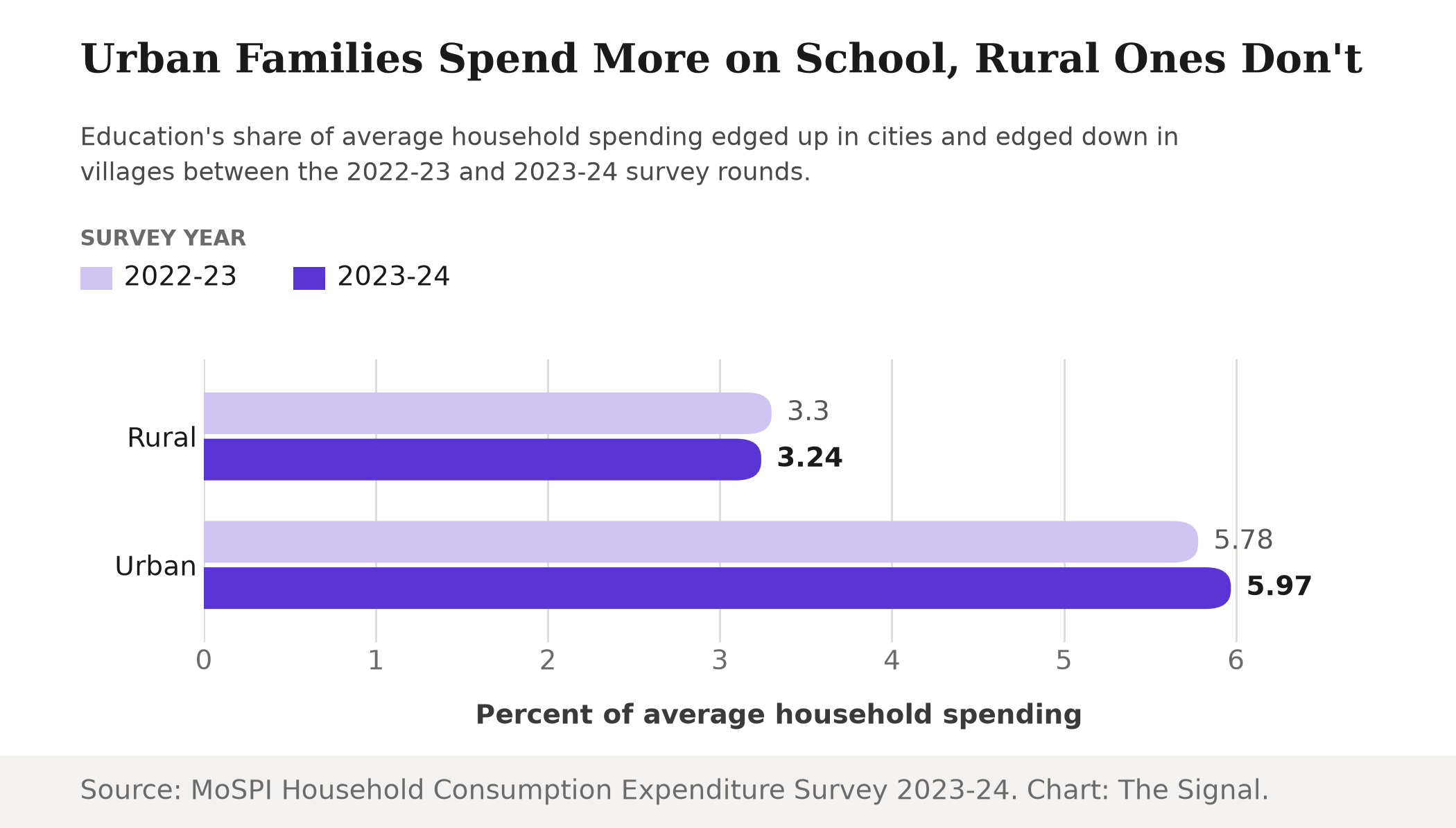
This household figure and the Union budget figures above describe two different things: what a family spends and what the central government allocates. Neither, alone, backs a clean "the state is retreating and families are paying more" story. The Union ledger is only one part of a system that enrolls 24.69 crore students, of whom government schools account for nearly half and private schools for 41 percent; what it shows is a budget that swung inside a single year for reasons unrelated to the protests, next to a household budget that moved in opposite directions for city and village alike.
The honest objection
The strongest case for a genuine squeeze does not need to reach far. School Education's mid-year cut of about 10 percent was real money pulled from the department serving the government-school share of a system where government schools are 69 percent of all schools, even if the following year's estimate restored it. A rebound one year later is no comfort to a state government that had to manage an actual shortfall against that revised figure while it was in force. And urban households genuinely are spending a rising share of their budgets on education, even if rural households are not; for a family in a large city, a "rising burden" story is not wrong, it is simply not the national one.
That case narrows the thesis. It does not overturn it. A one-year dip followed by a record allocation is a volatility story, not a defunding story, and the same set of budget documents that recorded the cut also recorded the reversal. The exam scandal, not the budget line, is the fact the government itself cited when the minister resigned.
The Signal
Pradhan did not fall on the budget. He fell on an exam his own ministry had already referred to the CBI, in a system large enough that a single compromised test can put ten days of protest on the street. The money India's Union government spends on education is rising to records on both the school and the higher-education side; the one dip in that trend was reversed within a year, and the government's own share of total spending on education rose across the period, not shrank. Watch what replaces Pradhan's ministry over the next few months. If the fix is institutional: a rebuilt testing agency, audited question banks, traceable custody of exam papers, that is a genuine repair. If it is only a new name at the top while NEET-UG's machinery stays the same, the next leak is already scheduled. A resignation over an exam is a personnel story until the exam itself changes. Only then does it become a policy one.
Reporting basis: Dharmendra Pradhan's resignation and its stated cause are per All India Radio's News Services Division. The NEET-UG 2026 CBI FIR is per a Press Information Bureau release; the exam's cancellation and re-conduct order are per Doordarshan News, and the re-conducted exam's turnout and result figures are from the National Testing Agency's press release. Union Budget figures for the Department of School Education and Literacy and the Department of Higher Education are from their respective Notes on Demands for Grants for 2026-27, and the combined education expenditure line, total central expenditure and GDP estimate are from the Union Budget's "Budget at a Glance 2026-27." Household education spending shares are from MoSPI's Household Consumption Expenditure Survey 2023-24 press note. School-system scale and the government and private enrollment split are from UDISE+ 2024-25 data, as cited in the Economic Survey 2025-26. The two-year growth rates, the share-of-total-expenditure figures, and the share-of-GDP figure are The Signal's calculations from those sources.