The easy reading of America's November 3 midterm is that voters rejected artificial intelligence. The NBC News Exit Poll found that "a large majority, 76%, said they opposed building data centers in their communities." Read that line alone and the story is a public turning against the AI boom.
It is worth slowing down on that. The poll asks about a building. The market monitor's cost figures are what explain the mood.
The bill that data centres sent to everyone else
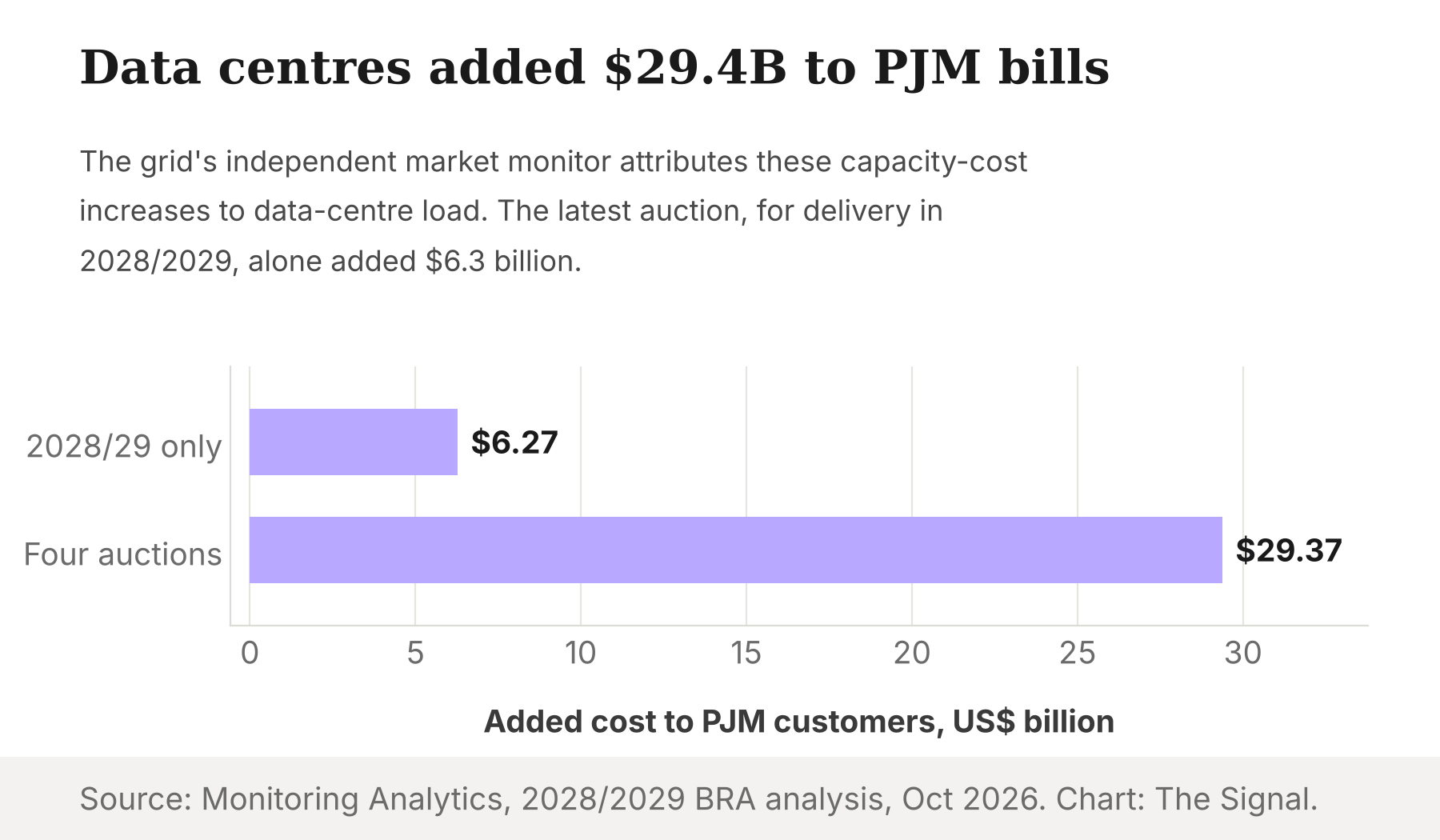
PJM, a US grid operator, buys power capacity years ahead through auctions. Its independent market monitor reports that data-center demand raised costs for PJM customers by $6,267,819,123 in the 2028/2029 auction, or about $6.3 billion.
That is one auction. Across the last four, the monitor reports that the total increase in costs to PJM customers from data-center load was $29,368,774,465. The 2028/2029 auction alone is roughly a fifth of that.
The mechanism is not subtle. The monitor says PJM's 2028/2029 forecast included 21,470 MW of data-center load, and that there would have been no capacity shortfall "but for the forecast data center load." Scarcity set the price, and the monitor's finding is that the added cost fell on PJM's other customers.
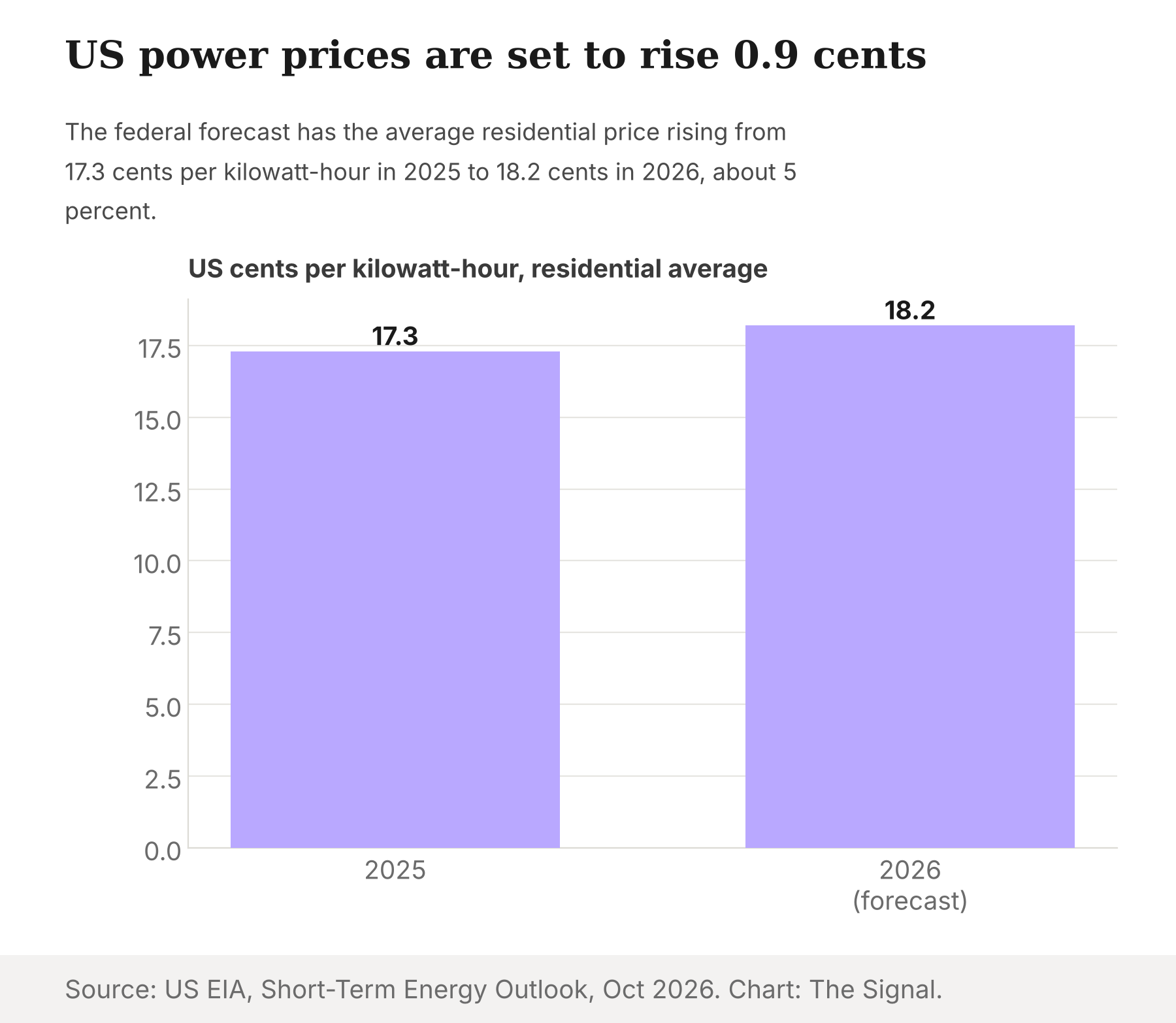
Retail prices tell the same story in blunter units. The US Energy Information Administration's October 2026 outlook lists the average residential price at 17.3 cents per kilowatt-hour in 2025 and 18.2 cents in 2026. That forecast is about 5 percent higher, and it is a national average, not a PJM figure. It does not isolate data centres. It shows the climate in which the PJM numbers landed.
The likelier culprit is cost allocation
Here is the reframe. A voter cannot see a capacity auction. A voter sees a bill. The 76 percent figure may reflect a cost that arrives without consent more than any objection to computing. That is our reading, and the poll itself does not say it.
If the reading is right, regulators who make data centres carry their own grid costs should have an answer. One early example: AEP Ohio's data-center tariff, effective July 23, 2025, applies to projects of 25 MW or more and sets a minimum billing demand of up to 85 percent of contracted capacity. Under that design, a data centre pays for most of its contracted power whether or not it uses it.
What it means for India
India is early on the same curve. ThePrint reports, citing the Central Electricity Authority's National Generation Adequacy Plan, that data centres are expected to consume more than 13.6 GW by 2032 and 16.4 GW by 2040. The same report cites CBRE, which puts operational capacity in early 2026 at about 950 MW to 1,500 MW, after 103 percent growth in 2025.
The two figures are not the same measure, since one is capacity and the other is expected power draw. Against the top of CBRE's range, the CEA's 2032 figure is about nine times larger.
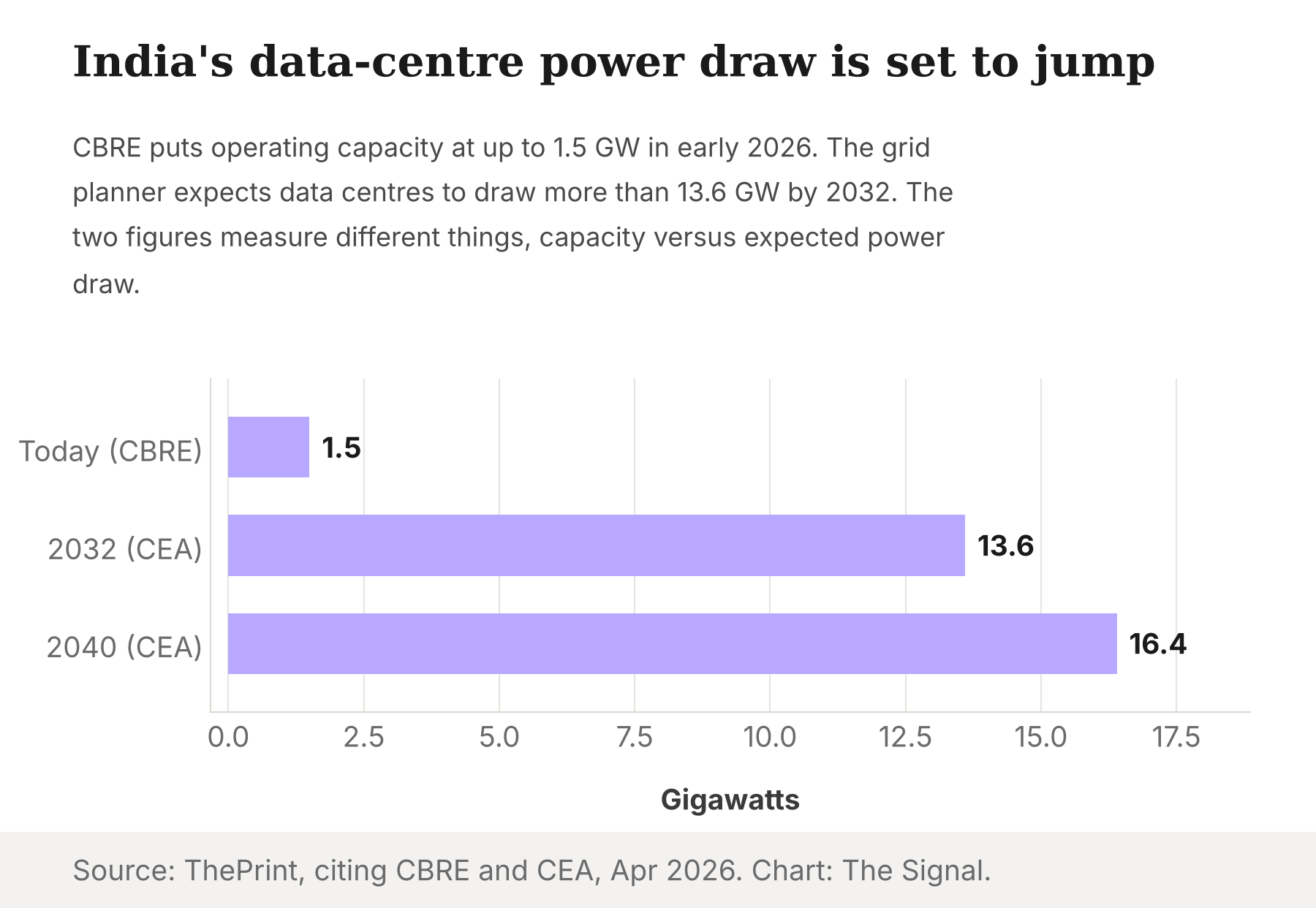
ThePrint's account of the CEA's message to states covers forecasting demand and strengthening the grid, and describes no rule on who bears the cost if the capacity goes unused. We did not find a state tariff order that does, but not finding one is not proof that none exists.
The honest objection
The strongest case against this reading is that the poll does not link opposition to prices at all. The exit poll figure measures opposition to local construction, not the reason for it. Voters may also be reacting to land, water or noise, and a midterm has many causes. The case is real, and it limits how much weight the electoral link can bear. It does not change the monitor's own finding on cost.
The Signal
The US experience suggests the political risk of a data-centre boom sits in the tariff, not the technology. India still has time to decide who pays before the expected load arrives.
Watch whether any Indian state regulator writes a minimum-take rule for large data-centre loads, along the lines of the Ohio tariff. A data centre is a customer. Whether it is also a subsidy is a decision someone writes down.
Reporting basis: the auction costs and the shortfall finding are from the PJM Independent Market Monitor (Monitoring Analytics). The national residential price figures are from the US Energy Information Administration's October 2026 outlook, with 2026 a forecast. The 76 percent opposition figure is from the NBC News Exit Poll. The tariff terms are as AEP Ohio describes them on its own tariff page. The India figures are per ThePrint, reporting the CEA's plan and a CBRE estimate; we did not retrieve the CEA document itself, so both rest on that single outlet. The one-fifth share, the nine-fold gap and the roughly 5 percent price rise are The Signal's calculations from those figures.