The festive season is supposed to be the good quarter for phones in India. This year it was not. Omdia estimates that India's smartphone shipments fell 26% year on year to 35.8 million units in the third quarter of 2026, the lowest third-quarter volume since 2016. The firm blames higher prices and cautious spending on replacement phones, and notes that a later Diwali pushed some stock-building into October.
The easy read is a demand story: higher prices and cautious buyers hit every brand alike. Omdia's own breakdown says otherwise. Look at who lost.
The loss was not shared evenly
In the same release, Omdia says Chinese brands' combined share of India's shipments fell to about 68% in the third quarter of 2026 from 75% a year earlier. If Chinese brands held 75% and now hold 68%, every other brand together went from 25% to 32%. That is a gain of seven points, or 28% in relative terms, in a market that shrank by a quarter.
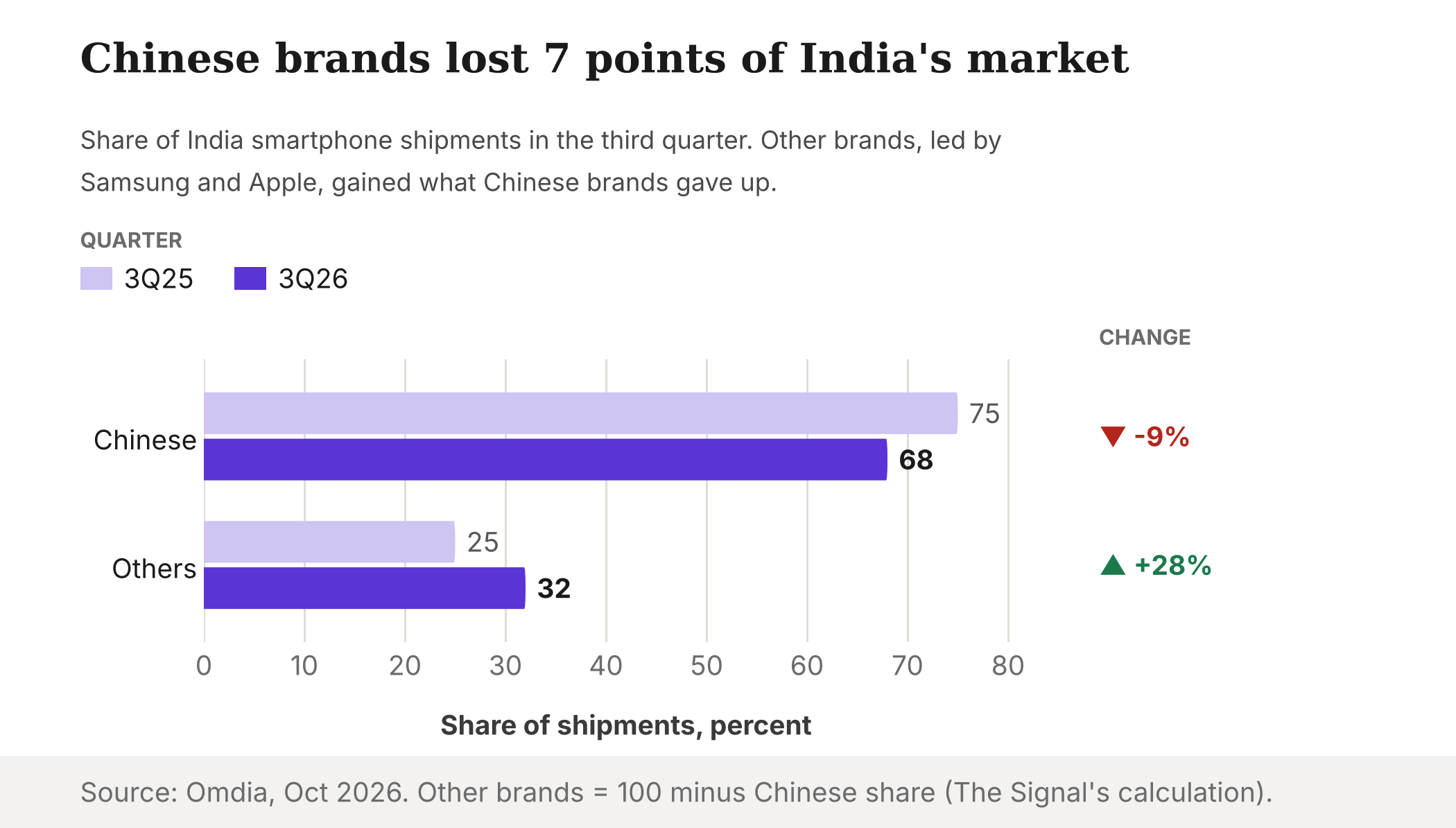
The arithmetic is blunt. If the market fell 26% and Chinese brands' share dropped from 75% to 68%, their shipments fell about 33% (0.68 × 0.74 ÷ 0.75), a calculation from Omdia's two figures. The release says Samsung regained the top spot, and Apple shipped 3.9 million units to rank fifth, helped by channel stocking ahead of anticipated price hikes.
The cost that hits cheap phones first
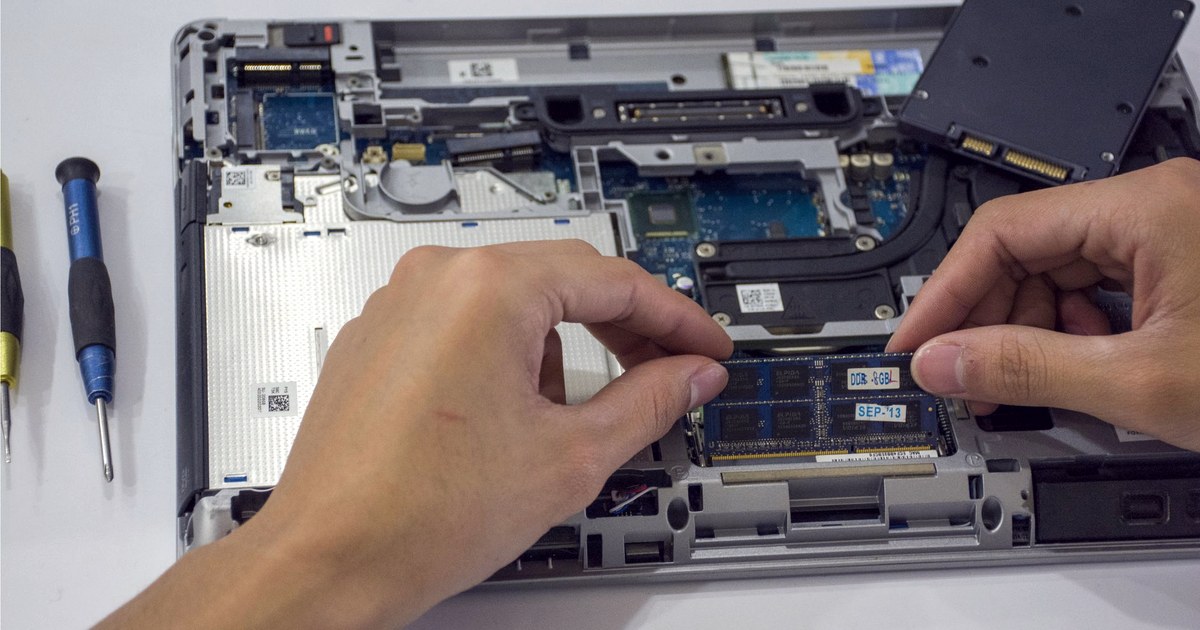
The sharpest pressure sits inside the phone. The memory price rises were another cost problem for smartphone vendors already cutting production plans, as eeNews Europe put it in reporting TrendForce's forecast. Our reading is that this lands hardest on cheap phones, where each rupee of component cost matters most. We could not source a per-segment cost breakdown, so that is a mechanism that fits the evidence, not a measured figure.
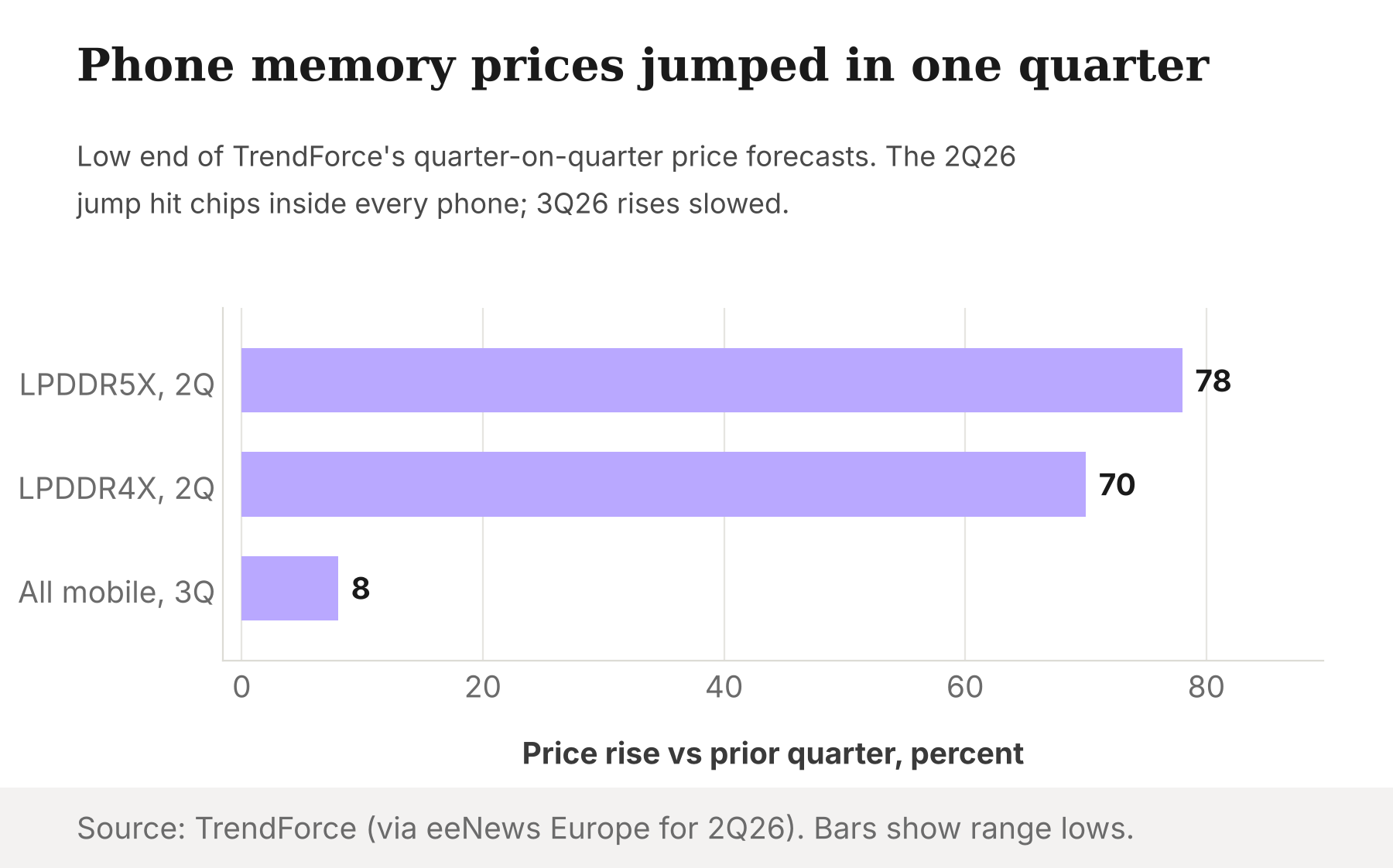
What the sources do show is the size of the jump. TrendForce's forecast, reported by eeNews Europe, was that average selling prices for LPDDR4X memory would rise by at least 70 to 75% quarter on quarter in the second quarter of 2026, with faster LPDDR5X rising at least 78 to 83%. For the third quarter, TrendForce projected mobile DRAM contract prices to rise about 8 to 13% quarter on quarter, a slower pace on top of a very high base.
Omdia's own vendor notes point the same way. It reports that vivo, which had the steepest fall among the top five, was hit by repeated price hikes that disrupted channel planning, and that Xiaomi's rising component costs forced trade-offs in pricing and memory configurations. A brand that sells on specifications per rupee loses its pitch when memory costs force it to cut RAM or raise the price.
The premium end held
Premium buyers are less sensitive to a price rise. Apple's India business shows it: Apple India's operating revenue rose 31.4% to about ₹1.04 lakh crore in FY26, as reported by Inc42. Counterpoint Research's Tarun Pathak told IANS in July that he expected single-digit volume but double-digit value growth for Apple in India in calendar 2026, and called an iPhone price hike highly likely.
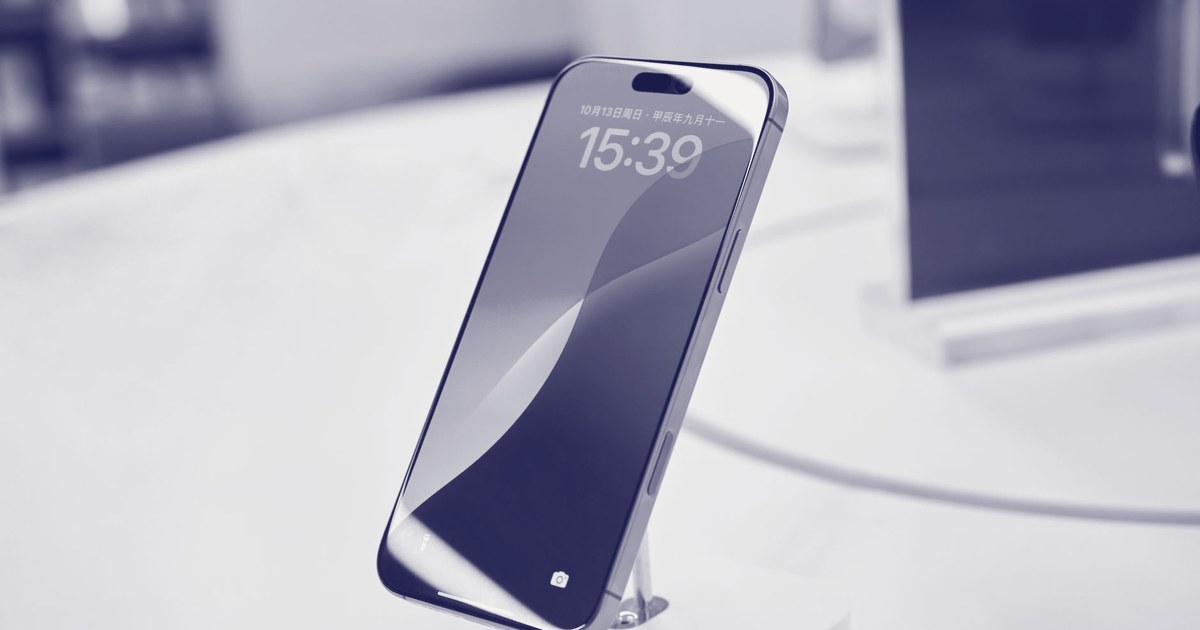
That is the pattern in one sentence: fewer phones, higher prices, more value. The iPhone 18 Pro launched in India at Rs 1,64,900 against $1,199 in the US. Apple is not chasing volume in a falling market.
The honest objection
Omdia's numbers are estimates of shipments, not sales to customers. Apple's quarter was flattered by stocking ahead of price hikes, and a later Diwali moved some festive stock into October. Part of the Chinese brands' share loss may be timing, and Omdia itself says Chinese brands were hit by weaker online-event momentum and fewer exclusive launches, not only by memory costs. The memory story is a strong fit for the evidence, not a proven single cause.
The counter is that the direction is hard to explain by timing alone. A calendar shift moves volume between quarters for all brands. It does not move seven points of share from one group to another.
The Signal
India's phone market is not just smaller. It is being re-sorted by input costs. Omdia expects pricing pressures to persist through at least the first half of 2027 and a further low-single-digit fall in the market in 2027. If memory stays expensive, the brands with premium pricing power keep gaining share, and the value tier keeps shrinking. The number to watch is the Chinese brands' share in the fourth quarter. Below 68% means the squeeze is spreading.
Reporting basis: Market shipments, brand share, vendor commentary and outlook come from Omdia's 19 October 2026 release, a single origin, and are estimates. Memory price forecasts come from TrendForce, directly for the third quarter and as relayed by eeNews Europe for the second. Apple India's revenue is per Inc42's report, whose underlying filing we did not check. The Counterpoint Research view is as quoted by IANS. The iPhone 18 Pro price is per Esquire India. The 25% to 32% share of other brands, the seven-point gain, the 28% relative gain and the 33% fall in Chinese brands' shipments are The Signal's calculations from those figures.