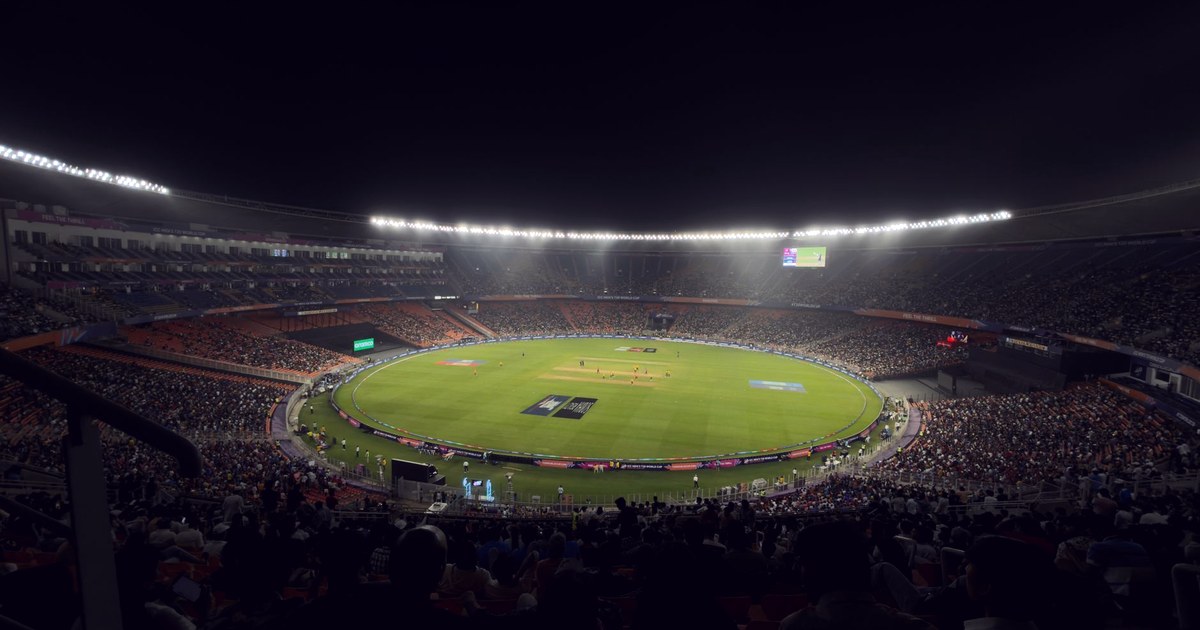
The BCCI's official announcement states that Campa, SBI Life and ChatGPT have joined as associate partners for India's home cricket season, with the three new partnerships worth a combined value of over Rs 130 crore, a 44% increase over the previous cycle. Read as a headline, it is the story cricket sponsorship always tells: a fizzy-drinks brand, an insurer and now an AI chatbot, all paying up to sit next to the biggest show in Indian sport. OpenAI, a company that sells intelligence, is buying a spot next to Campa Cola. That looks like image spend, the kind of marketing a firm does once it has more money than obvious ad ideas.
It is worth slowing down on that framing. Adgully reports that Campa Cola was the top bidder at Rs 1.31 crore per match, while ChatGPT and SBI Life matched each other at Rs 1.2 crore per match, for a partnership covering 35 home bilateral matches through March 2028. That is not a glamour number. It is a media-buying number, and media buys are supposed to be judged the way a performance marketer judges them: by cost per person reached.
The math behind the bid
Nobody has published the television or streaming audience for these specific 35 fixtures. But two recent numbers bracket what a marquee Indian international draws. BARC data cited by MediaBrief show that the Perth Test of the 2024-25 Border-Gavaskar Trophy drew 70.8 million TV viewers, the highest-rated bilateral away Test in BARC's history. ICC chairman Jay Shah announced, as reported, that JioHotstar's concurrent viewers for the 2026 T20 World Cup peaked at 60.5 million. Set ChatGPT's Rs 1.2 crore against either number and the cost per viewer lands between 17 and 20 paise, our calculation from those two sources. Judged that way, an AI company's cricket sponsorship is not an image splurge. It is closer to the cheapest media buy on the table.
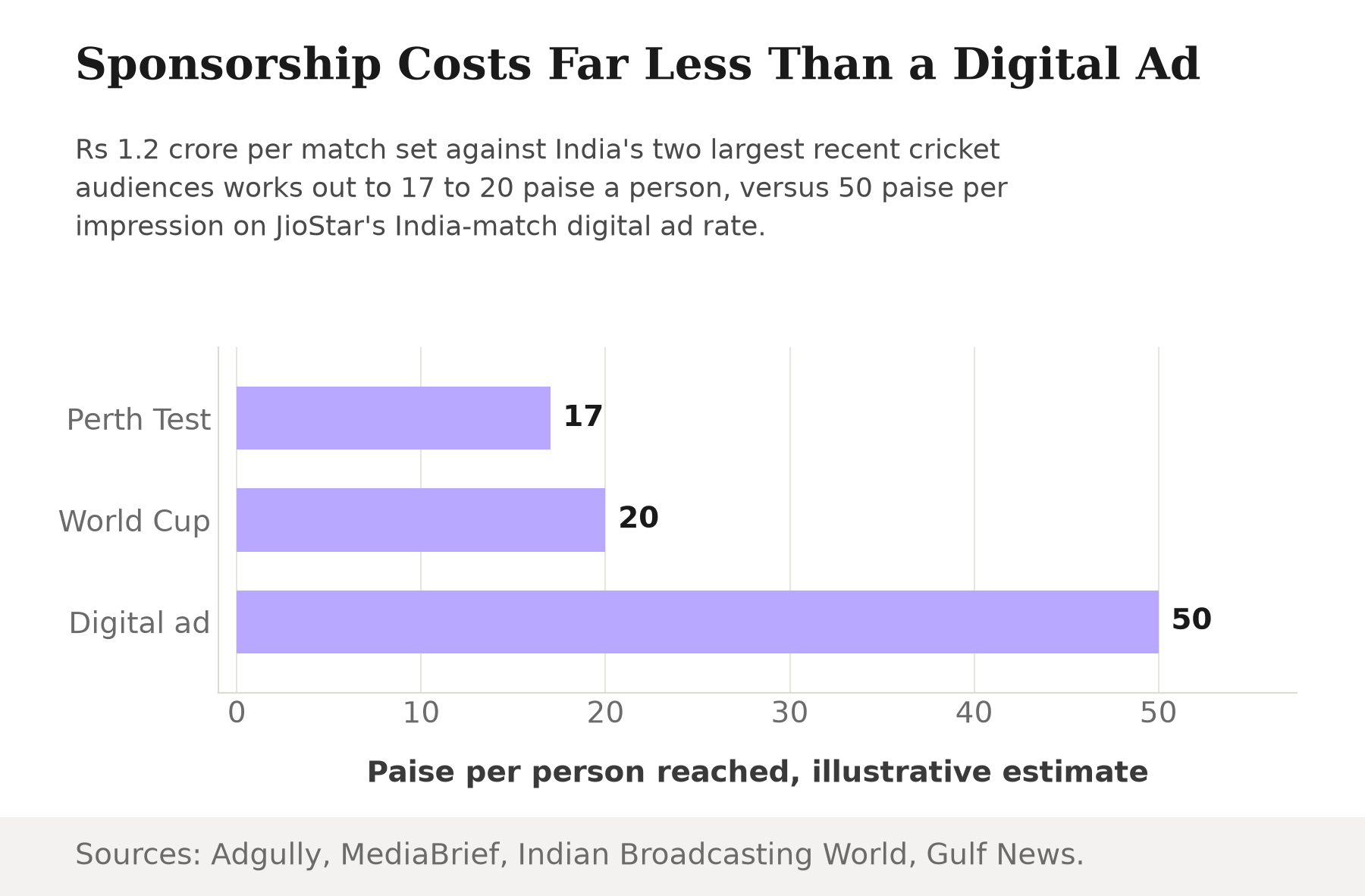
Source: MediaBrief; Gulf News; Indian Broadcasting World. Cost-per-viewer figures are The Signal's calculation. Chart: The Signal.
The comparison that makes that number legible is the price of the alternative. Indian Broadcasting World reports that JioStar set its digital CPM ad rate at Rs 500 per thousand impressions for India's matches at the 2025 ICC Champions Trophy, double the Rs 250 CPM for the tournament overall. Rs 500 per thousand impressions is 50 paise per impression. Even at the more expensive of the two sponsorship estimates, ChatGPT is paying under half of what a single India-match digital impression costs, and one televised viewer is a person, not a served ad that may or may not have been seen.
Three bidders, two identical numbers
ChatGPT bid exactly what SBI Life bid, and both came in just under Campa Cola. The three rights fees sit within 11 lakh rupees of each other, which suggests the BCCI ran this as a real auction rather than handing an AI company a discount to get its name on the boundary boards.
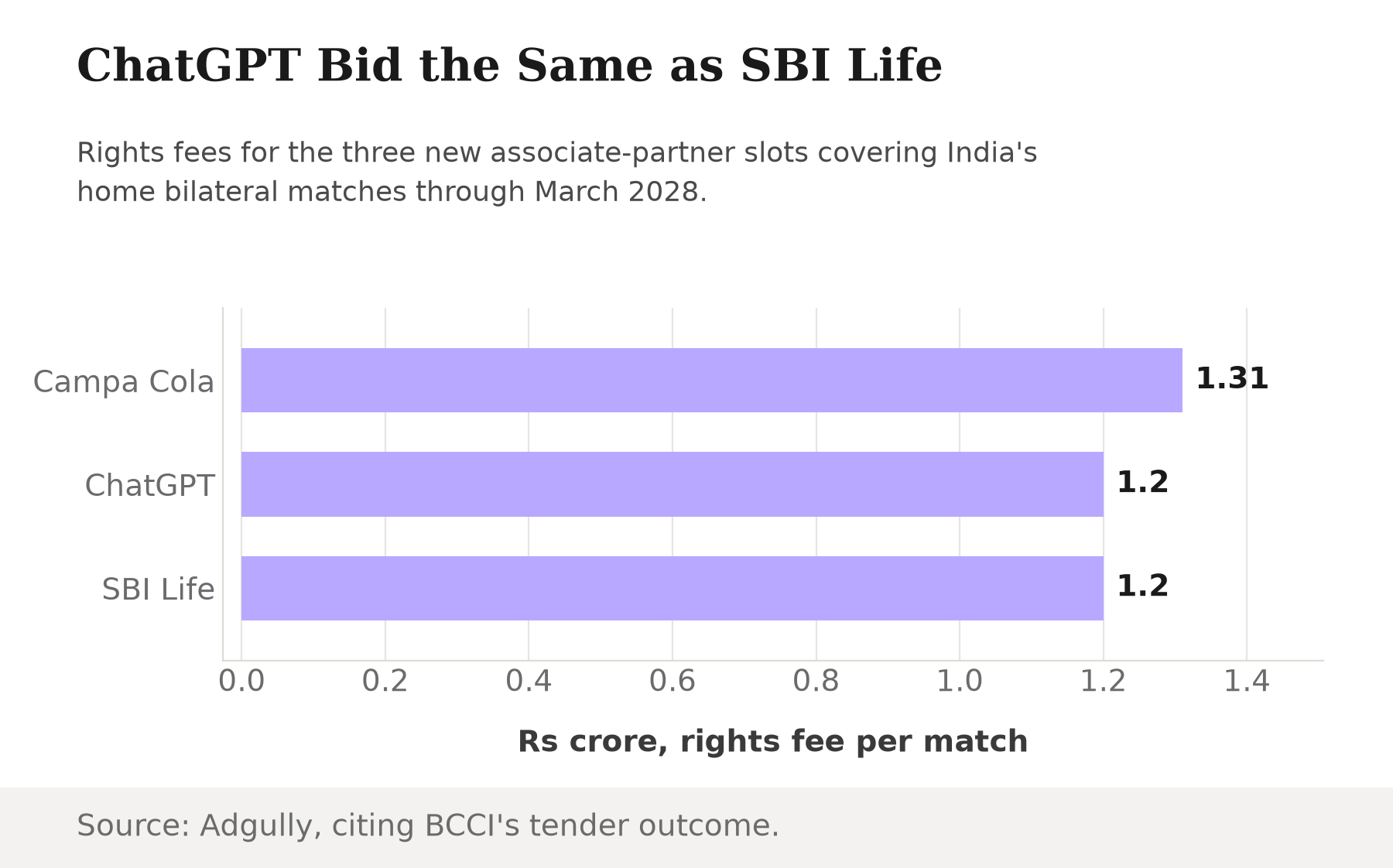
Source: Adgully. Chart: The Signal.
Multiplied out, ChatGPT's Rs 1.2 crore per match across 35 matches through March 2028 comes to about Rs 42 crore for the full run of the deal, a fixed, multi-year media commitment rather than a one-off stunt buy.
Cricket is not new for OpenAI
This is OpenAI's second cricket sponsorship in India in under a year, and the size of its commitment has almost tripled. SportsPro reports that OpenAI and Kingfisher joined the Women's Premier League as Premier Partners in November 2025, in new agreements collectively valued at Rs 48 crore for the 2026-27 seasons, ChatGPT's first-ever sports sponsorship of any kind.
| Deal | ChatGPT's partners | Combined value | Coverage |
|---|---|---|---|
| Women's Premier League | ChatGPT, Kingfisher | Rs 48 crore | 2026-27 seasons |
| BCCI home cricket season | ChatGPT, Campa Cola, SBI Life | Over Rs 130 crore | 35 home bilateral matches through March 2028 |
Ten months from a first, shared sponsorship of the women's league to a solo-branded slot across the men's home season is a fast escalation for a company that had never bought cricket rights before late 2025.
Why cricket, why now
The scale of the audience OpenAI is chasing in India is not abstract. OpenAI CEO Sam Altman said, as reported, that India has 100 million weekly active ChatGPT users, OpenAI's second-largest market globally after the United States. That is a company already deep inside the country's phones, looking to widen the base further and, just as important, to be trusted by the people already using it.
Trust is the harder sell. A KPMG and University of Melbourne global study of AI trust finds that 76% of Indians say they are willing to trust AI systems, and 78% are concerned about negative outcomes from AI, in the same 2025 survey. Those two figures describe a market that is using AI faster than it has decided how it feels about it. A stadium sponsorship, tied to the most watched, most trusted broadcast property in the country, is one way to sit inside that ambivalence rather than argue against it with a banner ad.
Advertising-industry analysts read the same logic into these deals. Kumar Awanish, Chief Growth Officer at Cheil India, told Storyboard18 that "AI brands operate very differently. Their objectives are brand positioning and long-term ecosystem engagement, not immediate transactional behaviour linked to matches." That is a different job than a performance-marketing impression is built to do: a digital ad is priced and judged on a click or a conversion, while a cricket sponsorship is priced and judged on being seen, repeatedly, inside a broadcast Indians already trust.
ChatGPT is also not the only AI company drawing that conclusion. Adgully reports that Google's Gemini signed its own three-year sponsorship with the BCCI, covering the IPL from 2026 to 2028, in a deal worth around Rs 270 crore, more than double ChatGPT's combined BCCI and WPL commitments. Set side by side, the two biggest AI assistants operating in India have now each bought a multi-year seat inside the country's most-watched sport, which makes ChatGPT's bid look less like an experiment and more like the opening move in a pattern.
The honest objection
The strongest case against this math is that a paise-a-viewer estimate is only as good as its benchmark, and neither of ours is the literal audience for these 35 fixtures. The Perth Test was an away fixture in Australia, not a home bilateral, and the World Cup peak was a marquee global final chase, not a routine home series game. If an ordinary home Test or ODI draws far fewer viewers than either of those two, ChatGPT's true cost per person watching is higher than 17 to 20 paise, and could be a good deal higher.
That case is real. The matrix behind this analysis has no figure for what an average, non-marquee home fixture actually draws, so the range here is a bracket built from the two biggest available data points, not a guarantee for every one of the 35 matches. But the gap to digital advertising has room to absorb real erosion. At 50 paise per impression, sponsorship only becomes the pricier option once a match's audience falls under roughly 24 million people, our calculation from the same two figures (Rs 1.2 crore divided by Rs 0.50). That is a little over a third of Perth's crowd and about 40% of the World Cup's peak. Whether every one of the 35 fixtures clears that bar is exactly what the public record cannot yet say.
There is a second honest limit worth naming. TRAI's Telecom Services Performance Indicator Report states that India had 1,028.61 million total internet subscribers as of the end of December 2025, the addressable base against which any digital ad campaign is measured. A digital buy can target that entire base with intent signals; a stadium sponsorship cannot. Cricket sponsorship wins on raw cost per person reached. It is not built to prove any of those people did anything after watching.
The Signal
Strip away the idea that an AI company sponsoring cricket is a vanity buy, and what is left is a company doing ordinary reach arithmetic and finding that a long-running television sport still clears the bar a modern ad platform sets. ChatGPT did not overpay to be seen next to Campa Cola. It bid the market rate, alongside an insurer that has run this playbook for years, for a channel that reaches tens of millions of Indians at a fraction of what it costs to reach them one impression at a time. Watch what OpenAI does next: if this is a one-off experiment, the WPL and BCCI deals stay its only sports sponsorships. If the arithmetic here holds up once real viewership numbers for these 35 matches become public, cricket in India will have a third kind of sponsor alongside soft drinks and financial services, and the one thing it is selling is a rupee that goes further than a click.
Reporting basis: the BCCI's own announcement of the Campa, SBI Life and ChatGPT associate-partner deal is the primary source for the combined deal value and the year-over-year increase; the per-match rights fees and the 35-match, March 2028 term are as reported by Adgully from BCCI's tender outcome. The November 2025 WPL sponsorship is per SportsPro. India's ChatGPT user base is per Sam Altman's statement as reported by TechCrunch, and the AI trust and concern figures are from the KPMG and University of Melbourne global study. The Perth Test viewership is BARC data as reported by MediaBrief; the T20 World Cup 2026 figures are as announced by ICC chairman Jay Shah and reported by Gulf News. JioStar's digital CPM rates are as reported by Indian Broadcasting World, and the total internet subscriber base is from TRAI's Telecom Services Performance Indicator Report. The Rs 270-crore Gemini/BCCI IPL sponsorship figure is as reported by Adgully, and the advertising-industry read on AI brands' objectives is from Kumar Awanish of Cheil India, as quoted by Storyboard18. The cost-per-viewer estimates, the total deal value across 35 matches, and the breakeven audience size are The Signal's calculations from those figures.